
 |
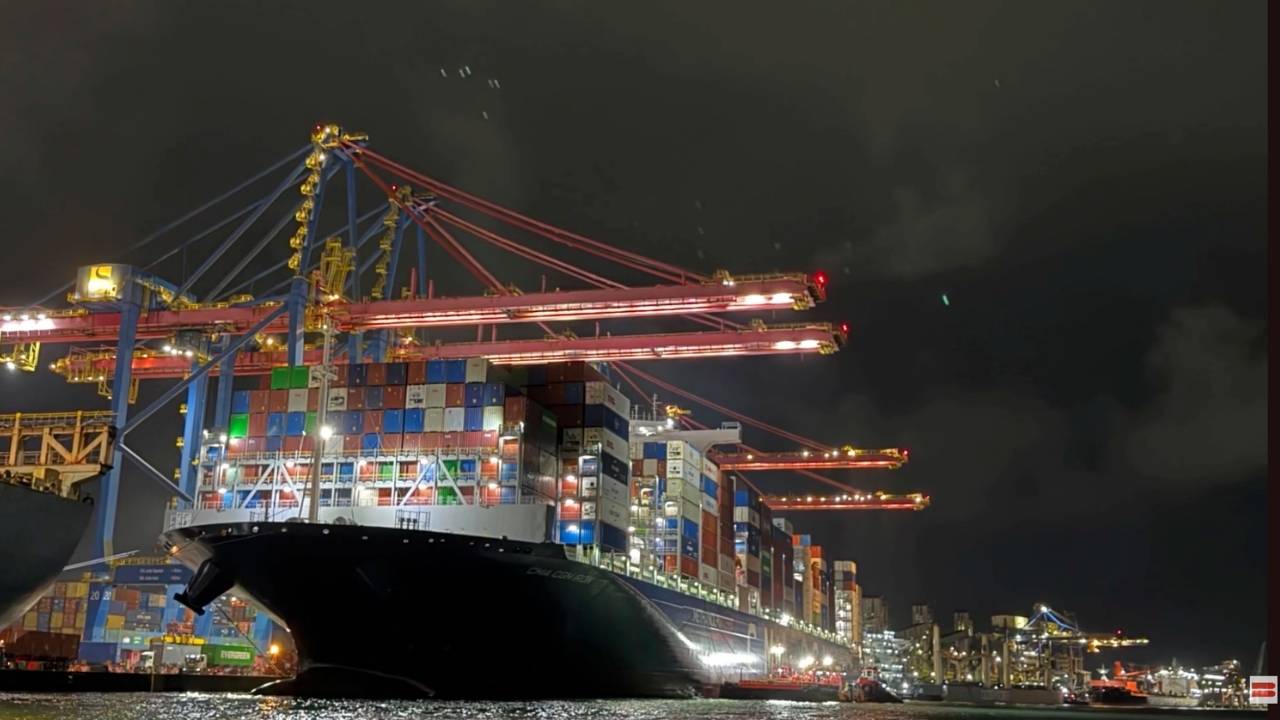
Bunker One has carried out what it says is Latin America’s first bioethanol bunkering operation for an ocean-going vessel, delivering 500,000 litres of anhydrous ethanol to a CMA CGM container ship at the Port of Santos, Brazil.
The fuel was supplied by Copersucar, a sugar and bioethanol company, to the CMA CGM Iron — CMA CGM’s first 13,000-teu container vessel equipped with a certified tri-fuel engine capable of operating on bioethanol. Bunker One executed the operation using its barge Dona Isa.
Peter Zachariassen, CEO of Bunker One, stated: “The question is no longer whether bioethanol can be used as a marine fuel. It is whether it can be supplied safely and reliably at the point of demand. This operation demonstrates Bunker One’s ability to bring together the expertise, infrastructure and execution required to make that happen.”
Operational preparation
Commercial bioethanol bunkering operations remain limited globally, largely because handling low-flashpoint fuels requires a different operational approach than conventional marine fuels.
Prior to the delivery, Bunker One’s barge Dona Isa underwent dedicated technical preparation, including cargo tank conditioning, transfer procedure development, emergency response planning, crew training and the implementation of specialised safety measures for bioethanol handling.
Bunker One also incorporated the International Association of Ports and Harbors (IAPH) checklist for low-flashpoint fuel operations and established a dedicated emergency response plan for the delivery. Crew members, operational personnel and HSE teams participated in both theoretical and practical training programmes before the operation was carried out.
Flavio Ribeiro, Managing Director of Bunker One LatAm, remarked: “Brazil already possesses one of the world’s most mature and scalable bioethanol supply chains. This operation demonstrates how that capability can be connected to international shipping through safe and reliable bunkering infrastructure.”
Brazil’s role in the energy transition
The operation is said to highlight the potential role of Brazil’s established bioethanol industry in serving global shipping markets. By combining Copersucar’s bioethanol supply capabilities with Bunker One’s bunkering execution, the two companies claim to have established a practical link between Brazilian renewable fuel production and the demand for alternative marine fuels.
Tomás Manzano, President of Copersucar, commented: “More than a pioneering bunkering operation, we are building the conditions for bioethanol to become part of the navigation energy matrix in a competitive way, expanding Brazil’s leading role in the transition to a low-carbon economy.”
The operation also underlines a broader challenge facing shipping’s energy transition: developing new fuels is only part of the equation. The industry will also need to establish practical methods for storing, transporting and supplying those fuels at ports around the world — shifting the focus from fuel availability alone to operational readiness.
|
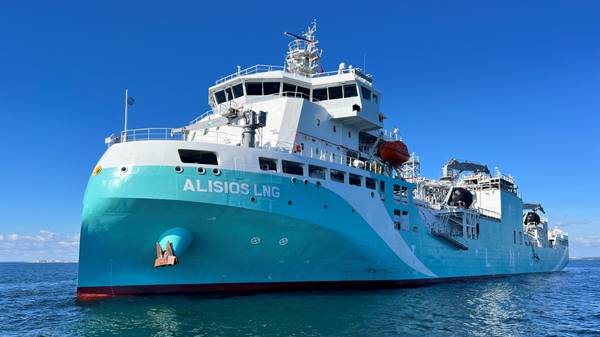
Axpo completes first LNG bunkering in Valencia, with over half bio-LNG
Ship-to-ship transfer to a container vessel makes Valencia the company's fourth Spanish port for LNG bunkering. |
|
|
|
||
|
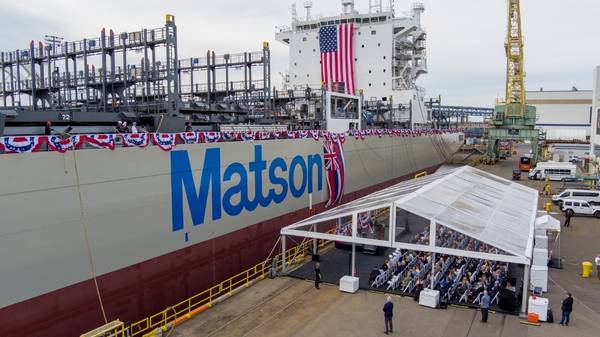
Matson christens Makua, first of three LNG-ready Aloha Class container ships
Dual-fuel vessel, due for delivery in early 2027, is the first of three ships worth around $1bn. |
|
|
|
||
|
CMB.Tech seeks Singapore-based ammonia operations manager for Asia Pacific
New hire will oversee ammonia chartering and bunkering and liaise with Far East partners. |
|
|
|
||
|
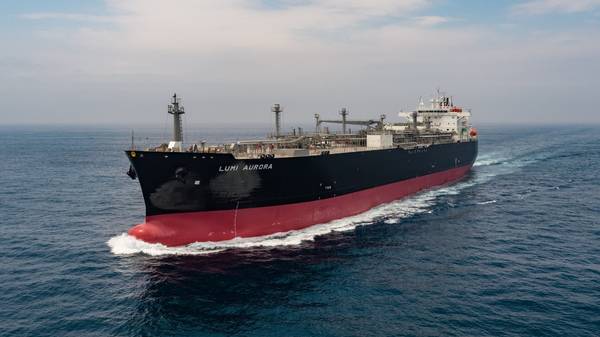
IINO Lines deploys first Ice Class IB VLGC on long-term charter to Borouge International
LPG-fuelled Lumi Aurora will carry North American gas to Borouge International's Porvoo plant in Finland. |
|
|
|
||
|
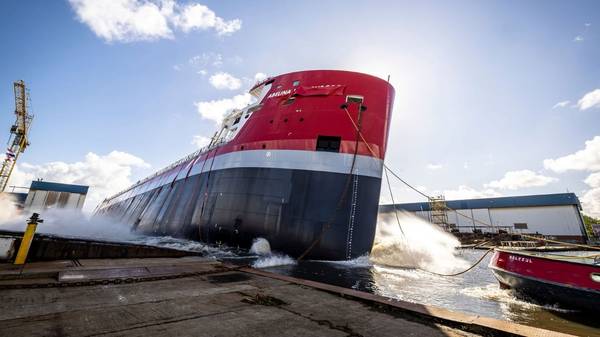
Wagenborg launches first EasyMax 2.0 vessel, prepared for methanol, ammonia and LNG
Abelina Wagenborg, built at Niestern Sander, is the first of a new generation designed for multiple alternative fuels. |
|
|
|
||
|
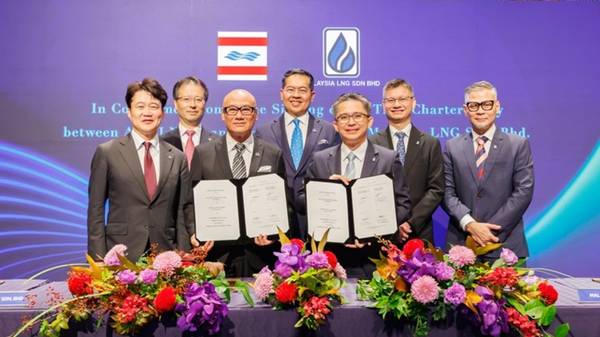
NYK–MISC joint venture signs charter for 18,700-cbm LNG carrier with Malaysia LNG
Asia LNG Transport will operate the dual-fuel diesel-electric newbuild, due from Hudong-Zhonghua in 2028, on routes to Japan. |
|
|
|
||

|
Study finds methanol dual-fuel retrofit of Kamsarmax bulk carrier would take about 75 days
Report by Mærsk Mc-Kinney Møller Center, involving Tsuneishi, puts conversion costs at 25–30% of the cost of a conventionally fuelled newbuilding. |
|
|
|
||
|
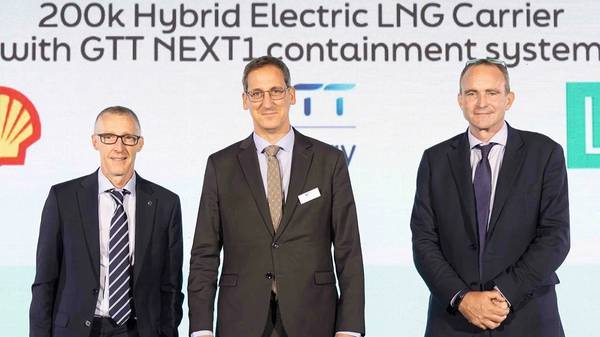
Lloyd's Register, Shell and GTT launch joint project on hybrid-electric 200,000-cbm LNG carrier
Partners to develop a concept combining hybrid-electric propulsion with GTT NEXT1 cargo containment technology for larger LNG carriers. |
|
|
|
||
|
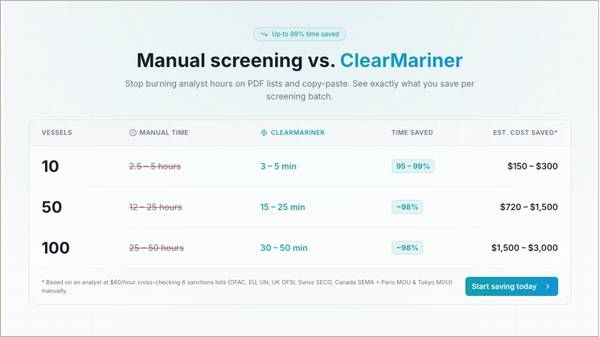
ClearMariner expands maritime sanctions screening with ESG, emissions and API support
Online service now combines sanctions checks with voyage CO₂, CII, EU ETS and FuelEU Maritime estimates. |
|
|
|
||

|
Flex Commodities adds Long Jing Xin to Singapore marine fuels team
Company appoints associate for marine fuels as part of plan for regional expansion. |
|
|
|
||
| Axpo completes first LNG bunkering in Valencia, with over half bio-LNG [News & Insights] |
| CMA CGM recruiting risk manager to oversee oil, gas and CO₂ exposure in energy and bunkering unit [News & Insights] |
| CMB.Tech's Mineral Europa starts maiden voyage as first ammonia-powered dry bulk vessel [News & Insights] |
| Singapore safety council inspects methanol bunker tanker Golden Centaurus [News & Insights] |
| Vitol to start LNG bunkering in Asia from late 2026 after vessel sea trials [News & Insights] |
