
 |
The Clean Arctic Alliance has called on International Maritime Organization (IMO) member states to submit proposals by December 5 to curb black carbon emissions from Arctic shipping, following what it described as a lack of meaningful progress at the COP30 climate summit in Belém, Brazil.
In a statement released after the conference closed on November 24, the coalition of 24 environmental organisations criticised COP30 for failing to address short-lived climate forcers such as black carbon, despite a joint declaration by nine countries — Canada, Chile, Colombia, Costa Rica, Dominican Republic, Madagascar, Nigeria, Sri Lanka and Uganda — committing to sectoral action. The announcement framed the pollutant as an area where rapid reductions could deliver immediate climate, health and air-quality benefits.
"COP30 promised so much — it's disappointing that it delivered so little," said Dr Sian Prior, Lead Advisor of the Clean Arctic Alliance. "There was a clear lack of urgency amongst governments, in the face of the climate crisis, with a complete dearth of official COP30 attention to easy wins on short-lived climate forcers — like black carbon."
The alliance said governments now have “less than a fortnight” to act before the IMO deadline on December 5, urging Arctic states — including Canada, Norway, Iceland and Denmark/Greenland — to lead a concrete proposal on “polar fuels,” comprising distillate-type marine fuels such as DMA and DMZ or other fuels with similarly low black carbon emissions.
The proposals will be considered at the IMO’s Sub-Committee on Pollution Prevention and Response (PPR 13) in February 2026 in London, where delegates will begin setting rules on permissible fuels for ships operating in the Arctic.
Momentum behind polar fuels has been growing. The Nordic Council of Ministers recently recommended that Nordic governments work towards establishing the concept within the IMO and MARPOL Annex VI, the international framework regulating air pollution from ships. The Clean Arctic Alliance stated that this regulatory foundation is necessary to achieve measurable reductions in black carbon emissions from vessels operating in and near the Arctic.
“By making cleaner fuels mandatory for shipping in this unique region that is already being dramatically affected by climate change, Arctic governments — and other IMO member states — have a unique opportunity to demonstrate leadership,” Prior said.
Black carbon is a short-lived climate pollutant generated by the incomplete combustion of fossil fuels. It is responsible for roughly one-fifth of international shipping’s climate impact, according to the alliance. Its warming effect is more than 1,600 times that of CO₂ over a 20-year period. When deposited on snow and ice, it sharply accelerates melting by reducing surface reflectivity — a process known as the loss of the albedo effect — exposing darker areas of land and water that absorb additional heat. Scientists have warned that Arctic systems are approaching tipping points that could trigger rapid and irreversible changes over multiple generations.
The Clean Arctic Alliance also highlighted the public-health implications of black carbon exposure, including increased cardiovascular risk and premature mortality, citing research that has detected black carbon particles in foetal tissues following maternal inhalation.
Despite more than a decade of discussions at the IMO, black carbon emissions from shipping remain unregulated. The organisation has conducted extensive scientific work on the issue, but no binding measure has been agreed. A paper (Regulating Black Carbon emissions from international shipping impacting the Arctic) submitted to IMO’s Marine Environment Protection Committee (MEPC 82/5/2) outlines how identifying suitable polar fuels and mandating their use in Arctic waters could deliver immediate emissions reductions.
The concept was previously examined at the IMO’s PPR 11 session and received broad support from IMO member states and parts of the fuel and shipping industry during further discussions in January 2025, according to the Clean Arctic Alliance.
A report by Pacific Environment, On Thin Ice: Why Black Carbon Demands Urgent Action, reinforces the need for rapid intervention. It argues that Arctic shipping growth is increasing black carbon release, accelerating ice melt and heightening climate risks. The report calls for switching to readily available, cleaner distillate fuels as the fastest way to cut emissions while longer-term decarbonisation pathways mature.
“The IMO has spent more than a decade on scientific analysis and discussions, but black carbon emissions from Arctic shipping remain unregulated,” Prior said. “We want to see a concrete proposal led by Arctic states on polar fuels that will ensure a rapid reduction in Arctic black carbon emissions ahead of longer-term decarbonisation efforts.”
|
World Fuel seeks marine fuel sales executive in Singapore
Role requires more than five years' experience in bunkering, trading, energy or commodities. |
|
|
|
||
|
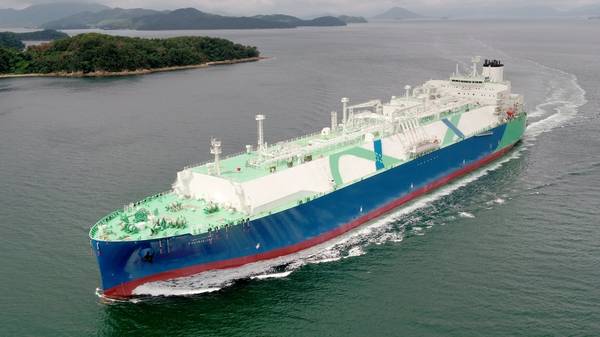
MISC names first of three new LNG carriers for QatarEnergy charter deal
Th'ailib, chartered to QatarEnergy for 15 years, extends MISC's long-term LNG fleet partnership with the energy producer. |
|
|
|
||
|
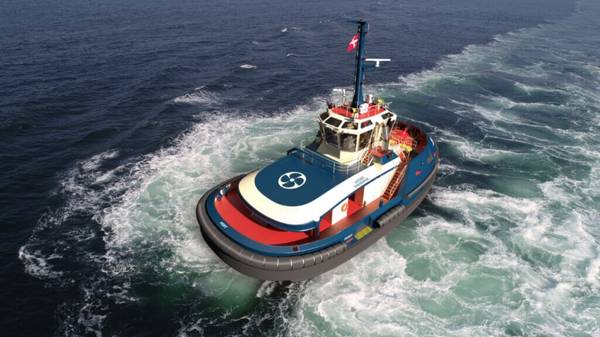
AYK Energy to supply batteries for Kongsberg Maritime’s electric Svitzer tugs
Battery maker AYK Energy expands its workboat portfolio with a deal to power four fully electric Svitzer TRAnsverse tugs. |
|
|
|
||

|
Wärtsilä to supply dual-fuel engines for 12 CMA CGM container ships
Wärtsilä will deliver 36 LNG dual-fuel engines for a dozen new 18,000-TEU container vessels being built for CMA CGM. |
|
|
|
||
|
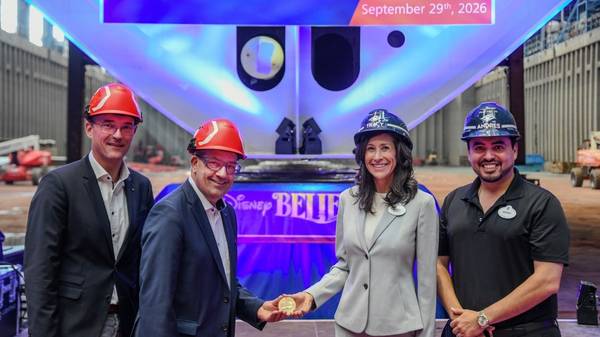
Keel-laying ceremony held for LNG-powered Disney Believe at Meyer Werft
Construction starts on second gigablock of Disney Believe, the fourth vessel in Disney Cruise Line’s Wish class. |
|
|
|
||
|
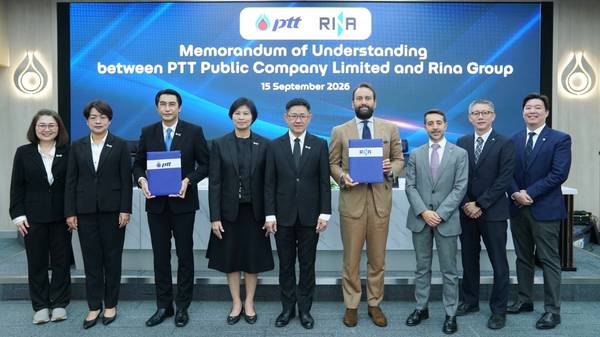
RINA and Thailand’s PTT sign MoUs to collaborate on decarbonisation technologies
Agreements establish a research and knowledge-sharing framework covering alternative fuels, hydrogen readiness and vessel electrification across the energy and maritime sectors. |
|
|
|
||
|
IBIA to host ethanol marine fuel workshop in New York
Limited-capacity session will examine ethanol’s commercial, technical and regulatory prospects as a shipping fuel. |
|
|
|
||

|
Corvus Energy’s Blue Whale NxtGen battery system gains DNV type approval
DNV approval confirms the safety and performance of Corvus Energy’s large-scale battery system for ferries, cruise ships and offshore vessels. |
|
|
|
||

|
PMG Energies appoints Jessie Ng as bunker trader in Singapore
Bunker firm adds experienced trader to Singapore team. |
|
|
|
||
|
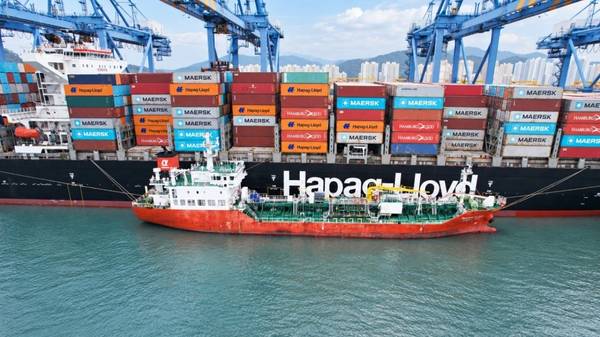
Hapag-Lloyd completes simultaneous-operations biomethanol bunkering in Busan
Container line bunkers ISCC EU-certified biomethanol from Goldwind during SIMOPS, advancing its 2024 supply agreement. |
|
|
|
||
| Clean Arctic Alliance calls for Arctic states to submit polar fuels proposal by December 5 deadline [News & Insights] |
| Danish Shipping to push for IMO climate deal at COP30 after October setback [News & Insights] |
| Electric and hybrid ferries could cut Sea of Marmara emissions by 63%, IMO study finds [News & Insights] |
| NYK shares two years of ammonia-fuelled tugboat data with IMO [News & Insights] |
| IMO and EMSA gather maritime experts to address seafarer training for alternative fuels [News & Insights] |
| IMO seminar examines technical hurdles facing ammonia as a marine fuel [News & Insights] |
| IMO sub-committee finalises revised methanol fuel safety guidelines [News & Insights] |
