Thu 23 May 2019, 12:17 GMT

Teekay Tankers upbeat on IMO 2020's 'positive impacts'


Refinery runs predicted to climb. Expected rise in scrubber-related off-hires seen as a positive.


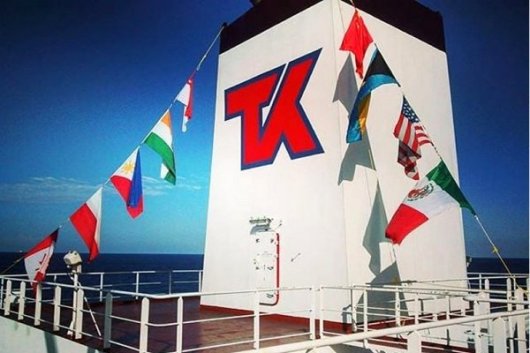
Image credit: Teekay Corporation
Teekay Tankers (Teekay) said on Thursday that it expects IMO's introduction of a 0.5% global limit on the sulphur content of marine fuels to be positive for the tanker market during the second half of 2019.

The Bermuda-headquartered firm noted that recent tanker demand had been negatively affected by higher-than-normal refinery maintenance, as refiners look to complete maintenance and upgrade programmes in anticipation of much greater demand in the second half of the year, when they will be required to operate at high throughput levels in order to produce sufficient distillates to meet the new IMO 2020 regulations.

Teekay also explained that, since January, global crude oil production had decreased by around 2.5m barrels per day (bpd) due to a contraction in OPEC supply, and that the global tanker fleet had risen by 12.6m deadweight tonnes (dwt), or 2.1 percent.

But in an upbeat analysis of the future, the tanker specialist said it expects refinery runs to climb between July and December as refiners prepare for IMO 2020 and the resultant jump in distillate demand that the new sulphur cap is set to generate.

Additionally, Teekay noted that global oil demand is predicted to grow by 1.3m bpd in 2019, according to EIA IEA and OPEC average forecasts; that global refinery throughput is forecast by the IEA to climb by 4.6m bpd between March and August; that US crude exports could rise to 4m bpd by the end of the year; and that the current tanker orderbook stands at 59.4m dwt, or 9.9 percent of the existing total fleet of 600.7m dwt - the lowest orderbook-to-fleet ratio in more than 20 years, and an indication that fleet growth could be relatively low over the next couple of years.

Added to this, Teekay posited that fleet availability could be weakened further by an expected rise in off-hires as ships are taken out of service to be fitted with scrubbers prior to IMO 2020.

In its financial results for the first quarter, Teekay Tankers posted a net income of $12.4m, which was a $31.6m improvement on last year's $19.2m loss.

Revenue during the three-month period grew year-on-year by $64.0m, or 38.0 percent, to $232.5m.

Discussing the results, Kevin Mackay, President and Chief Executive Officer, remarked: "Average crude tanker spot rates moderately increased during the first quarter of 2019, which resulted in another profitable quarter and slightly improved results over the prior quarter. However, spot tanker rates declined towards the latter half of the first quarter, and the market faces a number of seasonal and other short-term headwinds, which are expected to reduce our earnings during the second quarter of 2019. We believe these factors are temporary in nature and expect a significant firming in the tanker market from the second half of 2019 due to positive underlying oil demand, an expected increase in U.S. crude oil exports, higher OPEC production, lower tanker fleet growth, and the positive impacts of IMO 2020."

Mackay added: "With a stronger liquidity position, market-leading position in our vessel sectors and significant operating leverage, we believe we are well-positioned to benefit from a tanker market recovery in the second half of 2019 and into 2020."


TMS Tankers logo. Lloyd’s Register delivers fleet-wide energy transition roadmap for TMS Tankers  

LR Advisory maps vessel-level compliance risk and decarbonisation pathways across the Greek owner’s tanker fleet.

Dr Prapisala Thepsithar, GCMD. GCMD shares biofuel assurance and green finance insights at Hong Kong shipping decarbonisation forum  

The Global Centre for Maritime Decarbonisation presented pilot findings on biofuels and energy efficiency financing.

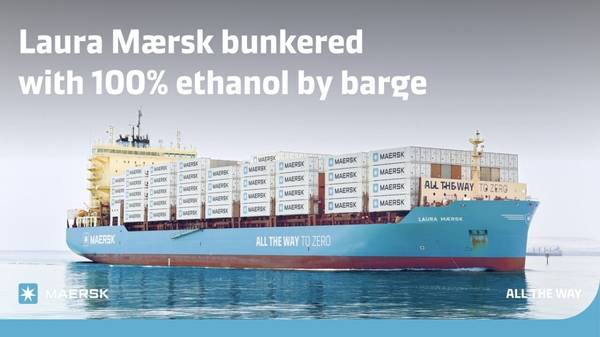
Laura Maersk ethanol bunkering graphic. Maersk conducts large-scale ethanol bunkering trial on Laura Maersk in Rotterdam  

A.P. Moller – Maersk has conducted a barge-delivered ethanol bunkering operation as part of ongoing fuel trials.

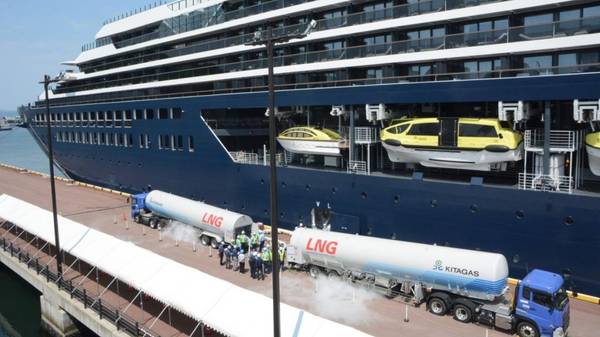
Luminara vessel truck-to-ship bunkering. MOL Techno-Trade completes first LNG bunkering for international cruise ship in Hokkaido  

Truck-to-ship LNG operation at Hakodate marks first such supply to an international cruise vessel in Hokkaido.

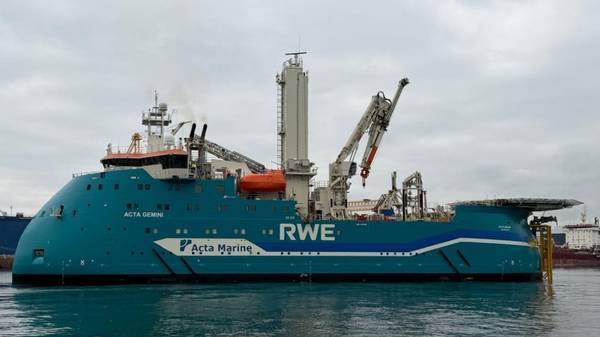
Acta Gemini vessel. Acta Marine takes delivery of methanol dual-fuel CSOV Acta Gemini for RWE wind farm charter  

The vessel will support operations at the Sofia Offshore Wind Farm at Dogger Bank.

Yeva Wood and Kirsten Møller Jørgensen. Malik Supply expands Danish team with bunker trader and finance hire  

Danish bunker supplier Malik Supply adds two new staff across its Fredericia and Aalborg offices.

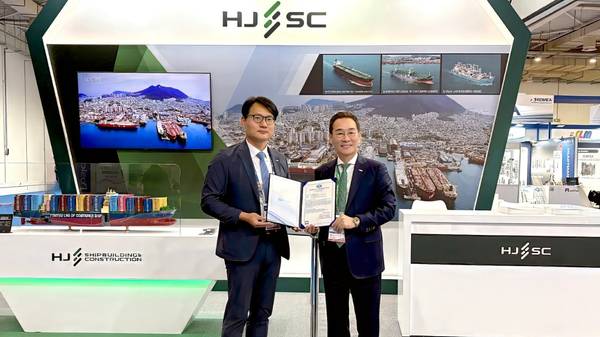
AiP award ceremony for a 10,000-teu biofuel-powered container ship. HJSC wins AiP for 10,000-teu biofuel-powered container ship design  

South Korean shipbuilder HJ Shipbuilding & Construction receives classification society approval for its biofuel vessel design at Posidonia.

Active vessel. Capital Clean Energy Carriers takes delivery of LNG carrier and dual-fuel gas carrier, secures five new charters  

Athens-based CCEC expands its fleet and pushes contracted revenue backlog to $3.1bn.

VPS logo. Fuel quality management for vessels in extended idle: Arabian Gulf, Gulf of Oman and adjacent anchorages | Rahul Choudhuri, VPS  

Managing fuel quality deterioration following the closure of the Strait of Hormuz.

Person signing a document. Agastya Green Fuels signs 250,000 t/yr e-methanol offtake deal with Sri Lanka’s SAR Group  

Indian producer and Sri Lankan maritime firm agree long-term green methanol supply partnership.