Tue 15 Sep 2015, 11:32 GMT

LNG as a marine fuel discussed at industry event


Event was attended by around 100 delegates.


Bernhard Schulte Shipmanagement (BSM) recently highlighted the issues and solutions surrounding liquefied natural gas (LNG) as a marine fuel at its industry forum entitled 'LNG as a Marine Fuel: Addressing the Challenges'.

Attended by close to 100 delegates from the ship owning, equipment manufacturing, brokering and media segments of the industry, the session was held in conjunction with London International Shipping Week 2015, which took place between Monday, September 7 and Friday, September 11.

Chaired by Chris Clucas, Corporate Expert - Liquefied Gas for BSM and the President of the Society for Gas as a Marine Fuel (SGMF), the event explored the commercial and environmental advantages of using LNG as a fuel, challenges associated with increasing adoption and implications for the future.

Joining the session were Mark Bell, General Manager for Society for Gas as a Marine Fuel (SGMF); Mats Fagerberg, Partner at Affinity Shipping LLP; John Grant, General Manager for Wartsila UK Ltd and John Eltringham, Project Director at BSM.

A highlight of the session was the presentation by John Eltringham, who mentioned the technical challenges associated with the development of vessels that use LNG as a fuel. He then explained how the level of expertise gained through this process enabled BSM to develop, in partnership with Babcock LGE, a gas supply vessel design for LNG-fuelled ships, terminals and other marine craft. The design enables delivery of LNG to small onshore facilities and large off-pipe consumers, and is suitable for coastal and seagoing operation.

The panel, moderated by Karen Thomas from LNG World Shipping, looked at first-mover advantage, economies of scale and the need for a sustainable business model to make LNG-fuelled vessels commercially viable. However the importance of regulation and oil prices to the commercial viability of the decision remained a common thread through the discussions.

When asked to comment on when the use of LNG as a marine fuel would accelerate, the panelists were united in their view that with most vessel sectors having a gas-fuelled vessel design in the wings, a step towards change in the market was inevitable in the near future.

Following the panel session, delegates used the discussion session to comment and raise questions on the importance of legislation and corresponding economic factors that were stressed during the earlier the presentations. The floor was vociferous in its agreement on the importance of maintaining the current safety record in the LNG sector and shared thoughts and recommendations on improved and new training approaches to ensure that the competence of talent in the gas sector was further elevated.

Describing the level of interaction during the two-hour session, Captain Norbert Aschmann, Chief Executive Officer of BSM, said: "The strong participation and quality debate we experienced demonstrates that there is active engagement on this topic, despite the relatively slow uptake of LNG as a fuel in the maritime over recent years."

In a statement, BSM commented: "Managing 20 LNG vessels, BSM's expertise in the area of LNG has long been utilised by shipowners keen to address the operational challenges associated with the use of LNG as a marine fuel. By building upon this proven and extensive capability BSM is now responding to the challenges faced in the development of the use of LNG as a fuel for ships, as more stringent vessel emissions regulations come into force and ship owners strive to find more cost-effective ways to power their ships."


TMS Tankers logo. Lloyd’s Register delivers fleet-wide energy transition roadmap for TMS Tankers  

LR Advisory maps vessel-level compliance risk and decarbonisation pathways across the Greek owner’s tanker fleet.

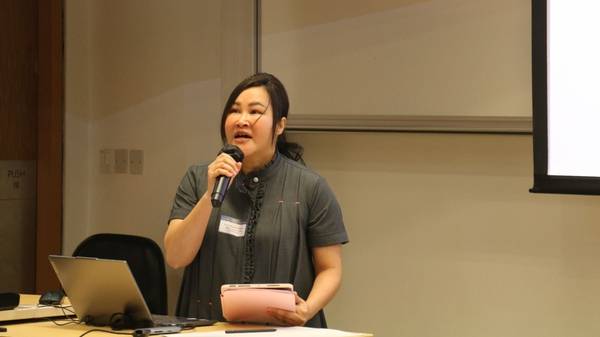
Dr Prapisala Thepsithar, GCMD. GCMD shares biofuel assurance and green finance insights at Hong Kong shipping decarbonisation forum  

The Global Centre for Maritime Decarbonisation presented pilot findings on biofuels and energy efficiency financing.

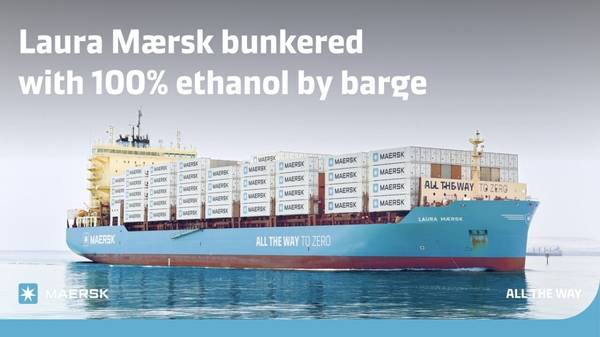
Laura Maersk ethanol bunkering graphic. Maersk conducts large-scale ethanol bunkering trial on Laura Maersk in Rotterdam  

A.P. Moller – Maersk has conducted a barge-delivered ethanol bunkering operation as part of ongoing fuel trials.

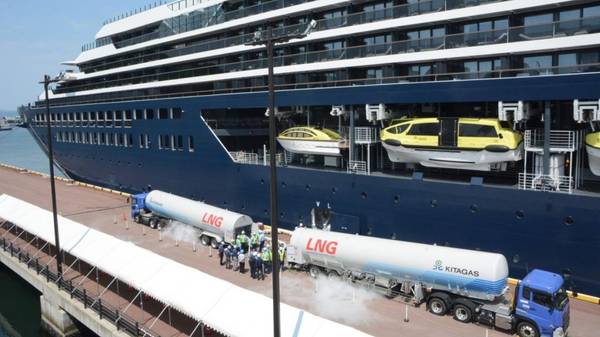
Luminara vessel truck-to-ship bunkering. MOL Techno-Trade completes first LNG bunkering for international cruise ship in Hokkaido  

Truck-to-ship LNG operation at Hakodate marks first such supply to an international cruise vessel in Hokkaido.

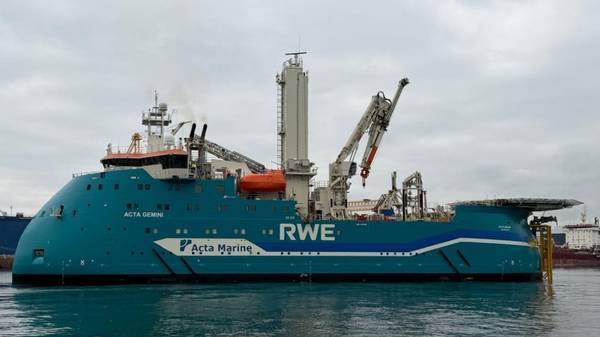
Acta Gemini vessel. Acta Marine takes delivery of methanol dual-fuel CSOV Acta Gemini for RWE wind farm charter  

The vessel will support operations at the Sofia Offshore Wind Farm at Dogger Bank.

Yeva Wood and Kirsten Møller Jørgensen. Malik Supply expands Danish team with bunker trader and finance hire  

Danish bunker supplier Malik Supply adds two new staff across its Fredericia and Aalborg offices.

AiP award ceremony for a 10,000-teu biofuel-powered container ship. HJSC wins AiP for 10,000-teu biofuel-powered container ship design  

South Korean shipbuilder HJ Shipbuilding & Construction receives classification society approval for its biofuel vessel design at Posidonia.

Active vessel. Capital Clean Energy Carriers takes delivery of LNG carrier and dual-fuel gas carrier, secures five new charters  

Athens-based CCEC expands its fleet and pushes contracted revenue backlog to $3.1bn.

VPS logo. Fuel quality management for vessels in extended idle: Arabian Gulf, Gulf of Oman and adjacent anchorages | Rahul Choudhuri, VPS  

Managing fuel quality deterioration following the closure of the Strait of Hormuz.

Person signing a document. Agastya Green Fuels signs 250,000 t/yr e-methanol offtake deal with Sri Lanka’s SAR Group  

Indian producer and Sri Lankan maritime firm agree long-term green methanol supply partnership.