This is a legacy page. Please click here to view the latest version.
Tue 11 Dec 2012, 16:35 GMT

Reduced fuel consumption with 'new generation' ships


New ships are said to offer significant improvements in fuel consumption.


Mitsubishi Heavy Industries (MHI) says it has begun construction of the first ship in its “Sayaendo” Series, which it has developed as a 'new generation' liquefied natural gas (LNG) carrier, at the company’s Nagasaki Shipyard & Machinery Works.

The LNG carrier is one of two ships ordered jointly by Osaka Gas Co., Ltd., and Mitsui O.S.K. Lines, Ltd. (MOL) in October 2011.

The Sayaendo Series has a hull shape that evolved from LNG carriers with Moss-type hemispherical tanks, and is said to offer significant improvements in fuel consumption and maintainability.

The unit now being built is slated for delivery in the fiscal year 2014 (ending March 31, 2015). At a ceremony held at the shipyard to mark the occasion, a prayer was offered up for safety throughout the vessel’s construction. The ceremony was attended by representatives of the ship’s owners and from MHI.

The LNG carrier will measure 288.0m (meters) in length overall (LOA), 48.94m in width, and 11.55m in draft. The 138,000 gross tonnage (75,000 deadweight tonnage) ship is capable of carrying up to 153,000m3 of LNG (cargo tank total volume: 155,000m3). It will be jointly owned by Osaka Gas International Transport Inc. (OGIT), a wholly owned subsidiary of Osaka Gas handling the operation of LNG carriers, and MOL, which will function as the ship management company.

To protect its four Moss spherical tanks, the Sayaendo features a peapod-shaped continuous cover integrated with the ship’s hull in lieu of a conventional hemispherical cover. This configuration enables reductions in size and weight while maintaining the ship’s overall structural rigidity.

The continuous cover over the tanks also improves aerodynamics by substantially reducing wind pressure, which serves as drag on ship propulsion. For its main power plant the Sayaendo adopts MHI’s “Ultra Steam Turbine Plant” (UST), a new turbine that provides higher thermal efficiency through effective use of thermal energy by reheating steam. Through downsizing, weight reduction and hull line improvement, the new ship is said to achieve a substantial 25% reduction in fuel consumption per unit cargo compared to conventional ships.

With a conventional cover configuration, pipes, wires and catwalks atop the tanks are supported by complex structures. By covering the tanks with an integrated cover and making those supporting structures unnecessary, the new design also improves maintainability. In addition, CO2 emissions are reduced as a result of decreased fuel consumption, and response to environmental issues is further enhanced with installation of a ballast water treatment system, which addresses impact on the marine ecosystem.

To date, MHI has received orders for five Sayaendo Series carriers in total, including another ship ordered by MOL in June.

"The Sayaendo has been drawing great attention in the marine transport industry and is quickly becoming a leading force in the movement to develop energy-saving “eco-ships” offering enhanced environmental performance – an area in which the Japanese shipbuilding industry is actively engaged," MHI said.

MHI sees eco-ships as a key focus of its development of high-value-added products in its shipbuilding and ocean development business sector. At the same time, by developing technologies in this area and further and expanding its product range, the company says it aims to intensify its marketing activities both in Japan and around the world.


TMS Tankers logo. Lloyd’s Register delivers fleet-wide energy transition roadmap for TMS Tankers  

LR Advisory maps vessel-level compliance risk and decarbonisation pathways across the Greek owner’s tanker fleet.

Dr Prapisala Thepsithar, GCMD. GCMD shares biofuel assurance and green finance insights at Hong Kong shipping decarbonisation forum  

The Global Centre for Maritime Decarbonisation presented pilot findings on biofuels and energy efficiency financing.

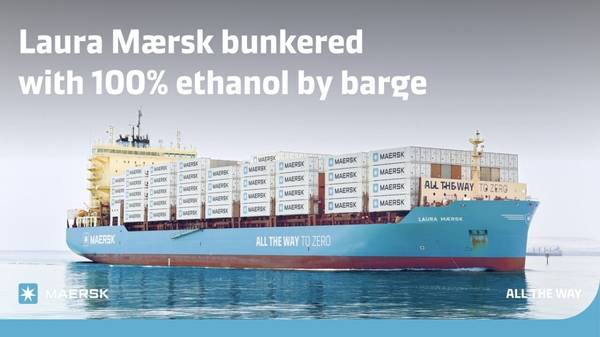
Laura Maersk ethanol bunkering graphic. Maersk conducts large-scale ethanol bunkering trial on Laura Maersk in Rotterdam  

A.P. Moller – Maersk has conducted a barge-delivered ethanol bunkering operation as part of ongoing fuel trials.

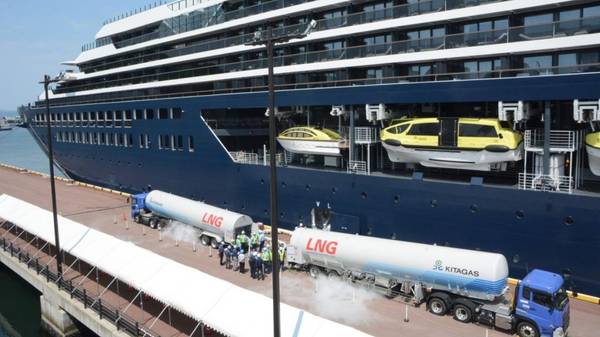
Luminara vessel truck-to-ship bunkering. MOL Techno-Trade completes first LNG bunkering for international cruise ship in Hokkaido  

Truck-to-ship LNG operation at Hakodate marks first such supply to an international cruise vessel in Hokkaido.

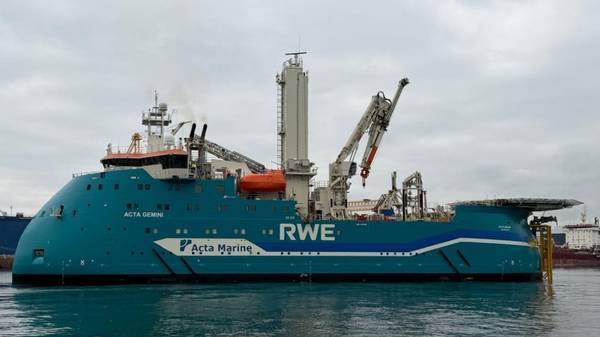
Acta Gemini vessel. Acta Marine takes delivery of methanol dual-fuel CSOV Acta Gemini for RWE wind farm charter  

The vessel will support operations at the Sofia Offshore Wind Farm at Dogger Bank.

Yeva Wood and Kirsten Møller Jørgensen. Malik Supply expands Danish team with bunker trader and finance hire  

Danish bunker supplier Malik Supply adds two new staff across its Fredericia and Aalborg offices.

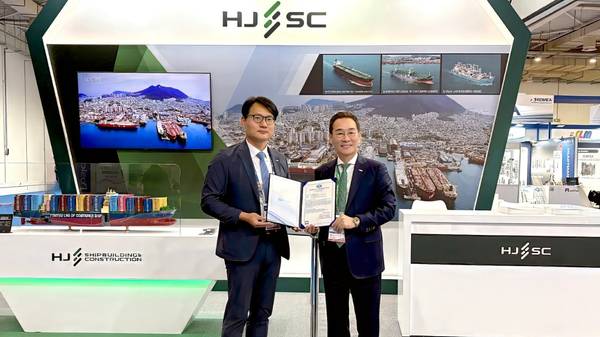
AiP award ceremony for a 10,000-teu biofuel-powered container ship. HJSC wins AiP for 10,000-teu biofuel-powered container ship design  

South Korean shipbuilder HJ Shipbuilding & Construction receives classification society approval for its biofuel vessel design at Posidonia.

Active vessel. Capital Clean Energy Carriers takes delivery of LNG carrier and dual-fuel gas carrier, secures five new charters  

Athens-based CCEC expands its fleet and pushes contracted revenue backlog to $3.1bn.

VPS logo. Fuel quality management for vessels in extended idle: Arabian Gulf, Gulf of Oman and adjacent anchorages | Rahul Choudhuri, VPS  

Managing fuel quality deterioration following the closure of the Strait of Hormuz.

Person signing a document. Agastya Green Fuels signs 250,000 t/yr e-methanol offtake deal with Sri Lanka’s SAR Group  

Indian producer and Sri Lankan maritime firm agree long-term green methanol supply partnership.


↑  Back to Top