This is a legacy page. Please click here to view the latest version.
Tue 20 Nov 2012, 13:57 GMT

HK regulations 'badly required' to control ship emissions


Hong Kong government is urged to act quickly to improve air quality.


Hong Kong public policy think tank, Civic Exchange, has said that it welcomes the Audit Commission’s Report No.59 released today, in particular Chapters 1 and 2 on "Monitoring and reporting of air quality" and the "Implementation of air-quality improvement measures". It has also urged the Hong Kong government to act swiftly in order to improve air quality in line with the Audit Commission’s recommendations.

Please find a statement by Civic Exchange below.

Managing Air Quality Objectives

Audit Commission’s Report highlights HKSAR Government’s past inadequacies in managing Hong Kong’s air quality objectives (AQOs) and in setting new AQOs that would protect public health (Chapter 1, Part 2). Civic Exchange argues that it is indisputable that Hong Kong’s AQOs must use the World Health Organization’s Air Quality Guidelines as our long-term goal.

It is also extremely important that, as recommended by the report, time targets and milestones must be set for achieving the AQOs as soon as possible, which is contrary to HKSAR Government’s past approach to achieve the AQOs as soon as reasonably practicable. Regular reviews should also be made in future to revise our AQOs for driving further improvement of our air quality, but not to be constrained by worries of non-compliance.

Administering Air Pollution Index

Administration of air pollution index (API) is also considered in the report as unsatisfactory (Chapter 1, Part 3). Indeed, Civic Exchange has been constantly calling for the government to make the API a better system for communicating air quality information and its associated health risks to the population. With the imminent implementation of the new AQOs, the HKSAR Government should also take this opportunity to revamp their API system for enhanced communication with the public.

Measures on Vehicles and Ships

Chapter 2 of the Audit Commission’s Report focuses on the air quality improvement measures. Civic Exchange agrees with the report’s recommendations that efforts need to be made by the HKSAR Government in cutting emissions from vehicles, ships, power plants, and non-road mobile machinery, as well as stepping up collaboration in regional air quality management with Guangdong. Among the major local emission sources, priorities must be given to clean-up the diesel commercial vehicles and ship.

Simon Ng, Head of Transport and Sustainability Research of Civic Exchange, explained: "Roadside air quality has been getting worse, and one key measure is to get the old and polluting diesel commercial vehicles off the road. On the other hand, ships have become the biggest emitter of respirable suspended particulates (36%) and nitrogen oxides (32%), and the second biggest emitter of sulphur dioxide (48%). Regulations are badly required for the control of ship emissions such as the use of low sulphur fuel at berth. In the long run, an emission control area should be set up in Pearl River Delta waters to maximize emission reduction and public health improvement."

Inter-department and Cross-bureau collaboration

Civic Exchange recognizes that the Environment Bureau (ENB) and the Environmental Protection Department (EPD) cannot deliver clean air to Hong Kong on their own, without the support of other government departments and policy bureaux. For example, the report questions the slow progress in implementing bus route rationalization in the past. To achieve better progress in the future, it requires collaboration among ENB, EPD, Transport Department and the District Councils. Also, we need Health Department’s support if the main objective of our air quality management plan is to improve public health.

Measurable Improvement versus Marginal Gain

"Air pollution in Hong Kong is so worrying that we must go for policies and measures that would not just bring marginal difference, but substantial and measurable improvement in air quality and public health," Ng said.

"It would require a new mindset, sheer determination, bold actions, collaboration within government, as well as support from the Legislature and society. It is heartening that ENB and EPD have acknowledged all the recommendations listed in the Report, and it is time to put promises into actions," added Ng.


TMS Tankers logo. Lloyd’s Register delivers fleet-wide energy transition roadmap for TMS Tankers  

LR Advisory maps vessel-level compliance risk and decarbonisation pathways across the Greek owner’s tanker fleet.

Dr Prapisala Thepsithar, GCMD. GCMD shares biofuel assurance and green finance insights at Hong Kong shipping decarbonisation forum  

The Global Centre for Maritime Decarbonisation presented pilot findings on biofuels and energy efficiency financing.

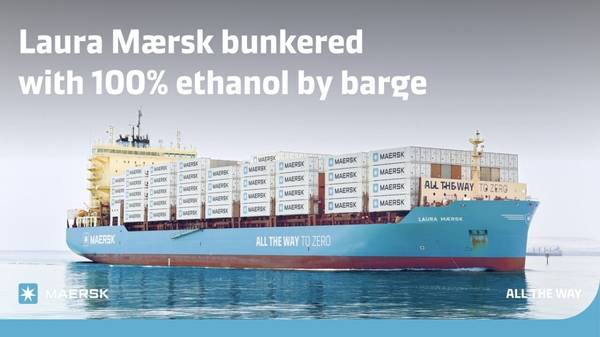
Laura Maersk ethanol bunkering graphic. Maersk conducts large-scale ethanol bunkering trial on Laura Maersk in Rotterdam  

A.P. Moller – Maersk has conducted a barge-delivered ethanol bunkering operation as part of ongoing fuel trials.

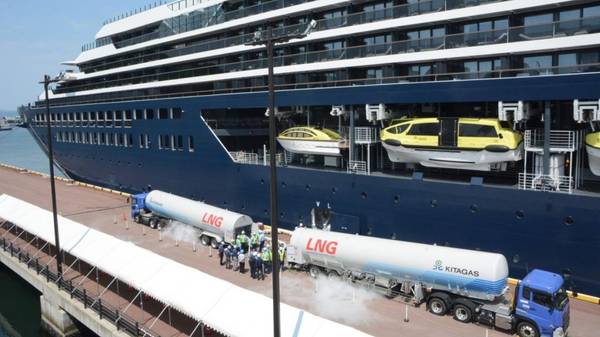
Luminara vessel truck-to-ship bunkering. MOL Techno-Trade completes first LNG bunkering for international cruise ship in Hokkaido  

Truck-to-ship LNG operation at Hakodate marks first such supply to an international cruise vessel in Hokkaido.

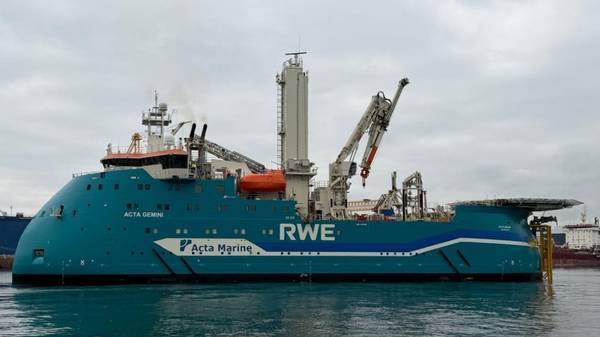
Acta Gemini vessel. Acta Marine takes delivery of methanol dual-fuel CSOV Acta Gemini for RWE wind farm charter  

The vessel will support operations at the Sofia Offshore Wind Farm at Dogger Bank.

Yeva Wood and Kirsten Møller Jørgensen. Malik Supply expands Danish team with bunker trader and finance hire  

Danish bunker supplier Malik Supply adds two new staff across its Fredericia and Aalborg offices.

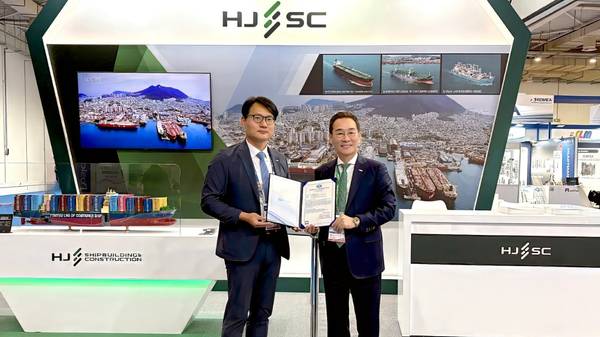
AiP award ceremony for a 10,000-teu biofuel-powered container ship. HJSC wins AiP for 10,000-teu biofuel-powered container ship design  

South Korean shipbuilder HJ Shipbuilding & Construction receives classification society approval for its biofuel vessel design at Posidonia.

Active vessel. Capital Clean Energy Carriers takes delivery of LNG carrier and dual-fuel gas carrier, secures five new charters  

Athens-based CCEC expands its fleet and pushes contracted revenue backlog to $3.1bn.

VPS logo. Fuel quality management for vessels in extended idle: Arabian Gulf, Gulf of Oman and adjacent anchorages | Rahul Choudhuri, VPS  

Managing fuel quality deterioration following the closure of the Strait of Hormuz.

Person signing a document. Agastya Green Fuels signs 250,000 t/yr e-methanol offtake deal with Sri Lanka’s SAR Group  

Indian producer and Sri Lankan maritime firm agree long-term green methanol supply partnership.


↑  Back to Top