This is a legacy page. Please click here to view the latest version.
Wed 3 Oct 2012, 08:02 GMT

Report calls for Arctic fuel oil ban


New report suggests that shipping should be banned from using heavy fuel oil in Arctic waters.


Press Release - Source: Transport & Environment

Shipping activities are set to increase as the melting of Arctic ice accelerates. This will lead to increased emissions which will exacerbate Arctic melting and pose a growing threat to the environment in the region.

In a new report, entitled 'Troubled Waters', sustainable transport campaigners Transport & Environment (T&E) sound the alarm making recommendations on how to reduce the impact of shipping in the Arctic and urging the EU to take serious action to ensure the unique Arctic ecosystem survives.

Recent research indicates the Arctic could be completely ice-free in the next thirty to forty years, and some scientists even suggest this may happen by the end of this decade. The lowest level of sea-ice ever recorded was registered this month.

Industry and governments see the melting ice as an opportunity for oil and gas extraction, mining, tourism and the development of other human activities. This would require more and more ships operating in Arctic waters with potentially catastrophic effects for that fragile ecosystem and a serious threat for the global environment.

"While Arctic melting is certainly an effect of climate change, we don't want it to be a cause of it as well”, says Antoine Kedzierski, T&E policy officer for shipping. “The vicious circle that makes the ice melt, allowing more ships in the Arctic and again causing ice melting must be broken."

The opening of Arctic sea routes - the Northwest passage along the coast of Canada and the Northern Sea route in Russia - has the potential to shorten distances between Asia, North America and Europe. These sea routes could attract a significant amount of international shipping traffic, even up to 10% of the total container trade between Asia and Europe by 2050, according to recent models.

In 2008, the international community recognised the possible threats that Arctic shipping could pose and commenced work on the so-called Polar Code, to mandate enhanced safety and environmental regulations for shipping activities in polar waters. The safety provisions of the draft code are well advanced but work on the environmental chapter has stalled. In a communication dated June 2012, the European Commission confirmed its commitment to address the growing issue of shipping emissions in the Arctic area, but failed to set out specific actions for the EU to pursue. So far a tangible commitment by the EU to ensure the inclusion of strong environmental provisions in the Polar Code is missing.

"The EU must take the lead in Arctic environmental protection. Talk is cheap but tough action is what’s needed”, Kedzierski added. “At the end of the day, the European Union is responsible for most of the shipping emissions in the Arctic, in that the majority of Arctic shipping departs or arrives at EU ports. Action on black carbon emissions from shipping is urgent and a strong polar code is vital to ensure the highest safety and environmental standards are observed. Tomorrow will be too late."

The report suggests three priority measures to reduce the impact of shipping in the Arctic:

* Cut shipping emissions of black carbon, which absorbs heat from the sun and is one of the main causes of ice melting in the region;

* Ban the use by shipping of heavy fuel oil in Arctic waters, as has already been implemented in the Antarctic. This oil produces more toxic air pollutants and in the case of an oil spill would have catastrophic effects.

* Require ships to operate at slower speeds. Such a measure would minimise the risk of accidents and bring huge safety and environmental benefits.


TMS Tankers logo. Lloyd’s Register delivers fleet-wide energy transition roadmap for TMS Tankers  

LR Advisory maps vessel-level compliance risk and decarbonisation pathways across the Greek owner’s tanker fleet.

Dr Prapisala Thepsithar, GCMD. GCMD shares biofuel assurance and green finance insights at Hong Kong shipping decarbonisation forum  

The Global Centre for Maritime Decarbonisation presented pilot findings on biofuels and energy efficiency financing.

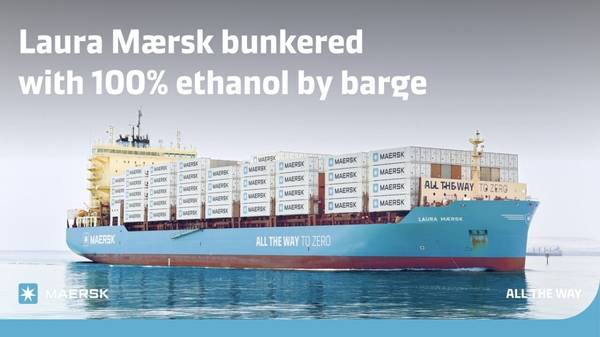
Laura Maersk ethanol bunkering graphic. Maersk conducts large-scale ethanol bunkering trial on Laura Maersk in Rotterdam  

A.P. Moller – Maersk has conducted a barge-delivered ethanol bunkering operation as part of ongoing fuel trials.

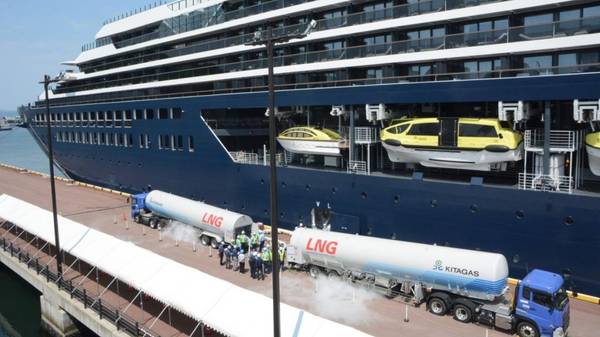
Luminara vessel truck-to-ship bunkering. MOL Techno-Trade completes first LNG bunkering for international cruise ship in Hokkaido  

Truck-to-ship LNG operation at Hakodate marks first such supply to an international cruise vessel in Hokkaido.

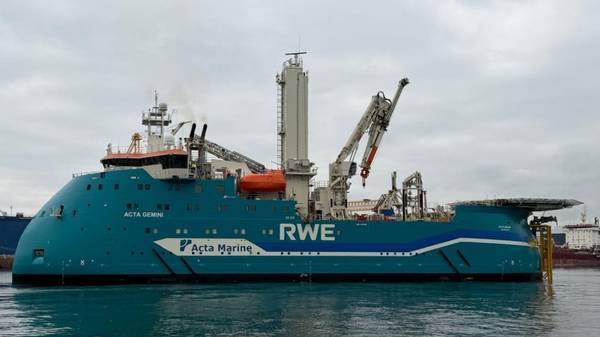
Acta Gemini vessel. Acta Marine takes delivery of methanol dual-fuel CSOV Acta Gemini for RWE wind farm charter  

The vessel will support operations at the Sofia Offshore Wind Farm at Dogger Bank.

Yeva Wood and Kirsten Møller Jørgensen. Malik Supply expands Danish team with bunker trader and finance hire  

Danish bunker supplier Malik Supply adds two new staff across its Fredericia and Aalborg offices.

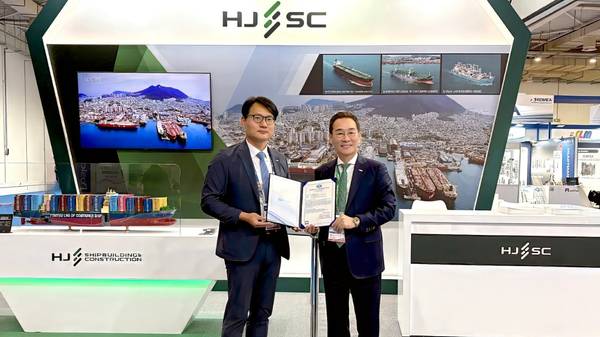
AiP award ceremony for a 10,000-teu biofuel-powered container ship. HJSC wins AiP for 10,000-teu biofuel-powered container ship design  

South Korean shipbuilder HJ Shipbuilding & Construction receives classification society approval for its biofuel vessel design at Posidonia.

Active vessel. Capital Clean Energy Carriers takes delivery of LNG carrier and dual-fuel gas carrier, secures five new charters  

Athens-based CCEC expands its fleet and pushes contracted revenue backlog to $3.1bn.

VPS logo. Fuel quality management for vessels in extended idle: Arabian Gulf, Gulf of Oman and adjacent anchorages | Rahul Choudhuri, VPS  

Managing fuel quality deterioration following the closure of the Strait of Hormuz.

Person signing a document. Agastya Green Fuels signs 250,000 t/yr e-methanol offtake deal with Sri Lanka’s SAR Group  

Indian producer and Sri Lankan maritime firm agree long-term green methanol supply partnership.


↑  Back to Top