This is a legacy page. Please click here to view the latest version.
Fri 6 Jul 2012, 16:12 GMT

New dual-fuel engine to be developed


New engine will be capable of using natural gas as well as conventional fuel oil.


Mitsubishi Heavy Industries, Ltd. (MHI) has begun developing the "UEC-LSGi," low-speed, dual-fuel, marine diesel engine capable of using not only conventional heavy oil but also natural gas as fuel.

The new engine will be added to the lineup of the Mitsubishi UEC Engine Series, the company's 2-stroke, low-speed marine diesel engine brand. Scheduled to be launched in 2015, MHI aims to reduce the economic and environmental burden on ship operators with the new engine.

MHI says it will engage in the development of new components for dual-fuel use, including a new direct fuel injection system and a gas-fuel supply and control system. The company aims to complete preliminary testing by the end of March 2014. It will then conduct verification tests for full-scale engines with dual-fuel use capability and launch an 11,000 – 18,000 kW class power output UEC-LSGi engine with a cylinder bore of 600mm.

MHI points out that the price of heavy oil used as fuel for low-speed, 2-stroke marine diesel is expected to rise in the future. In contrast, the price of natural gas has fluctuated in a relatively narrow range, and the supply of shale gas, a non-conventional type gas, has stabilized due to recent advances in production technology. As a result, the interest in the development of natural gas-powered low-speed, 2-stroke marine diesel engines has been steadily increasing.

In addition, the International Maritime Organization (IMO) has been implementing stricter regulations on sulphur content in fuel oil, with the aim to reduce SOx (sulphur oxides) contained in fuel emitted from ships.

The sulphur content of fuel for marine ships will be required to be less than 0.5% by 2020, considerably lower than the current figure of under 3.5%. Operators of ships using heavy oil fuel are therefore required either to use low sulphur fuel or install exhaust gas treatment systems. MHI points out that the development of low-speed marine diesel engines capable of using natural gas as fuel means that such measure would not be necessary as natural gas does not contain sulphur.

MHI says it has developed UEC-LSGi engines in response to recent market needs. The MHI engine uses the diffusional combustion method, where approximately 300 bar of high-pressure gas is injected in the air compressed by the cylinder stroke and ignited by the pilot flame by a very small amount of fuel oil.

The method is said to excel in response to changes in gas fuel composition and sudden changes in engine load, compared with the pre-mixed combustion method, where low-pressure gas is mixed with air and then compressed.

The UEC-LSGi will also be designed to operate with heavy fuel only to the 100% engine load, which will enable it to meet various operational requirements.

MHI said it will apply its EGR (exhaust gas recirculation) technology, currently in development, for the new engine to comply with IMO rules.

MHI is currently the only licensor of the low-speed, 2-stroke marine diesels in Japan. By combining a wide range of machinery and technologies for marine use, the company is promoting "Project MEET" (Mitsubishi Marine Energy & Environmental Technical Solution System), which is designed to develop solutions that comply with stricter environmental regulations.


TMS Tankers logo. Lloyd’s Register delivers fleet-wide energy transition roadmap for TMS Tankers  

LR Advisory maps vessel-level compliance risk and decarbonisation pathways across the Greek owner’s tanker fleet.

Dr Prapisala Thepsithar, GCMD. GCMD shares biofuel assurance and green finance insights at Hong Kong shipping decarbonisation forum  

The Global Centre for Maritime Decarbonisation presented pilot findings on biofuels and energy efficiency financing.

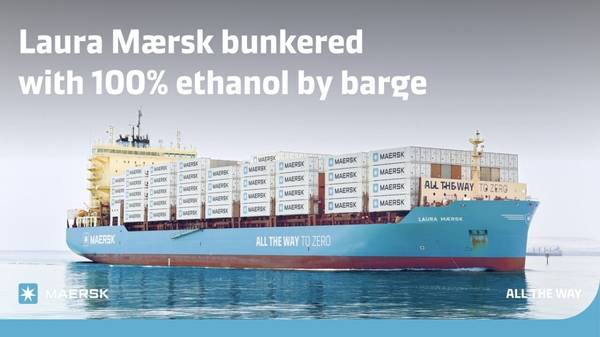
Laura Maersk ethanol bunkering graphic. Maersk conducts large-scale ethanol bunkering trial on Laura Maersk in Rotterdam  

A.P. Moller – Maersk has conducted a barge-delivered ethanol bunkering operation as part of ongoing fuel trials.

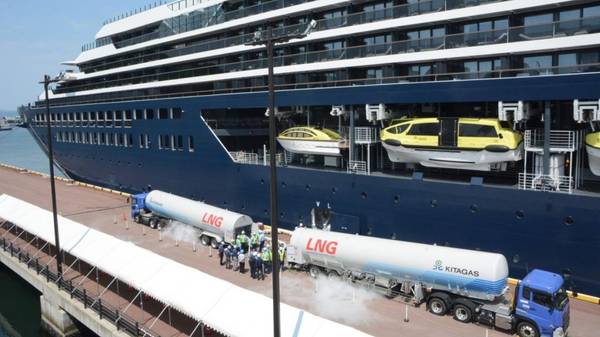
Luminara vessel truck-to-ship bunkering. MOL Techno-Trade completes first LNG bunkering for international cruise ship in Hokkaido  

Truck-to-ship LNG operation at Hakodate marks first such supply to an international cruise vessel in Hokkaido.

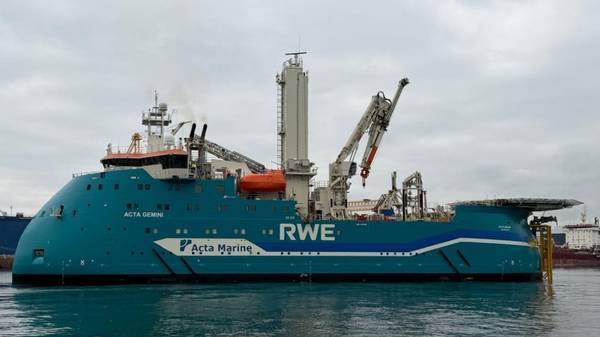
Acta Gemini vessel. Acta Marine takes delivery of methanol dual-fuel CSOV Acta Gemini for RWE wind farm charter  

The vessel will support operations at the Sofia Offshore Wind Farm at Dogger Bank.

Yeva Wood and Kirsten Møller Jørgensen. Malik Supply expands Danish team with bunker trader and finance hire  

Danish bunker supplier Malik Supply adds two new staff across its Fredericia and Aalborg offices.

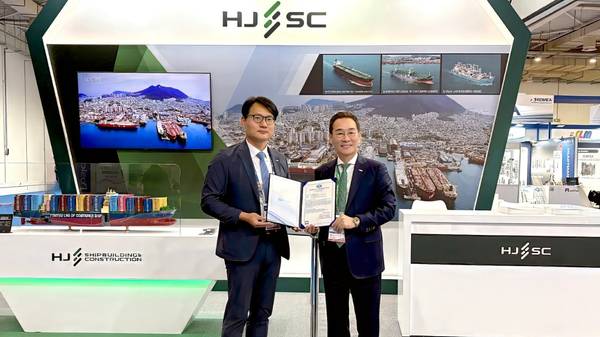
AiP award ceremony for a 10,000-teu biofuel-powered container ship. HJSC wins AiP for 10,000-teu biofuel-powered container ship design  

South Korean shipbuilder HJ Shipbuilding & Construction receives classification society approval for its biofuel vessel design at Posidonia.

Active vessel. Capital Clean Energy Carriers takes delivery of LNG carrier and dual-fuel gas carrier, secures five new charters  

Athens-based CCEC expands its fleet and pushes contracted revenue backlog to $3.1bn.

VPS logo. Fuel quality management for vessels in extended idle: Arabian Gulf, Gulf of Oman and adjacent anchorages | Rahul Choudhuri, VPS  

Managing fuel quality deterioration following the closure of the Strait of Hormuz.

Person signing a document. Agastya Green Fuels signs 250,000 t/yr e-methanol offtake deal with Sri Lanka’s SAR Group  

Indian producer and Sri Lankan maritime firm agree long-term green methanol supply partnership.


↑  Back to Top