This is a legacy page. Please click here to view the latest version.
Fri 18 May 2012, 13:44 GMT

Contract to equip ships with eco-friendly propulsion


Container ships to be fitted with propulsion and power generation system to reduce transit costs and emissions.


The Siemens Drive Technologies Division has been awarded a contract from Daewoo Shipbuilding and Marine Engineering (DSME) to implement eco-friendly propulsion and power generation system in container ships, which will aim to comprehensively reduce transit costs and achieve the best operational CO2 Index in accordance with the International Maritime Organization (IMO).

Apart from administering shaft generator motors and a power generation system, Siemens will also furnish the company with expertise in power management and Waste Heat Recovery Control (WHR). This approach will contribute towards depreciating the emission of significant air pollutants.

Headquartered in Seoul, South Korea, Daewoo Shipbuilding and Marine Engineering (DSME) is the second largest shipbuilder in the world. In February 2011 the company entered into a contract with A.P. Moller-Maersk Group (Maersk Line) to build 20 Triple-E class vessels.

The first generation of these green container ships will be the largest in the world and be able to carry 18,000 containers (TEU). The first ten vessels are scheduled to be delivered in 2013 and 2014 and the second set is expected to be delivered in 2014 and 2015.

The largest and greenest generation of these ocean carriers will have a twin propulsion system, with two slow running ultra-long stroke engines that drive separate propellers. Designed to sail with two 3 MW Shaft Generator Motors (SGM) that act as a variable consumer or power generation units, these ships will reach a high safety standard which will keep the mains alive in all conditions.

The power generation systems from Siemens Drive Technologies that are enabled with Waste Heat Recovery System (WHR) will play a major role in enhancing the propulsion of these ships and improve the environment friendly heat recovery methodology available on board.

Through the WHR the exhaust gas from the engine is captured and used to run the combined exhaust gas/steam turbine genset which generates electrical energy. With this energy the total power generation can be run with lesser fuel consumption and at the same time CO2 emissions are significantly reduced by approximately 12%.

The EcoMain Decision Support System from Siemens allows the vessel to optimize its energy balance and thereby improve the maintenance cycles that play a pertinent role in reducing energy utilization.

The umpteen numbers of on-board technical installations and systems contribute in providing data such as status, performance and efficiency. The EcoMain communications platform helps to utilize the commercial potential of the ship by optimizing this operation.

Through a wide range of on-board interfaces, EcoMain is able to collect data from as many technical systems as possible. This information is later prepared in a standardized format and made available on a common data platform.

Energy consumption, emissions, bunkering with liquids, maintenance schedules, document and knowledge management can be evaluated and subsequently optimized. The greatest potential for improvement is said to lie in energy consumption, environmental compatibility and maintenance intervals.

The project is scheduled to be completed in early 2015.


Capital's LNG-powered vessel. Chinese shipbuilder delivers 155,500-dwt LNG dual-fuel crude oil tanker  

Vessel handed over to Capital Ship Management Corp in China.

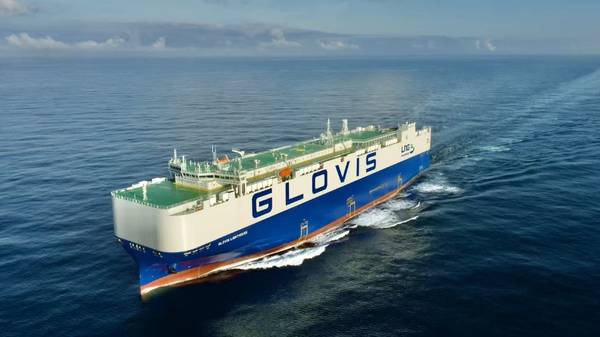
Glovis Lighthouse vessel. Seaspan takes delivery of first 10,800-ceu dual-fuel LNG car carrier  

Glovis Lighthouse enters service as one of a handful of vessels globally to exceed 10,000 CEU capacity.

Port of Rotterdam, Maersk, Core Power and Lloyd's Register logos. Rotterdam study maps pathway for nuclear-powered commercial ship port calls  

A joint study by Lloyd's Register, the Port of Rotterdam, Core Power and Maersk examines the feasibility of nuclear vessel port calls.

Hakata waterfront. Kinkai Yusen conducts first biofuel demonstration on domestic ro-ro vessel at Hakata Port  

Japanese shipping company to trial B24 biofuel blend aboard the vessel Nanotsu on 16 June.

Norwegian Energy Trading (NET) AS logo. Norwegian Energy Trading renews ISCC certification for biofuel trading  

Norwegian bunker trader says renewal reflects growing biofuel volumes and commitment to verifiable sustainability standards.

Ivy Cove vessel. Jiangnan delivers VLAC with LPG dual-fuel main engine  

Vessel is claimed to be the world’s first 93,000 cbm very large ammonia carrier.

BIMCO logo. BIMCO adopts biofuel clause for time charter parties  

Shipping body has introduced a new contractual clause to govern the use of biofuels under time charter agreements.

Prince Madog hydrogen fuel cell retrofit receives LR certification. UK research vessel Prince Madog wins LR certification for hydrogen fuel cell retrofit  

Lloyd’s Register certifies what is claimed to be the first sea-going, manned hydrogen retrofit of its kind.

World Fuel logo. World Fuel seeks marine lube operations and sales executive in Greece  

US firm is recruiting for a commercial role focused on marine lubricants, based out of its Glyfada office.

ECSA Parliamentary Breakfast event. European Shipowners calls for fuel supplier mandates and ETS revenue investment ahead of policy revision  

Industry body urges EU policymakers to redirect carbon revenues into clean marine fuel production.


↑  Back to Top