This is a legacy page. Please click here to view the latest version.
Mon 30 Jan 2012, 08:23 GMT

Event examines LNG, efficiency and emissions reduction


Forum looks at the task of reducing shipping's environmental impact.


Germanischer Lloyd(GL)'s Exchange Forum on "Environmental Updates for the Maritime Industry" looked at the task of reducing the maritime industry's environmental impact.

More than 150 representatives from the maritime industry, shipping companies, ship management agencies, maritime journalists and stakeholders met to hear presentations from GL experts and discuss the drivers, implementation and commercial implications of the operational and design challenges facing the maritime industry as it seeks to reduce its environmental footprint, while maintaining a solid commercial footing.

Mr. Athanasios Reisopoulos, Area Manager Southern Europe welcomed the guests and introduced the speakers. Mr. Dimitrios Korkodilos, Managing Director of Andriaki Shipping Co. Ltd and Chairman of the GL Hellenic Technical Committee was moderator of the Forum.

In his opening speech, Mr. Korkodilos said: "The introduction of new environmental regulations that affect ship design and operational aspects has been the main incentive for GL to organize this Forum, together with keeping the Greek shipping community updated on significant developments as well as available tools".

In his presentation, Dr Pierre C. Sames, GL Senior Vice President Strategic and head of Research & Development, laid out some of the results which have emerged from a GL joint study looking at the costs and benefits of LNG fuelled vessels.

Examining a range of containerships from 2.500 to 18.000 TEU, the study, conducted in cooperation with leading engine manufacturer MAN Diesel & Turbo, models the cost and payback times of LNG and scrubber systems, calculating a variety of scenarios based on fuel price, investment costs, use of waste heat recovery systems, and route exposure to emission control areas (ECAs).

For vessels operating predominately in ECAs (65%), Dr Sames noted that the study suggests that the payback on an LNG system was only two to three years, while for smaller vessels (2.500TEU) the study demonstrates that at a price of 1$/mmBTU less than HFO, LNG becomes the preferred option.

Innovation to reduce the environmental impact of shipping has been spurred by a series of new regulations. The 62nd session of the Marine Environment Protection Committee (MEPC) of International Maritime Organization (IMO), in particular brought significant changes to the regulatory landscape in shipping with the Energy Efficiency Design Index (EEDI) and the Shipboard Energy Efficiency Management Plan (SEEMP).

In his presentation, Mr. Athanasios Reisopoulos, GL's Area Manager Southern Europe, examined how recent emission rule changes would challenge the shipping industry. Focusing on the main air pollutants in the exhaust gases of engines, he looked at the measures and technologies used in order to reduce emissions from shipping.

Having analyzed the effect of the main parameters in the EEDI formula he outlined a number of examples of technical measures aimed at increasing the energy efficiency of ships and reducing CO2 emissions. Mr. Reisopoulos also presented GL's zero emission container feeder vessel design concept, powered by liquid hydrogen created by using surplus offshore wind generation capacity.

Irrespective of which fuel a vessel may be using, in both new designs and ships in operation, significant gains in the environmental impact of shipping can be made by maximising efficiencies. Dr. Ing. Volker Bertram, from GL's Maritime Solutions unit FutureShip, presented a number of options whereby owners, operators and designers can make use of the advances in integrating computer aided design and computational fluid dynamics to improve vessel efficiency, reduce fuel use, thereby limiting not only emissions but costs.

Mr. Aristidis Efstathiou, Business Development Manager Area Southern Europe, concluded the Forum with his presentations on "Guidelines for compiling a Shipboard Energy Efficiency Management Plan".

Mr. Efstathiou, highlighted the fact that the SEEMP will soon become mandatory for all vessels (larger than 400 GT) at their first IAPP renewal or intermediate survey after 01 January 2013. In order to support its clients, he pointed out that GL has developed a clear guidance on the form and implementation of the SEEMP. He showed how GL's user friendly standardized templates and energy management expertise could make it easier for a vessel's operators to create a SEEMP, either as a stand alone document or as an integral part of a broader management system.


TMS Tankers logo. Lloyd’s Register delivers fleet-wide energy transition roadmap for TMS Tankers  

LR Advisory maps vessel-level compliance risk and decarbonisation pathways across the Greek owner’s tanker fleet.

Dr Prapisala Thepsithar, GCMD. GCMD shares biofuel assurance and green finance insights at Hong Kong shipping decarbonisation forum  

The Global Centre for Maritime Decarbonisation presented pilot findings on biofuels and energy efficiency financing.

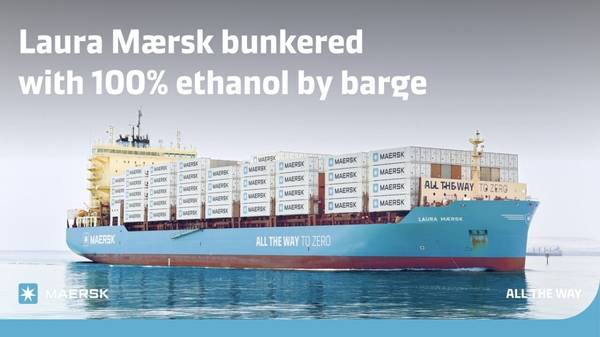
Laura Maersk ethanol bunkering graphic. Maersk conducts large-scale ethanol bunkering trial on Laura Maersk in Rotterdam  

A.P. Moller – Maersk has conducted a barge-delivered ethanol bunkering operation as part of ongoing fuel trials.

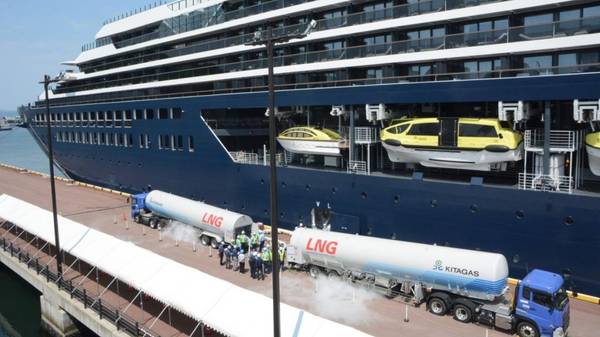
Luminara vessel truck-to-ship bunkering. MOL Techno-Trade completes first LNG bunkering for international cruise ship in Hokkaido  

Truck-to-ship LNG operation at Hakodate marks first such supply to an international cruise vessel in Hokkaido.

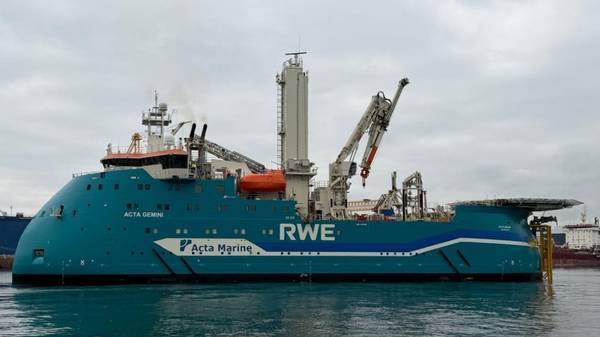
Acta Gemini vessel. Acta Marine takes delivery of methanol dual-fuel CSOV Acta Gemini for RWE wind farm charter  

The vessel will support operations at the Sofia Offshore Wind Farm at Dogger Bank.

Yeva Wood and Kirsten Møller Jørgensen. Malik Supply expands Danish team with bunker trader and finance hire  

Danish bunker supplier Malik Supply adds two new staff across its Fredericia and Aalborg offices.

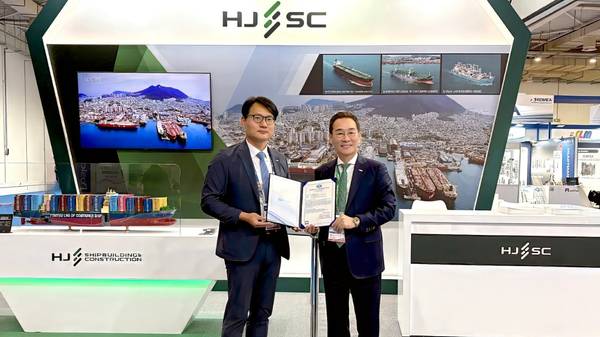
AiP award ceremony for a 10,000-teu biofuel-powered container ship. HJSC wins AiP for 10,000-teu biofuel-powered container ship design  

South Korean shipbuilder HJ Shipbuilding & Construction receives classification society approval for its biofuel vessel design at Posidonia.

Active vessel. Capital Clean Energy Carriers takes delivery of LNG carrier and dual-fuel gas carrier, secures five new charters  

Athens-based CCEC expands its fleet and pushes contracted revenue backlog to $3.1bn.

VPS logo. Fuel quality management for vessels in extended idle: Arabian Gulf, Gulf of Oman and adjacent anchorages | Rahul Choudhuri, VPS  

Managing fuel quality deterioration following the closure of the Strait of Hormuz.

Person signing a document. Agastya Green Fuels signs 250,000 t/yr e-methanol offtake deal with Sri Lanka’s SAR Group  

Indian producer and Sri Lankan maritime firm agree long-term green methanol supply partnership.


↑  Back to Top