This is a legacy page. Please click here to view the latest version.
Tue 8 Nov 2011, 10:02 GMT

Ust-Luga to load first Russian crude cargo


State-owned oil firm offers 100,000-tonne parcel for loading at the end of November.


Russian state-owned company Rosneft is reported to have offered a 100,000-tonne Urals URL-NWE-E crude cargo for loading in Ust-Luga at the end of November- early December.

The tender, which closes on November 11th, is said to be the first crude oil cargo that Russia will load at Ust-Luga's new Baltic terminal. Ust-Luga is the final destination of the second phase of the Baltic Pipeline System (BPS-2).

Fuel oil

Ust-Luga's new oil product terminal was launched in test mode in January 2011. The first vessel to load fuel oil from the facility was the product carrier SCF Neva, owned by Sovcomflot, on 31st January 2011.

The ice class 1A SCF Neva, loaded a cargo of 44,000 tonnes of fuel oil and departed from Ust-Luga heading for the port of Tallinn, Estonia.

Commenting on the first loading operation at the time, Andrey Babahanov, director of fleet operations for OAO Sovcomflot, said: "Successful loading of fuel oil aboard the tanker SCF Neva on 31 January is a trial operation. In close coordination with the cargo owners and the port operators, we needed to check the functioning of all services and systems of Russia's new oil products terminal. The data obtained during the handling of the tanker SCF Neva will be taken into account when the loading of large tankers is arranged in the port of Ust-Luga."

Situated on the Luga River, approximately 110 kilometres west of St. Petersburg, Ust-Luga is located practically on the border between the Russian Federation and the European Union.

The deep water area of the port (17 metres) together with the 3,700-metre approach canal make Ust-Luga port the only Russian port on the Baltic Sea capable of admitting dry-cargo vessels with a deadweight of up to 75,000 tonnes and liquid cargo carriers with a deadweight of up to 120,000 tonnes.

The port is expected to play an important role in the transportation of oil products as it is one of the few Russian ports capable of providing access to large deadweight vessels to export processed oil products, thus removing the dependence on foreign export terminals.

There are currently six terminals operating in Ust-Luga port: a coal transshipment terminal, the Universal transloading complex, a terminal for technical sulphur transshipment, a motor-railway ferry complex, the actively developing Yug-2 Multipurpose transloading complex and the 'Factor’ timber terminal.

The new oil export terminal is operated by JSC Rosneftbunker, a business unit of Gunvor Group. In November 2010, Rosneftbunker signed a credit line agreement with Vnesheconombank worth US$200 million to complete the financing of the Ust-Luga liquid bulk cargo facility.

The terminal’s projected capacity is 30 million tonnes of exported oil products a year.


TMS Tankers logo. Lloyd’s Register delivers fleet-wide energy transition roadmap for TMS Tankers  

LR Advisory maps vessel-level compliance risk and decarbonisation pathways across the Greek owner’s tanker fleet.

Dr Prapisala Thepsithar, GCMD. GCMD shares biofuel assurance and green finance insights at Hong Kong shipping decarbonisation forum  

The Global Centre for Maritime Decarbonisation presented pilot findings on biofuels and energy efficiency financing.

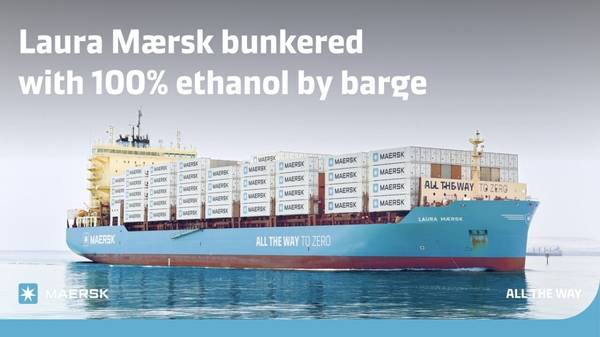
Laura Maersk ethanol bunkering graphic. Maersk conducts large-scale ethanol bunkering trial on Laura Maersk in Rotterdam  

A.P. Moller – Maersk has conducted a barge-delivered ethanol bunkering operation as part of ongoing fuel trials.

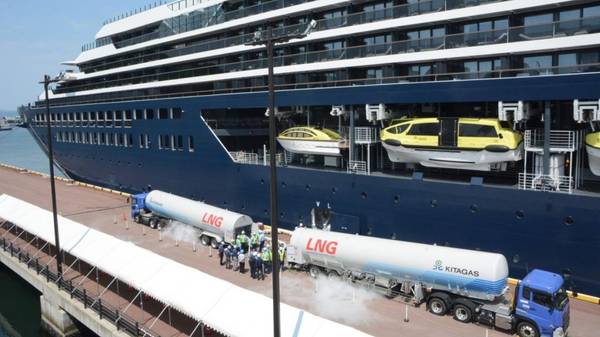
Luminara vessel truck-to-ship bunkering. MOL Techno-Trade completes first LNG bunkering for international cruise ship in Hokkaido  

Truck-to-ship LNG operation at Hakodate marks first such supply to an international cruise vessel in Hokkaido.

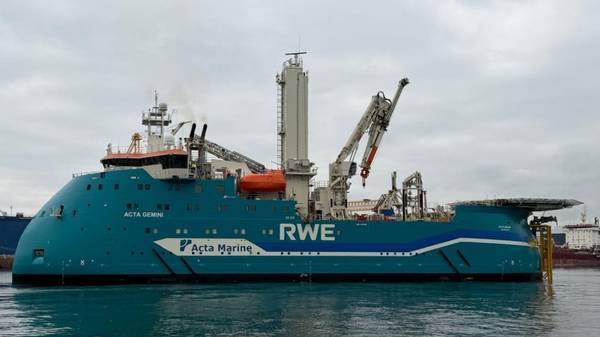
Acta Gemini vessel. Acta Marine takes delivery of methanol dual-fuel CSOV Acta Gemini for RWE wind farm charter  

The vessel will support operations at the Sofia Offshore Wind Farm at Dogger Bank.

Yeva Wood and Kirsten Møller Jørgensen. Malik Supply expands Danish team with bunker trader and finance hire  

Danish bunker supplier Malik Supply adds two new staff across its Fredericia and Aalborg offices.

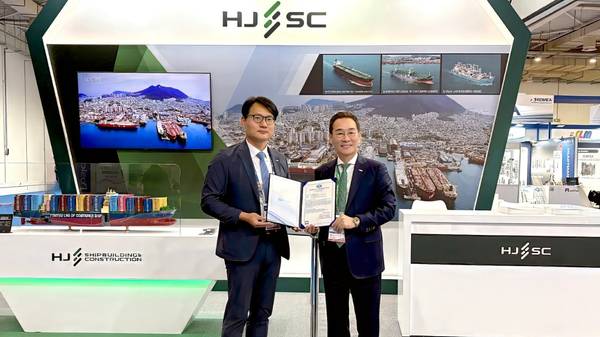
AiP award ceremony for a 10,000-teu biofuel-powered container ship. HJSC wins AiP for 10,000-teu biofuel-powered container ship design  

South Korean shipbuilder HJ Shipbuilding & Construction receives classification society approval for its biofuel vessel design at Posidonia.

Active vessel. Capital Clean Energy Carriers takes delivery of LNG carrier and dual-fuel gas carrier, secures five new charters  

Athens-based CCEC expands its fleet and pushes contracted revenue backlog to $3.1bn.

VPS logo. Fuel quality management for vessels in extended idle: Arabian Gulf, Gulf of Oman and adjacent anchorages | Rahul Choudhuri, VPS  

Managing fuel quality deterioration following the closure of the Strait of Hormuz.

Person signing a document. Agastya Green Fuels signs 250,000 t/yr e-methanol offtake deal with Sri Lanka’s SAR Group  

Indian producer and Sri Lankan maritime firm agree long-term green methanol supply partnership.


↑  Back to Top