This is a legacy page. Please click here to view the latest version.
Mon 7 Nov 2011, 11:22 GMT

IBIA to engage in LNG issues


Association says it is to 'become more closely engaged in LNG matters'.


The International Bunker Industry Association's (IBIA) board has taken a formal decision to "become more closely engaged in LNG matters". The move was announced at last week's IBIA's Annual Convention, held in Barcelona, by its acting chief executive Trevor Harrison. He told delegates that the association would become more involved in the ongoing discussions on LNG as a fuel at the International Maritime Organization (IMO).

The potential of LNG as a fuel for merchant ships received considerable attention. Several speakers referred to the issue while addressing industry concerns about the 2015 implementation of the 0.1% sulphur content cap in bunkers used within Emission Control Areas (ECAs). In addition one session was entirely devoted to the prospects for widespread use of LNG.

While there were some cautionary voices, the focus on LNG reflected IBIA's considered view that now is the time for the bunker industry to become involved in the development of gas powered ships. IBIA board member Nigel Draffin is to work closely with the Society of International Gas Tanker and Terminal Operators (SIGTTO) to provide input into the development of IMO's Code for Gas as Ship Fuel (IGF-Code).

The IBIA Annual Convention 2011 at Barcelona's Hotel Rey Juan Carlos I did however cover many other topics of concern to both bunker suppliers and buyers. In total, 170 delegates registered this year to take part in a programme spread out over three days.

IBIA Chairman Bob Lintott remarked: "This has been a highly successful convention. I am especially pleased that there has been lively debate from the first to the last sessions."

While the debates were good natured, several of the issues covered were controversial, right from the keynote speeches, which put forward opposing views on the impact of the 2015 ECA regime.

Manuel Carlier, director general of the Spanish Shipowners’ Association (ANAVE), and a director of the European Community Shipowners' Association (ECSA), expressed owners' concerns. Arnaud Leroy, Senior Project Officer, European Maritime Safety Agency, and working with the European Commission (ECs) on the Marine Fuels, countered with the case for continuing with its proposals which in some respects exceed IMO ECA requirements.

Carlier said that it was likely that bunker costs for ship operators would increase by between 70 and 100 percent while operating in ECAs, and that there would be a total increase in operating costs of 25 to 40 percent. He asked: “Can this cost be passed to customers in the freight market?”

Leroy emphasized the need to enforce regulations and also pointed to claimed environmental and health benefits of imposing stricter sulphur limits. He also noted uncertainties surrounding the impact of the 0.1 percent sulphur cap. He was particularly doubtful about predictions of a modal shift away from shipping.

He said: “Overall, the various studies offer differing conclusions as to whether a modal shift is imminent, which may in part, but not entirely, be explained by the difference in routes selected for their analyses. While the Swedish, German and ECSA studies in their high price scenario mainly foresee a substantial shift from short sea shipping to land-based modes, the COMPASS study acknowledges that there will be a cost increase and a change in transport volumes, but concludes that 'it is not expected that changes in entry/exit points or shifts in modal balance (SSS to land) will take place'.”

This sanguine view was certainly not shared by Interferry's executive director of EU and IMO Affairs, Johan Roos, who in a later presentation strongly challenged the suggestion that there might not be a modal shift to land-based transport once the 0.1 percent cap was in force. He said that ferry operators were “baffled” by the European Commission's stance. He asked: “Who cannot see that a 30 percent ticket price increase will not cause a modal back-shift?”


TMS Tankers logo. Lloyd’s Register delivers fleet-wide energy transition roadmap for TMS Tankers  

LR Advisory maps vessel-level compliance risk and decarbonisation pathways across the Greek owner’s tanker fleet.

Dr Prapisala Thepsithar, GCMD. GCMD shares biofuel assurance and green finance insights at Hong Kong shipping decarbonisation forum  

The Global Centre for Maritime Decarbonisation presented pilot findings on biofuels and energy efficiency financing.

Laura Maersk ethanol bunkering graphic. Maersk conducts large-scale ethanol bunkering trial on Laura Maersk in Rotterdam  

A.P. Moller – Maersk has conducted a barge-delivered ethanol bunkering operation as part of ongoing fuel trials.

Luminara vessel truck-to-ship bunkering. MOL Techno-Trade completes first LNG bunkering for international cruise ship in Hokkaido  

Truck-to-ship LNG operation at Hakodate marks first such supply to an international cruise vessel in Hokkaido.

Acta Gemini vessel. Acta Marine takes delivery of methanol dual-fuel CSOV Acta Gemini for RWE wind farm charter  

The vessel will support operations at the Sofia Offshore Wind Farm at Dogger Bank.

Yeva Wood and Kirsten Møller Jørgensen. Malik Supply expands Danish team with bunker trader and finance hire  

Danish bunker supplier Malik Supply adds two new staff across its Fredericia and Aalborg offices.

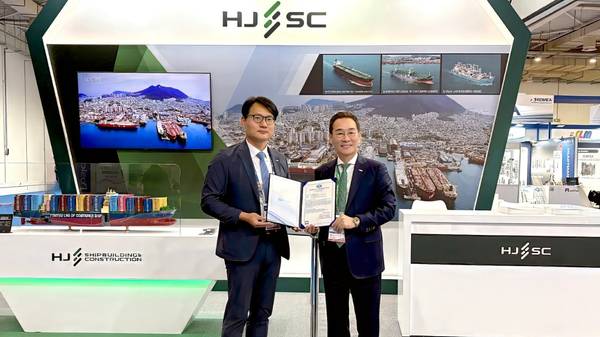
AiP award ceremony for a 10,000-teu biofuel-powered container ship. HJSC wins AiP for 10,000-teu biofuel-powered container ship design  

South Korean shipbuilder HJ Shipbuilding & Construction receives classification society approval for its biofuel vessel design at Posidonia.

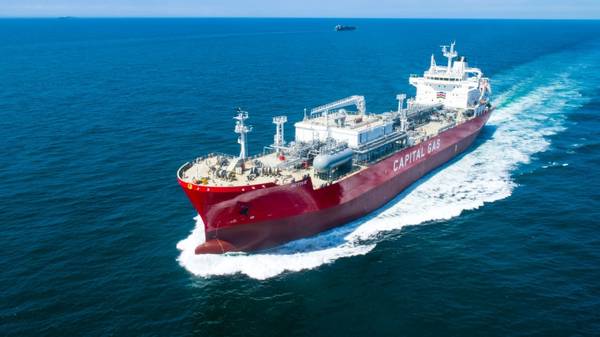
Active vessel. Capital Clean Energy Carriers takes delivery of LNG carrier and dual-fuel gas carrier, secures five new charters  

Athens-based CCEC expands its fleet and pushes contracted revenue backlog to $3.1bn.

VPS logo. Fuel quality management for vessels in extended idle: Arabian Gulf, Gulf of Oman and adjacent anchorages | Rahul Choudhuri, VPS  

Managing fuel quality deterioration following the closure of the Strait of Hormuz.

Person signing a document. Agastya Green Fuels signs 250,000 t/yr e-methanol offtake deal with Sri Lanka’s SAR Group  

Indian producer and Sri Lankan maritime firm agree long-term green methanol supply partnership.


↑  Back to Top