This is a legacy page. Please click here to view the latest version.
Mon 27 Sep 2010, 07:19 GMT

UK CO2 emissions 'up to six times higher'


Study says CO2 emissions from UK shipping could be up to six times higher than current estimates.


Carbon dioxide (CO2) emissions produced by UK shipping could be up to six times higher than currently calculated, according to new research from The University of Manchester.

According to a study, prepared by researchers at the Tyndall Centre for Climate Change Research and the Sustainable Consumption Institute, the global shipping industry, despite being traditionally viewed as one of the most energy efficient means of transport, releases increasing amounts of harmful emissions into the atmosphere every year.

"As the shipping industry's emissions are predicted to continue to grow in the future, the UK will fail to meet its commitment to avoid dangerous climate change if additional cuts are not made to other sectors," the University of Manchester said in a statement.

"Indeed, as the rest of the world strives to avoid dangerous climate change, the global shipping industry's carbon emissions could account for almost all of the world's emissions by 2050 if current rates of growth 'fuelled by globalisation' continue," the university added.

The new report refocuses attention from the global efforts to reduce shipping emissions down to a national scale, and questions if the UK has a role in influencing its share of the CO2 emissions produced.

The dramatic change in the estimate of CO2 from UK shipping is based on the fact that, up until now, the UK's emissions are calculated using international bunker fuel sales - that is fuel purchased at UK ports.

But, according to the report, this is a misleading statistic as the majority of vessels refuel at nearby ports, such as Rotterdam, where prices are more competitive.

Scientists at The University of Manchester said that the level of CO2 emissions released by commercial ships involved with UK trade provides a fairer representation of UK shipping emissions than fuel sold.

According to the University of Manchster, if this representation were to be adopted, the UK's CO2 emissions allocated to shipping would increase significantly and possibly to a higher level than the amount of CO2 released by UK aviation.

Greenhouse gas emissions from international shipping activity currently account for around 3% of total global emissions. On the basis of its international bunker fuel sales, UK international shipping emissions for 2006 were around seven megatonnes of carbon dioxide (MtCO2).

However the report claims it is fairer to calculate UK emissions on the basis of shipped goods exported from or imported into the UK. On this basis, UK emissions rise considerably to 31 or 42 MtCO2 respectively.

Dr Paul Gilbert, Lecturer in Climate Change at the Tyndall Centre for Climate Change Research, said: "Tackling climate change requires urgent emission reductions across all sectors."

The report explores the potential for the UK to take national measures to reduce its share of shipping emissions to complement any future global or EU action.

The report also examines the role the shipping sector should play in overall emissions reduction. Dangerous climate change is generally accepted to be an increase in global average temperature of greater than 2ºC above pre-industrial levels.

"To have a reasonable chance of avoiding dangerous climate change, global emissions must fall steeply out to 2050. Indeed, the report suggests that the UK should, in advance of EU or global action, consider a unilateral adjustment to its carbon budgets to reflect its share of international shipping emissions," the University of Manchester said.

The report concludes that action is required in both the short and medium-term to significantly reduce shipping emissions below projected levels.

Commenting on the study, John Aitken, Secretary General of Shipping Emissions Abatement and Trading, said: "This timely and thought-provoking report highlights many of the difficulties faced by those interested in reducing GHG emissions from shipping.

"It is clear a global approach is most preferable. If the further research mentioned in the report identifies an apportionment methodology for 'countries' which can be agreed upon by many nation states, it would greatly assist the development of a global strategy."


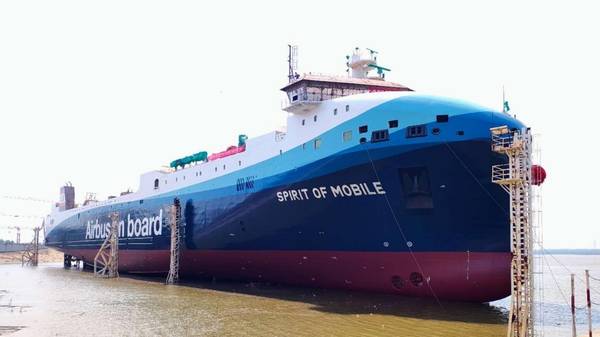
Spirit of Mobile vessel. LD Armateurs launches second low-emission ro-ro vessel for Airbus charter fleet  

French shipowner LD Armateurs has launched its second methanol-capable, rotor sail-equipped ro-ro vessel at a Chinese shipyard.

Verde Marine Energy (VME) logo. Verde Marine Energy renews ISCC EU certification and achieves RED III compliance  

Dutch bunker supplier Verde Marine Energy says it is now fully compliant with the EU's updated renewable energy rules.

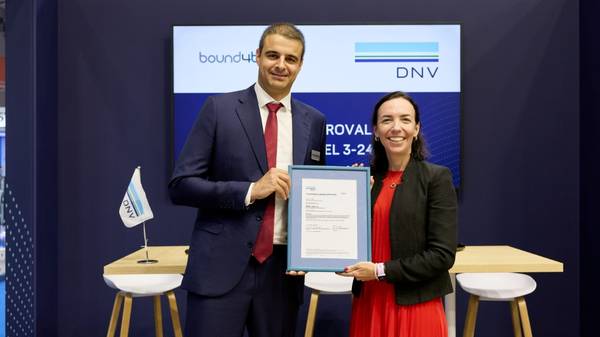
bound4blue receives DNV Type Approval. Bound4blue wins DNV type approval for its largest installed eSAIL suction sail  

DNV certification of the Model 3-24 eSAIL is said to support wider adoption of wind-assisted propulsion.

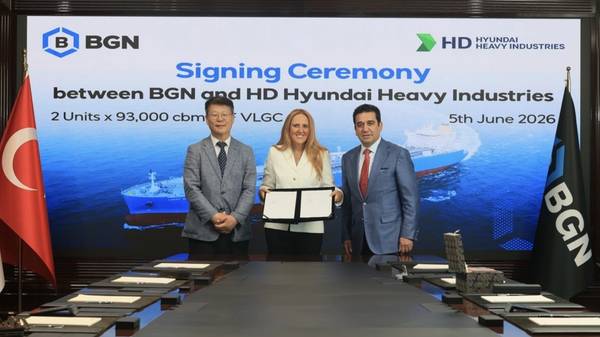
BGN and HD HHI signing ceremony. BGN expands owned LPG fleet with two additional VLGCs from HD HHI  

BGN signs a new shipbuilding contract, bringing its owned VLGC fleet to 19 vessels.

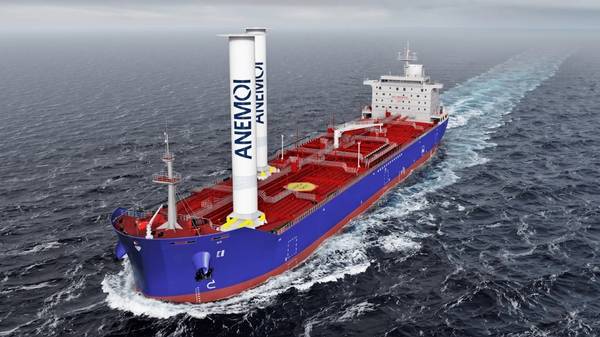
Medium-range (MR) tanker with Rotor Sails render. Anemoi and partners win DNV approval in principle for rotor sail integration on MR tankers  

DNV issues approval in principle for EX-rated rotor sail design on medium-range product tankers.

TMS Tankers logo. Lloyd’s Register delivers fleet-wide energy transition roadmap for TMS Tankers  

LR Advisory maps vessel-level compliance risk and decarbonisation pathways across the Greek owner’s tanker fleet.

Dr Prapisala Thepsithar, GCMD. GCMD shares biofuel assurance and green finance insights at Hong Kong shipping decarbonisation forum  

The Global Centre for Maritime Decarbonisation presented pilot findings on biofuels and energy efficiency financing.

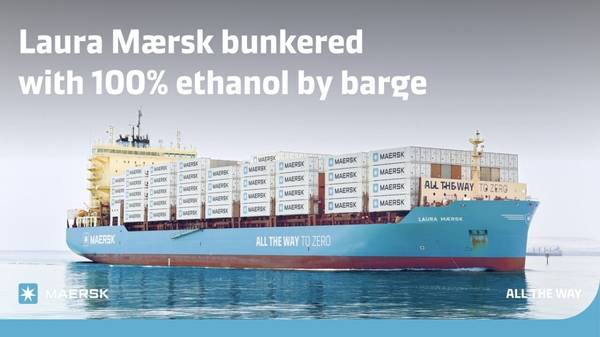
Laura Maersk ethanol bunkering graphic. Maersk conducts large-scale ethanol bunkering trial on Laura Maersk in Rotterdam  

A.P. Moller – Maersk has conducted a barge-delivered ethanol bunkering operation as part of ongoing fuel trials.

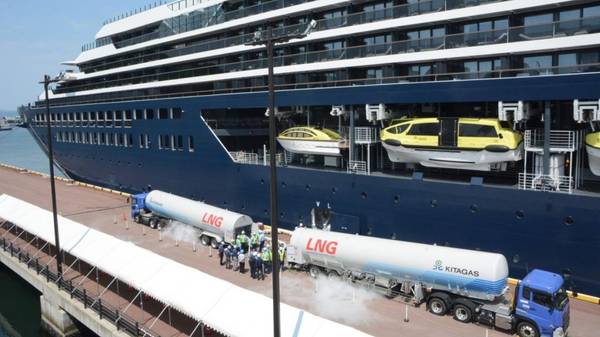
Luminara vessel truck-to-ship bunkering. MOL Techno-Trade completes first LNG bunkering for international cruise ship in Hokkaido  

Truck-to-ship LNG operation at Hakodate marks first such supply to an international cruise vessel in Hokkaido.

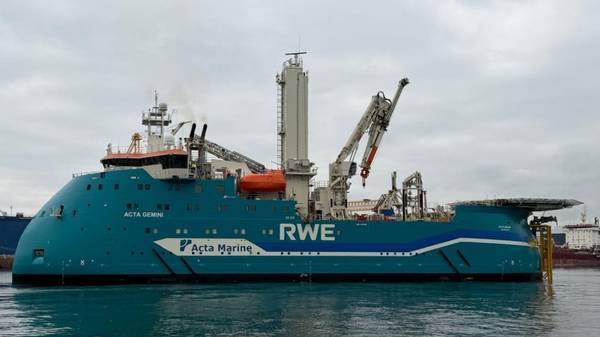
Acta Gemini vessel. Acta Marine takes delivery of methanol dual-fuel CSOV Acta Gemini for RWE wind farm charter  

The vessel will support operations at the Sofia Offshore Wind Farm at Dogger Bank.


↑  Back to Top


 Recommended