This is a legacy page. Please click here to view the latest version.
Wed 22 Sep 2010, 13:33 GMT

New propeller range cuts fuel costs


New range of propellers is said to lower fuel consumption and cut exhaust gas emissions.


MAN Diesel & Turbo has launched its new VBS Mk 5 range of propellers, which is said to lower fuel consumption and cut exhaust gas emissions.

The new VBS Mk 5 propellers consist of a complete range – a total of 20 new hub sizes which are able to handle outputs from 1,000 and up to 40,000 kW. The new range spans from hub diameters of 600 mm and up to 2,150 mm – distributed on three series designs: S (small, 600-940 mm), M (medium, 1,020-1,550 mm) and L (large, 1,640-2,150 mm).

Efficiency increase

The major benefit of the VBS Mk 5 propeller is said to be an increased efficiency of up to 2%. The operational advantages of increased propeller efficiency are then translated into savings via lower fuel consumption and reduced exhaust gas emissions. The increased efficiency may alternatively be exploited as higher thrust for increased ship speed or higher bollard pull for a given engine power.

Green propelling

"The flexibility of covering efficiently any propulsion power requirement and CP Propeller application is the overall product target for MAN Diesel & Turbo. Propeller and propulsion efficiency also carries the 'green aspect', as every gram of fuel saved by means of higher propulsive efficiency, results in a reduced impact on the environment," MAN Diesel said.

"Additionally, the new propellers have a green light for environmentally friendly lubes, as they are prepared for biodegradable servo and lube oils. The servo oil and lube oil systems are adapted to both biodegradable oils and ordinary mineral oils, and switching from one type to the other is possible without any requirements for component changes," the company added.

Hydrodynamic refinements

The shape of the new hub is flow-optimised at its afterpart and reduced in size, resulting in a lower hub/propeller diameter ratio and a reduced drag. The flow optimisation includes a new and more streamlined shape of the hub and blade foot integration, resulting in a blade foot, which is completely flush with the hub contour.

A design for demanding applications

The optimised hub/blade interface allows for higher propulsion power densities. Higher cavitation inception speed is allowed for the propelling of high-speed vessels. A reduced risk of root cavitation permits higher blade loading for demanding propulsion applications.

Compact, robust and lightweight

The new hub design is simplified with approximately 40 percent fewer parts. The material fatigue levels are calculated for a 30 year lifetime, considering all possible external loadings in service. Furthermore, the overall weight has been reduced for less impact on e.g. strut and stern tube bearing loads.

The new propellers have been developed with a number of inherent service, inspection and exchange features – including the unique possibility of inspecting/repairing all of the hub interior parts with the propellers placed in situ:

* The propeller blades can be exchanged inside a propeller nozzle – without pulling the shaft.

* The hub is completely serviceable with the propeller installed in the ship. No need for shaft/coupling flange dismantling, shaft pulling and removal of the rudder.

* Possibility of check/inspection and replacement of internal parts without removing the propeller blades.

* Hub bearing surfaces are exchangeable.

* The hub and shaft flange connection is designed for easy inspection during docking and survey.

* Maintenance concepts for hub wearing parts are available.

* Underwater exchange of propeller blades is possible.

Oil distribution unit for pitch control

A new compact ODF oil distribution unit – for gearbox mounting – has been developed for the VBS Mk 5 propellers. A short and very robust unit with 20% fewer parts compared with today's ordinary ODF designs. The installation length has been reduced by 15% – for the benefit of very short and compact engine-gear-propeller installations.


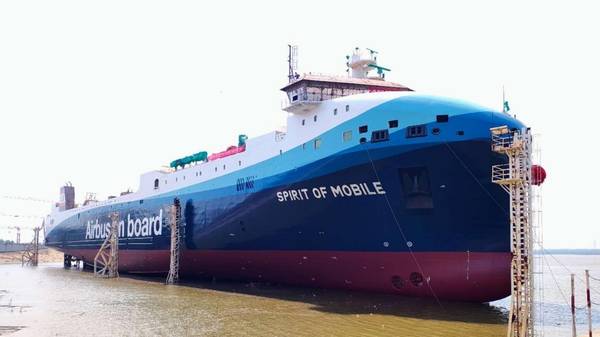
Spirit of Mobile vessel. LD Armateurs launches second low-emission ro-ro vessel for Airbus charter fleet  

French shipowner LD Armateurs has launched its second methanol-capable, rotor sail-equipped ro-ro vessel at a Chinese shipyard.

Verde Marine Energy (VME) logo. Verde Marine Energy renews ISCC EU certification and achieves RED III compliance  

Dutch bunker supplier Verde Marine Energy says it is now fully compliant with the EU's updated renewable energy rules.

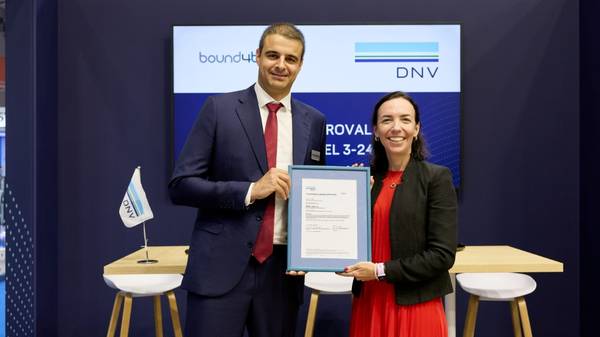
bound4blue receives DNV Type Approval. Bound4blue wins DNV type approval for its largest installed eSAIL suction sail  

DNV certification of the Model 3-24 eSAIL is said to support wider adoption of wind-assisted propulsion.

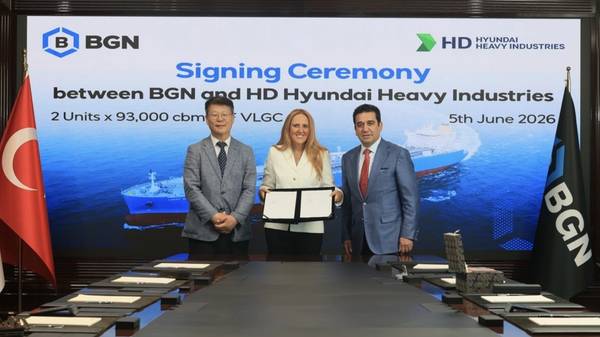
BGN and HD HHI signing ceremony. BGN expands owned LPG fleet with two additional VLGCs from HD HHI  

BGN signs a new shipbuilding contract, bringing its owned VLGC fleet to 19 vessels.

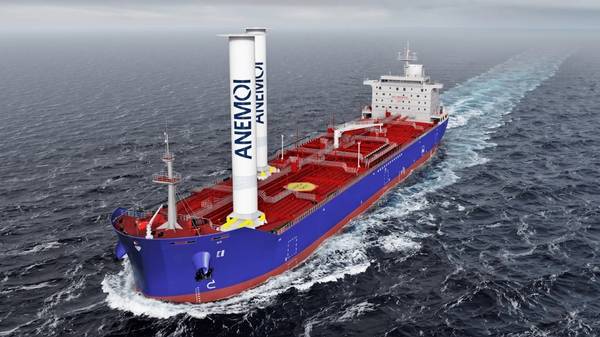
Medium-range (MR) tanker with Rotor Sails render. Anemoi and partners win DNV approval in principle for rotor sail integration on MR tankers  

DNV issues approval in principle for EX-rated rotor sail design on medium-range product tankers.

TMS Tankers logo. Lloyd’s Register delivers fleet-wide energy transition roadmap for TMS Tankers  

LR Advisory maps vessel-level compliance risk and decarbonisation pathways across the Greek owner’s tanker fleet.

Dr Prapisala Thepsithar, GCMD. GCMD shares biofuel assurance and green finance insights at Hong Kong shipping decarbonisation forum  

The Global Centre for Maritime Decarbonisation presented pilot findings on biofuels and energy efficiency financing.

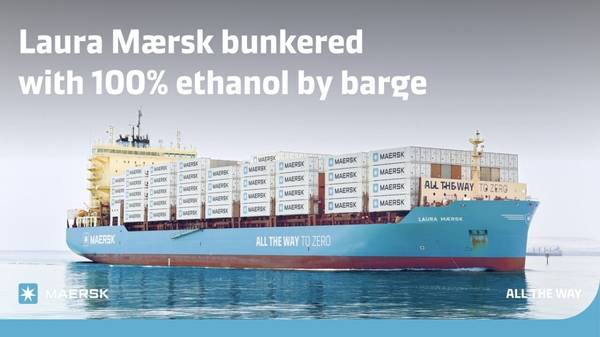
Laura Maersk ethanol bunkering graphic. Maersk conducts large-scale ethanol bunkering trial on Laura Maersk in Rotterdam  

A.P. Moller – Maersk has conducted a barge-delivered ethanol bunkering operation as part of ongoing fuel trials.

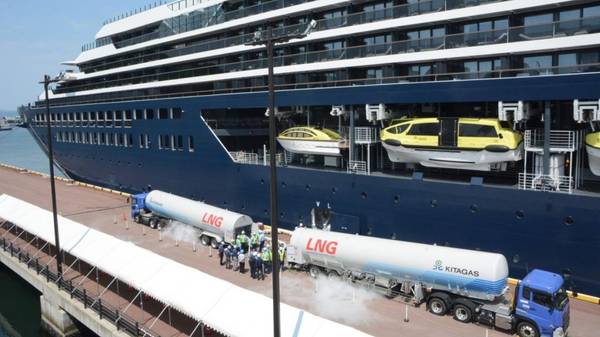
Luminara vessel truck-to-ship bunkering. MOL Techno-Trade completes first LNG bunkering for international cruise ship in Hokkaido  

Truck-to-ship LNG operation at Hakodate marks first such supply to an international cruise vessel in Hokkaido.

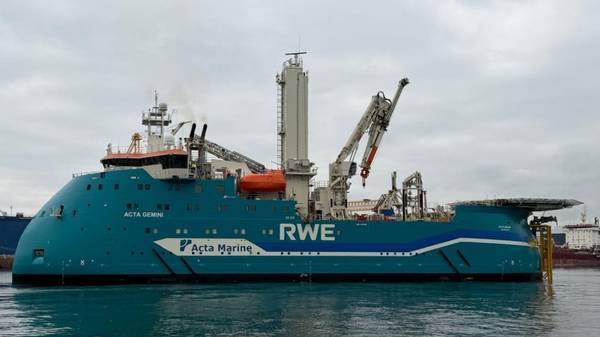
Acta Gemini vessel. Acta Marine takes delivery of methanol dual-fuel CSOV Acta Gemini for RWE wind farm charter  

The vessel will support operations at the Sofia Offshore Wind Farm at Dogger Bank.


↑  Back to Top