This is a legacy page. Please click here to view the latest version.
Thu 16 Sep 2010, 07:38 GMT

Engine provider announced for world's largest LNG ferry


Ferry to operate on the west coast of Norway upon completion.


Rolls-Royce, the global power systems company, has announced that it is to provide gas engines and main azimuth thrusters for a double ended passenger/vehicle ferry to be built for the Norwegian operator Fjord1 [pictured]. The vessel is set to be the world's largest gas engined ferry.

On completion, the 20+ knot ferry will primarily serve the busy Arsvågen-Mortavika route forming a link in the main road system on the west coast of Norway between Bergen and Stavanger.

Five ferries powered by Rolls-Royce gas engines fuelled with LNG already operate these services and for the new ferry Fjord 1 moved to Rolls-Royce thrusters as well.

"In planning the new ferry, Fjord 1 called for a substantial increase in efficiency," explained Matias Mork, Sales Manager - Rolls-Royce System Solution Merchant Vessel.

"The Rolls-Royce Azipull thrusters, two at each end of the vessel, have pulling propellers and streamlined underwater units which turn the swirl energy from the propeller water into useful thrust. They are a key to raising efficiency, in combination with the latest LNG fuelled gas engine design from Rolls-Royce. A significant improvement was found on the final model testing compared to existing ferries," Mork said.

The designers, Multi Maritime, developed a hullform and extensive studies and tank testing were undertaken in cooperation with Rolls-Royce to optimise the hydrodynamic integration of the Rolls-Royce AZP100 azimuth thrusters and the hull.

Three Bergen C25:33L9A nine cylinder gas engines power the four thrusters through an electric transmission. The C-series is a new design of gas engine now going into production, taking over from the older K series fitted in the existing five ferries on these routes, using the same successful lean burn combustion principle but incorporating the latest engine technology. The result, compared with conventional ferries burning liquid fuels, is said to be a major reduction in CO2 and NOx emissions and the virtual elimination of soot and sulphur emissions. A diesel engine genset, Bergen C-series, is also to be installed to power the vessel in case it should need to serve as a reserve ferry on routes without gas supply, or in emergency.

The contract to build the ferry was won by Fiskerstrand BLRT, a Norwegian registered joint venture between Fiskerstrand Verft in Ålesund, Norway, and Western Shipyard in Klaipeda, Lithuania.

The vessel will be 129.9m long and 19.2m beam with a deadweight of 1,300 tonnes, giving a capacity of 242 cars or its equivalent of 22 trucks plus cars on two decks, and it will be approved for 600 passengers.

Adding this ferry to the existing two vessels on the route will allow departures at 20 minute intervals instead of the current half hour frequency.


Yampu vessel. CSL delivers world’s first battery-powered self-unloading bulk carrier  

MV Yampu will transport limestone for Adbri in Australia, with full electric operation targeted by 2031.

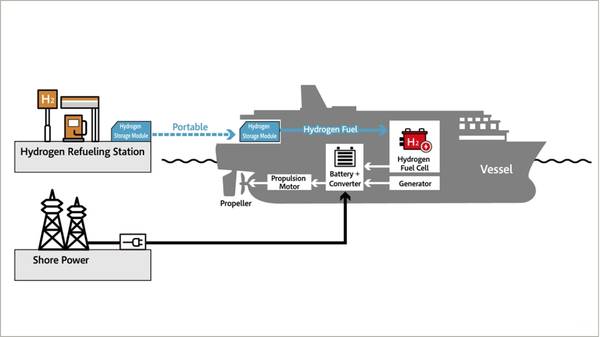
Illustration of hydrogen fuel cell system. NYK, Yanmar and Eneos to install hydrogen fuel cell system on new Tokyo dining cruise vessel  

Three Japanese companies are collaborating to bring hydrogen propulsion to a dining cruise ship due to enter service in 2027.

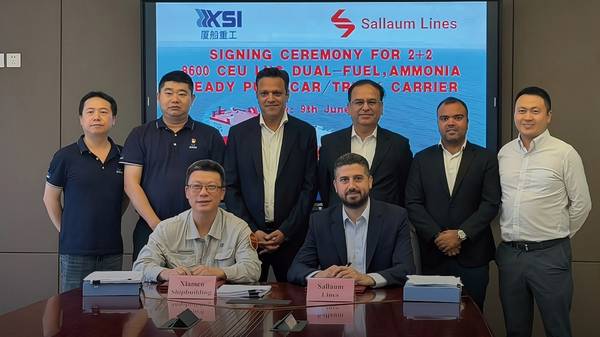
Signing ceremony for 8,600-ceu dual-fuel PCTCs. Sallaum Lines orders four 8,600-ceu dual-fuel PCTCs from Chinese yard — its largest vessels to date  

Ammonia-ready car carriers ordered from XSI mark the next phase of Sallaum Lines’ fleet renewal.

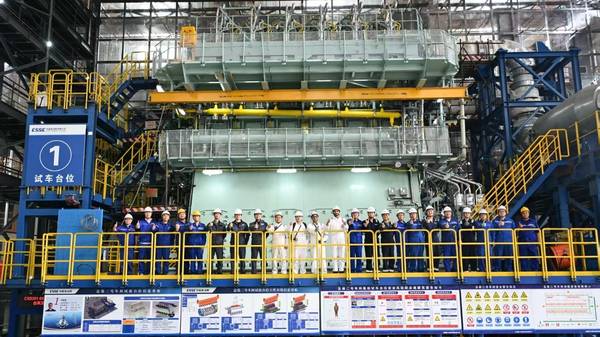
Factory acceptance test (FAT) for X72DF-A ammonia engine. WinGD completes factory acceptance test on X72DF-A ammonia engine destined for CMB.Tech bulker  

Swiss engine maker WinGD has completed factory acceptance testing of its ammonia-fuelled X72DF-A engine in China.

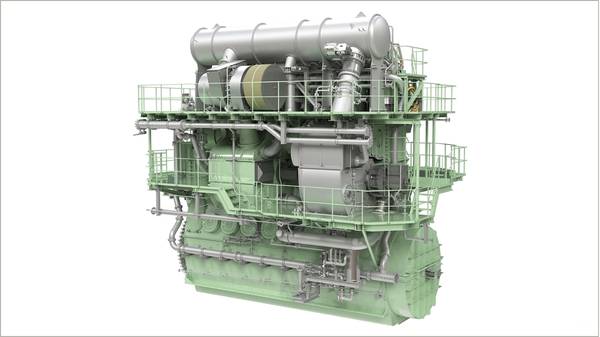
Everllence B&W S60ME-C10.5-GI-EcoEGR engine render. Everllence secures world’s first order for ME-GI Mk10.7 dual-fuel engine  

Norwegian car-carrier operator GCC selects next-generation methane engine for four newbuilds.

Capital Clean Energy Carriers Corp. (CCEC) and CMA CGM logos. Capital Clean Energy Carriers and CMA CGM form joint venture to build $82.8m LNG bunkering vessel  

The 20,000-cbm dual-fuel vessel is due for delivery in the third quarter of 2028.

Hong Kong flag. Hong Kong launches port dues and vessel registration incentives to boost green fuel bunkering  

Two new schemes offer financial concessions to attract green fuel vessels and grow the Hong Kong fleet.

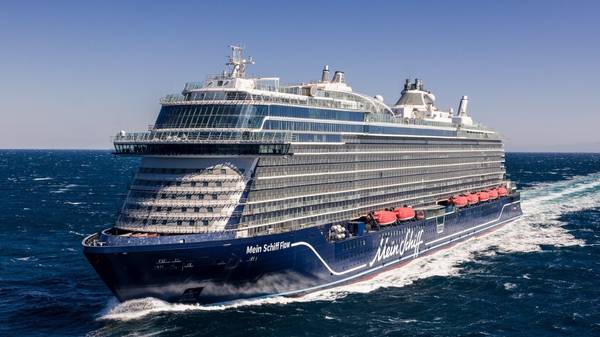
Mein Schiff Flow vessel. Fincantieri delivers LNG-ready cruise ship Mein Schiff Flow to TUI Cruises  

The 160,000 gross-tonne vessel is the second of two InTUItion-class dual-fuel ships.

Monjasa logo. Monjasa seeks trader for Fredericia-based Northwest Europe desk  

Bunker firm is recruiting a trader to join its Northwest Europe team.

Port of Barcelona and Port of Shanghai signing ceremony. Barcelona and Shanghai sign strategic port cooperation agreement targeting green fuels and digital corridors  

Ports formalise a 'sister ports' relationship covering green shipping, digitalisation and intermodality.


↑  Back to Top