This is a legacy page. Please click here to view the latest version.
Wed 15 Sep 2010, 06:57 GMT

ENOC reduces capacity in Singapore


UAE firm slashes its Singapore storage capacity to around 60,000 cubic metres.


Emirates National Oil Co (ENOC) is reducing its presence in the Asia fuel oil market after deciding to slash its storage capacity in Singapore.

Dubai-based ENOC, a majority shareholder in terminal operator Horizon Terminals Limited, of which Horizon Singapore Terminals is a subsidiary, cut its fuel oil storage capacity at its Singapore facility to around 60,000 cubic metres (cbm) at the beginning of this month. Chinese firm Brightoil Petroleum is reported to have taken over the vacated capacity.

"ENOC remains committed to its business and operations in Singapore across all portfolios. As part of its continuous and overall review of business activities, ENOC -- like all organisations -- balances product portfolios," an ENOC spokesman said.

The news follows ENOC's decision in July 2010 to cease its bunkering activities in Fujairah, the world's second-largest bunker port. The company was estimated to have been selling approximately 200,000 tonnes per month before its decision to exit Fujairah.

ENOC was reported to have pulled out of the Fujairah marine fuels market due to competition from its business rivals and from other ports in the region, which in turn led to a fall in sales volumes.

A principal reason for the decision was believed to be the fact that ENOC did not own the barges it had been using to carry out deliveries, which then resulted in the company finding it difficult to compete with other players in the market. As a result, ENOC was estimated to have lost around $20 million from its bunkering operations in Fujairah since relaunching in 2009.

Meanwhile, fuel oil trading manager Patrick Pak resigned from the firm last month and was replaced internally by senior trader Gerard Sum in a two-man trading team.

Commenting on the issue of changes in personnel, ENOC said: "The movement of individual staff also does not mean change in existing business activities. Singapore and the larger Asian market will continue to be focus areas for ENOC."

ENOC first entered the Asian fuel oil market in 2006 with approximately 200,000 cbm of storage capacity, of which around 90,000 cbm were sub-leased in 2008 and returned to the firm earlier this year.

The decision to slash storage to 60,000 cbm will mean that ENOC's capacity will be significantly smaller than the majority of medium-sized players with capacity of 100,000-150,000 cbm.

ENOC typically purchases fuel oil cargoes for sale into the Singapore bunker market via export tenders. Singapore, the world's largest marine fuels market, currently sells 3.3-3.5 million tonnes per month.

It is understood that ENOC is continuing to supply fuel in the spot ex-wharf market, but at reduced volumes, and has stopped doing term deals with barge operators.

At the start of this week ENOC was seen offering 20,000 tonnes of 380-cst in the physical pricing window at a premium of $1.00 per tonne, higher than the day's value of minus $2.50. The company has not been seen in the fuel oil swaps market for over a month, according to market sources.


TMS Tankers logo. Lloyd’s Register delivers fleet-wide energy transition roadmap for TMS Tankers  

LR Advisory maps vessel-level compliance risk and decarbonisation pathways across the Greek owner’s tanker fleet.

Dr Prapisala Thepsithar, GCMD. GCMD shares biofuel assurance and green finance insights at Hong Kong shipping decarbonisation forum  

The Global Centre for Maritime Decarbonisation presented pilot findings on biofuels and energy efficiency financing.

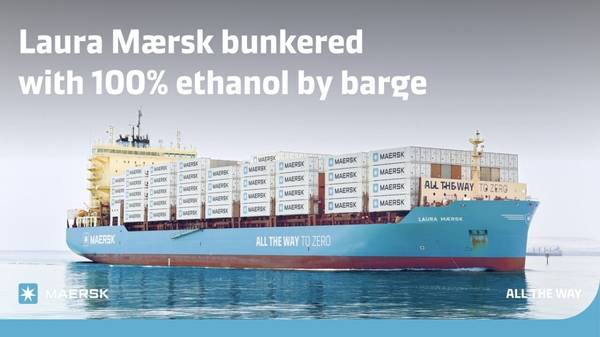
Laura Maersk ethanol bunkering graphic. Maersk conducts large-scale ethanol bunkering trial on Laura Maersk in Rotterdam  

A.P. Moller – Maersk has conducted a barge-delivered ethanol bunkering operation as part of ongoing fuel trials.

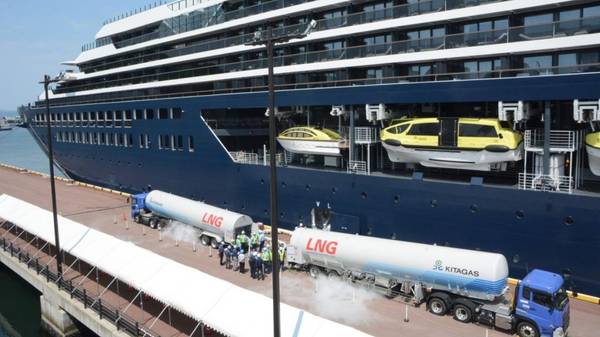
Luminara vessel truck-to-ship bunkering. MOL Techno-Trade completes first LNG bunkering for international cruise ship in Hokkaido  

Truck-to-ship LNG operation at Hakodate marks first such supply to an international cruise vessel in Hokkaido.

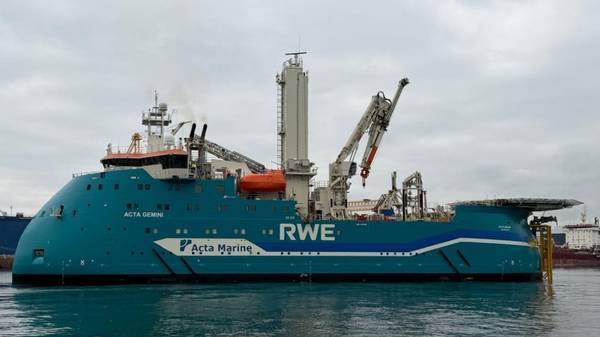
Acta Gemini vessel. Acta Marine takes delivery of methanol dual-fuel CSOV Acta Gemini for RWE wind farm charter  

The vessel will support operations at the Sofia Offshore Wind Farm at Dogger Bank.

Yeva Wood and Kirsten Møller Jørgensen. Malik Supply expands Danish team with bunker trader and finance hire  

Danish bunker supplier Malik Supply adds two new staff across its Fredericia and Aalborg offices.

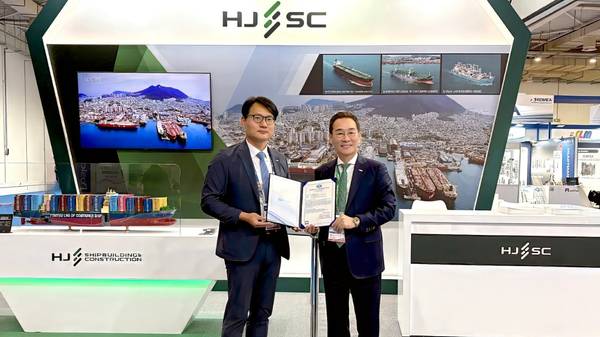
AiP award ceremony for a 10,000-teu biofuel-powered container ship. HJSC wins AiP for 10,000-teu biofuel-powered container ship design  

South Korean shipbuilder HJ Shipbuilding & Construction receives classification society approval for its biofuel vessel design at Posidonia.

Active vessel. Capital Clean Energy Carriers takes delivery of LNG carrier and dual-fuel gas carrier, secures five new charters  

Athens-based CCEC expands its fleet and pushes contracted revenue backlog to $3.1bn.

VPS logo. Fuel quality management for vessels in extended idle: Arabian Gulf, Gulf of Oman and adjacent anchorages | Rahul Choudhuri, VPS  

Managing fuel quality deterioration following the closure of the Strait of Hormuz.

Person signing a document. Agastya Green Fuels signs 250,000 t/yr e-methanol offtake deal with Sri Lanka’s SAR Group  

Indian producer and Sri Lankan maritime firm agree long-term green methanol supply partnership.


↑  Back to Top