This is a legacy page. Please click here to view the latest version.
Thu 9 Sep 2010, 09:03 GMT

Wärtsilä in fuel-saving product agreement


New product is said to cut fuel consumption and emissions using Organic Rankine Cycle technology.


Wärtsilä has signed an exclusive agreement with Turboden of Italy to jointly develop, market, and distribute the Wärtsilä Marine Engine Combined Cycle (ECC) product, which is said to reduce fuel consumption.

Marine ECC is to be based on Organic Rankine Cycle (ORC) technology. The two companies will aim to gain synergistic benefits from the combined strength of Wärtsilä's global presence in the marine market, and from Turboden's leadership and experience in developing ORC technology.

The joint development work will initially focus on applying the ORC technology for ship applications, and the Wärtsilä Marine ECC product is expected to enter the market during 2011.

The Wärtsilä Marine ECC is said to provide a means of obtaining an efficient and reliable small-scale combined cycle system from the otherwise wasted energy recovered from downstream exhaust gas, and/or from the high-temperature cooling water of reciprocating engines. This could provide added power in the range of 8 to 12 per cent to the prime mover. Typical sizes range from hundreds to several thousand kWe.

With the Marine ECC in operation, fuel oil consumption is said to be significantly lowered, which in turn provides the operator with lower operating expenses and reduced exhaust gas emissions.

"Because of high fuel prices and the need to reduce emissions, improving energy efficiency is today a matter of great importance to our customers. The Marine ECC will benefit both the customer and the environment, and is, therefore, completely in line with Wärtsilä's strategy," said Juha Kytölä, Vice President, Product Centre Ecotech, Wärtsilä.

The Rankine Cycle

The Rankine Cycle is a thermodynamic cycle that converts heat into work energy. Water is the most commonly used working fluid in Rankine Cycle systems, which generate the majority of the electricity used throughout the world. The ORC, on the other hand, can operate using various organic fluids to utilize the waste heat from exhaust gas, and from lower grade heat sources such as high-temperature cooling water.

While the ORC is already a well-established form of energy production with an increasing application base, it is new to the marine market. The ORC technology is said to provide a number of advantages including high thermodynamic cycle efficiency, the ability to operate at lower heat source temperatures, simple start up procedures, automatic and continuous operation without operator intervention, simple maintenance procedures, and long lifecycles.

"Following the very positive results that Turboden is now achieving with heat recovery systems for Stationary internal combustion engines, we are now excited to be working with Wärtsilä to develop an ORC solution specifically applicable to the marine market," said Paolo Bertuzzi, General Manager, Finance & Commercial Area, Turboden s.r.l.


Spirit of Mobile vessel. LD Armateurs launches second low-emission ro-ro vessel for Airbus charter fleet  

French shipowner LD Armateurs has launched its second methanol-capable, rotor sail-equipped ro-ro vessel at a Chinese shipyard.

Verde Marine Energy (VME) logo. Verde Marine Energy renews ISCC EU certification and achieves RED III compliance  

Dutch bunker supplier Verde Marine Energy says it is now fully compliant with the EU's updated renewable energy rules.

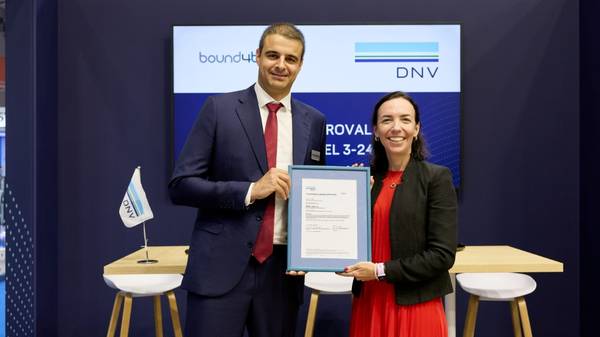
bound4blue receives DNV Type Approval. Bound4blue wins DNV type approval for its largest installed eSAIL suction sail  

DNV certification of the Model 3-24 eSAIL is said to support wider adoption of wind-assisted propulsion.

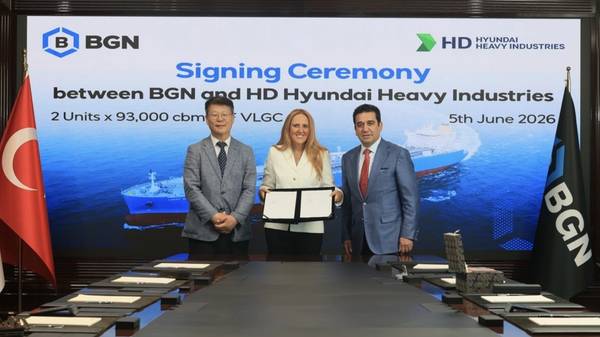
BGN and HD HHI signing ceremony. BGN expands owned LPG fleet with two additional VLGCs from HD HHI  

BGN signs a new shipbuilding contract, bringing its owned VLGC fleet to 19 vessels.

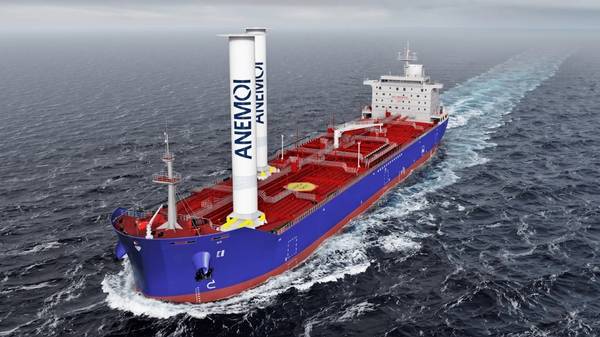
Medium-range (MR) tanker with Rotor Sails render. Anemoi and partners win DNV approval in principle for rotor sail integration on MR tankers  

DNV issues approval in principle for EX-rated rotor sail design on medium-range product tankers.

TMS Tankers logo. Lloyd’s Register delivers fleet-wide energy transition roadmap for TMS Tankers  

LR Advisory maps vessel-level compliance risk and decarbonisation pathways across the Greek owner’s tanker fleet.

Dr Prapisala Thepsithar, GCMD. GCMD shares biofuel assurance and green finance insights at Hong Kong shipping decarbonisation forum  

The Global Centre for Maritime Decarbonisation presented pilot findings on biofuels and energy efficiency financing.

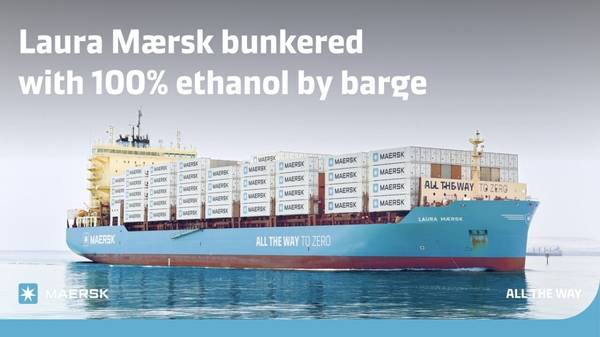
Laura Maersk ethanol bunkering graphic. Maersk conducts large-scale ethanol bunkering trial on Laura Maersk in Rotterdam  

A.P. Moller – Maersk has conducted a barge-delivered ethanol bunkering operation as part of ongoing fuel trials.

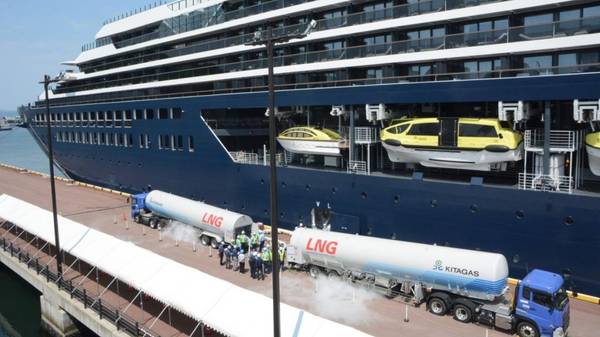
Luminara vessel truck-to-ship bunkering. MOL Techno-Trade completes first LNG bunkering for international cruise ship in Hokkaido  

Truck-to-ship LNG operation at Hakodate marks first such supply to an international cruise vessel in Hokkaido.

Acta Gemini vessel. Acta Marine takes delivery of methanol dual-fuel CSOV Acta Gemini for RWE wind farm charter  

The vessel will support operations at the Sofia Offshore Wind Farm at Dogger Bank.


↑  Back to Top