This is a legacy page. Please click here to view the latest version.
Wed 11 Aug 2010, 06:32 GMT

Chemoil posts Q2 net profit


CEO points to 'signs of gradual improvement' as Chemoil strives to optimize its operations.


SGX mainboard-listed Chemoil, one of the world’s leading suppliers of marine fuel, has today announced a net profit attributable to equity holders of US$3.2 million for the second quarter of 2010.

The figure is $9 million, or 74 percent, below the US$12.2 million net profit achieved during the corresponding period last year, but is a $16.7 million improvement on the US$13.5 million loss recorded in the first quarter of 2010.

In an analysis of the first six months of the year, Chemoil recorded a net loss of US$10.3 million, which represents a US$31.4 million decline compared to last year's first half profit of $21.1 million.

The group’s gross contribution per metric tonne (GCMT) of US$5.00 per tonne was $6.60, or 57 percent, lower than the US$11.6 per tonne achieved in the second quarter of 2009, but was US$3.26 per tonne higher than during the first three months of this year when the group's gross contribution per metric tonne was US$1.74 per tonne.

During the first six months of this year Chemoil's gross contribution per metric tonne was US$3.4 per tonne, which was US$6.8 per tonne, or 67 percent, below last year's results during the same period.

Chemoil's year-on-year sales volumes rose by 0.3 million tonnes, or 8 percent, to 4 million tonnes betwen April and June 2010, whilst sales volumes also rose by the same margin when compared to the first three months of this year.

Sales volumes were also higher during the first six months of 2010 compared to last year, rising by 0.3 million, or 4 percent, to 7.7 million tonnes.

Chemoil’s Chairman and CEO, Mr Mike Bandy, commented: “While most of our market segments have generally experienced improved performance this quarter, we are still facing pressures on our wholesale retail margin spreads which continue to remain at reduced levels in several strategic locations.”

“Despite the difficult economic conditions, there are signs of gradual improvement in certain ports on our footprint. Our retail marine fuel sales improved in Asia and select ports in the Americas, and we also recorded a rise in cargo and ex-wharf sales volumes leading to an improved GCMT of US$5 per MT. Our management is continuously seeking opportunities to strengthen the profitable segments of the business and optimize under-performing operations through efficiency improvements in order to deliver sustained profitability.”

Chemoil’s Chief Financial Officer, Jerome Lorenzo, said: “Our cost reduction efforts are starting to show encouraging results as we continue streamlining our operations. These measures include assessing our storage and barging efficiencies, reducing overheads, and managing our inventory held. This process is ongoing and we expect further results to materialize in the succeeding quarters.”

Mr Bandy concluded: “The first half of this year has been challenging and the wholesale-retail spreads continue to be low. As a reflection of the benefits of its diversification strategy, the Group recorded positive contributions from associates and joint ventures. It is the Group’s aim that through these carefully and strategically selected business affiliates, we will jointly develop new markets and optimize the company’s supply chain to contribute increasing returns to Chemoil’s operations.”

“We are confident that our continued approach of reducing costs, increasing efficiencies and seeking selective growth opportunities will continue to deliver improved profitability across our business segments.”


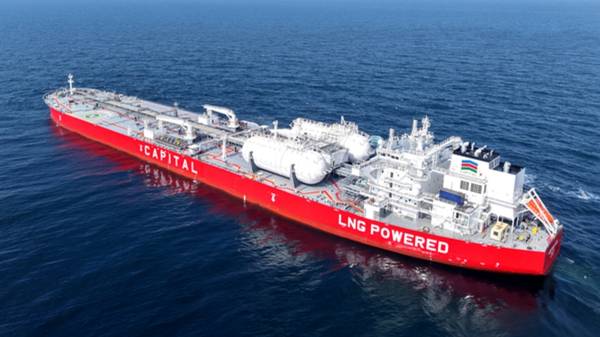
Capital's LNG-powered vessel. Chinese shipbuilder delivers 155,500-dwt LNG dual-fuel crude oil tanker  

Vessel handed over to Capital Ship Management Corp in China.

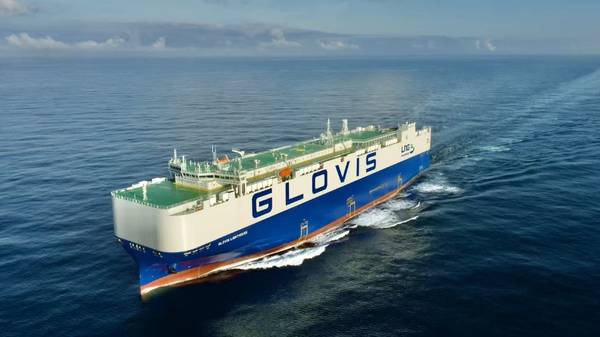
Glovis Lighthouse vessel. Seaspan takes delivery of first 10,800-ceu dual-fuel LNG car carrier  

Glovis Lighthouse enters service as one of a handful of vessels globally to exceed 10,000 CEU capacity.

Port of Rotterdam, Maersk, Core Power and Lloyd's Register logos. Rotterdam study maps pathway for nuclear-powered commercial ship port calls  

A joint study by Lloyd's Register, the Port of Rotterdam, Core Power and Maersk examines the feasibility of nuclear vessel port calls.

Hakata waterfront. Kinkai Yusen conducts first biofuel demonstration on domestic ro-ro vessel at Hakata Port  

Japanese shipping company to trial B24 biofuel blend aboard the vessel Nanotsu on 16 June.

Norwegian Energy Trading (NET) AS logo. Norwegian Energy Trading renews ISCC certification for biofuel trading  

Norwegian bunker trader says renewal reflects growing biofuel volumes and commitment to verifiable sustainability standards.

Ivy Cove vessel. Jiangnan delivers VLAC with LPG dual-fuel main engine  

Vessel is claimed to be the world’s first 93,000 cbm very large ammonia carrier.

BIMCO logo. BIMCO adopts biofuel clause for time charter parties  

Shipping body has introduced a new contractual clause to govern the use of biofuels under time charter agreements.

Prince Madog hydrogen fuel cell retrofit receives LR certification. UK research vessel Prince Madog wins LR certification for hydrogen fuel cell retrofit  

Lloyd’s Register certifies what is claimed to be the first sea-going, manned hydrogen retrofit of its kind.

World Fuel logo. World Fuel seeks marine lube operations and sales executive in Greece  

US firm is recruiting for a commercial role focused on marine lubricants, based out of its Glyfada office.

ECSA Parliamentary Breakfast event. European Shipowners calls for fuel supplier mandates and ETS revenue investment ahead of policy revision  

Industry body urges EU policymakers to redirect carbon revenues into clean marine fuel production.


↑  Back to Top


 Recommended