This is a legacy page. Please click here to view the latest version.
Tue 27 Jul 2010, 09:07 GMT

Propulsion solution delivers fuel savings


Integrated propeller and rudder design reduces bunker costs in recent trials.


Finnish firm Wärtsilä says its Energopac integrated propeller and rudder design has demonstrated that it is able to significantly reduce fuel costs.

In recent trials carried out in cooperation with the Spliethoff Group, a company that manages more than 55 multi-purpose cargo vessels, Wärtsilä's Energopac solution was said to deliver significant fuel cost benefits by effectively reducing flow separation behind the propeller hub and thereby reducing frictional drag while preserving course-keeping capabilities.

The trials involved eight 17,700 dwt vessels, six of which were fitted with standard rudders and two with Energopac.

The trials are said to have shown that the Energopac solution saves close to 4 percent power in design condition, representing annual fuel cost savings of more than USD 120,000, according to fuel prices in July 2010.

“After 6 months of operation, it has been shown that the reality confirms the theory,” said Frank Louwers, director at Spliethoff. “This facilitated our decision to install the Energopac propulsion solution on the next series of another 5 vessels.”

Custom designed for optimal savings

Launched in 2008, Wärtsilä’s Energopac is an easy-to-install rudder/propeller combination that features a rudder bulb located behind the propeller hub. The bulb is mounted on a custom-designed full-spade flap rudder. As each Energopac installation is designed to fit a specific vessel, it can be fully optimized for energy efficiency without compromising manoeuvrability or comfort levels. Wärtsilä’s in-house computational fluid dynamics (CFD) resources are used in developing an optimal design for the total system.

"High performance propeller designs usually involve a compromise between increased efficiency and reduced vibration levels. Differences in rudder resistance are significant, especially when small corrective steering forces are used to keep a vessel on course. Energopac’s sophisticated full-spade flap rudder delivers excellent rudder balance and manoeuvring performance, and also enables a smaller overall rudder blade area with lower consequent rudder drag," Wärtsilä said.

“Energopac is an effective way of reducing the operational costs of any vessel which spends a significant proportion of time in non-stop sailing,” said Marcel van Haaren, Manager, Sales Engineering, Wärtsilä Ship Power. “Hub losses in a vessel equipped with a conventional rudder/propeller arrangement are significant, but these can be greatly reduced by installing an Energopac system. An increasing number of ship owners are looking to invest in technology that improves energy efficiency and reduces fuel consumption and emissions, and Energopac is a very effective solution.”

For ships with highly-loaded controllable-pitch propeller systems, such as RoRo vessels, ferries, container/multipurpose vessels and vessels with an ice class notation, Wärtsilä says the potential savings with Energopac are large.

"Bornholmstrafikken’s RoRo vessel M/V Hammerodde, for example, reported that results are even better than the predictions obtained from model tests carried out prior to the installation of the Energopac solution," Wärtsilä said.

In addition to the Energopac systems already delivered, another 20 Energopac systems have been ordered and will be delivered in 2010 and 2011.

Wärtsilä said the reductions in fuel consumption depend on the vessel type, its operational profile and also on the reference propeller and rudder. The performance improvements determined through CFD calculations and/or model tests indicate power reduction values ranging from a minimum of 2 per cent to a maximum of 9 per cent.


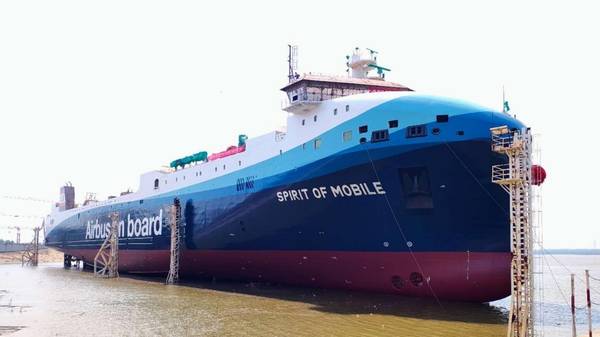
Spirit of Mobile vessel. LD Armateurs launches second low-emission ro-ro vessel for Airbus charter fleet  

French shipowner LD Armateurs has launched its second methanol-capable, rotor sail-equipped ro-ro vessel at a Chinese shipyard.

Verde Marine Energy (VME) logo. Verde Marine Energy renews ISCC EU certification and achieves RED III compliance  

Dutch bunker supplier Verde Marine Energy says it is now fully compliant with the EU's updated renewable energy rules.

bound4blue receives DNV Type Approval. Bound4blue wins DNV type approval for its largest installed eSAIL suction sail  

DNV certification of the Model 3-24 eSAIL is said to support wider adoption of wind-assisted propulsion.

BGN and HD HHI signing ceremony. BGN expands owned LPG fleet with two additional VLGCs from HD HHI  

BGN signs a new shipbuilding contract, bringing its owned VLGC fleet to 19 vessels.

Medium-range (MR) tanker with Rotor Sails render. Anemoi and partners win DNV approval in principle for rotor sail integration on MR tankers  

DNV issues approval in principle for EX-rated rotor sail design on medium-range product tankers.

TMS Tankers logo. Lloyd’s Register delivers fleet-wide energy transition roadmap for TMS Tankers  

LR Advisory maps vessel-level compliance risk and decarbonisation pathways across the Greek owner’s tanker fleet.

Dr Prapisala Thepsithar, GCMD. GCMD shares biofuel assurance and green finance insights at Hong Kong shipping decarbonisation forum  

The Global Centre for Maritime Decarbonisation presented pilot findings on biofuels and energy efficiency financing.

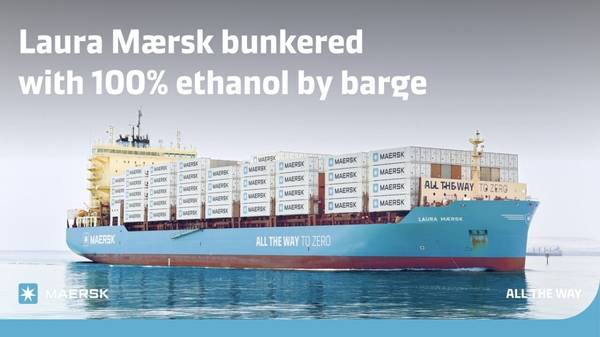
Laura Maersk ethanol bunkering graphic. Maersk conducts large-scale ethanol bunkering trial on Laura Maersk in Rotterdam  

A.P. Moller – Maersk has conducted a barge-delivered ethanol bunkering operation as part of ongoing fuel trials.

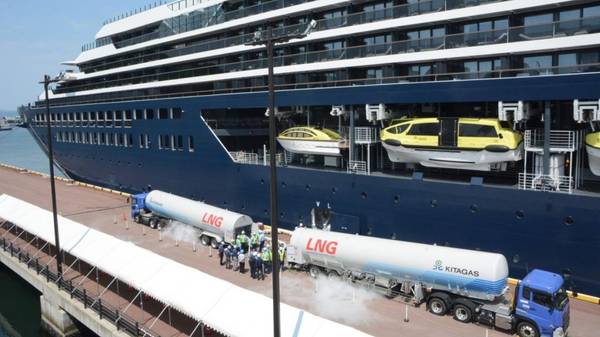
Luminara vessel truck-to-ship bunkering. MOL Techno-Trade completes first LNG bunkering for international cruise ship in Hokkaido  

Truck-to-ship LNG operation at Hakodate marks first such supply to an international cruise vessel in Hokkaido.

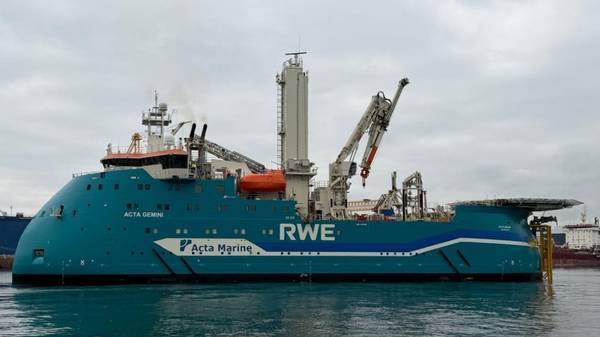
Acta Gemini vessel. Acta Marine takes delivery of methanol dual-fuel CSOV Acta Gemini for RWE wind farm charter  

The vessel will support operations at the Sofia Offshore Wind Farm at Dogger Bank.


↑  Back to Top