This is a legacy page. Please click here to view the latest version.
Mon 26 Jul 2010, 16:51 GMT

APL retrofits ships for cold ironing


Five containerships are retrofitted for shore-based electrical power in preparation for 2011.


Shipping firm APL, the world’s fourth-largest container carrier, has today announced that it has completed the retrofit of five vessels for cold ironing.

The clean air practice, which involves switching off a vessel’s diesel generators in order to use cleaner, shore-based electrical power, will be introduced next winter at APL’s marine terminal in Oakland, California. APL will become the first and only carrier or terminal operator at the Port of Oakland to cold iron ships.

By shutting down shipboard generators in Oakland, APL expects to eliminate 50,000 pounds of nitrogen oxide emissions annually. The carrier also expects to eliminate 1,500 pounds of particulate matter emissions per year.

“We are committed to reducing the impact of global trade on the environment,” said APL Americas President Gene Seroka. “Equipping our vessels for cold-ironing is tangible evidence that we are advancing on the goal.”

APL has been equipping its C-11 class vessels with cold ironing capabilities throughout 2010. The last of the five ships returned to service this month from the Keppel Shipyard in Singapore.

The ships are scheduled to plug in at port from the start of 2011, which is when APL expects to complete a construction project to electrify its Oakland vessel berths for cold ironing.

APL has been awarded two grants, totalling $4.8 million, for the cold-ironing project. Part of the funding helped finance the month-long retrofit of each ship.

Each one of the five vessels has been equipped with:

* A transformer that steps down 6,600-volt shoreside power to the 480-volt power used aboard ships;

* Room-sized enclosures that house the receptacles where shore-power cables are connected to the vessels; and

* 8,000 meters of cabling that run from the receptacles through the transformer and into the vessel’s electrical control panel.

Cold ironing is one of the most recent measures announced by APL to curb vessel air emissions. Others include:

* Slow steaming: APL started slow-steaming in 2009. Reducing the speed of a vessel has helped to reduce fuel consumption. Adding extra vessels has enabled APL to reduce vessel speed while maintaining weekly schedules.

* Emulsified fuel: APL is testing new technology in which a combination of water and fuel is used in the main and auxiliary engines. This system is expected to provide fuel savings and reduce nitrogen oxide emissions.

* Vessel speed reduction program: APL participates in a voluntary speed reduction program for vessels in Southern California waters. Reducing vessel speed helps to reduce nitrogen oxide emissions.

* Biodiesel fuel: At the Port of Seattle, Washington, APL uses a biodiesel blend in yard tractors and mobile container handling equipment. This blend of low sulphur and biodiesel fuel reduces particulate matter emissions.


Capital's LNG-powered vessel. Chinese shipbuilder delivers 155,500-dwt LNG dual-fuel crude oil tanker  

Vessel handed over to Capital Ship Management Corp in China.

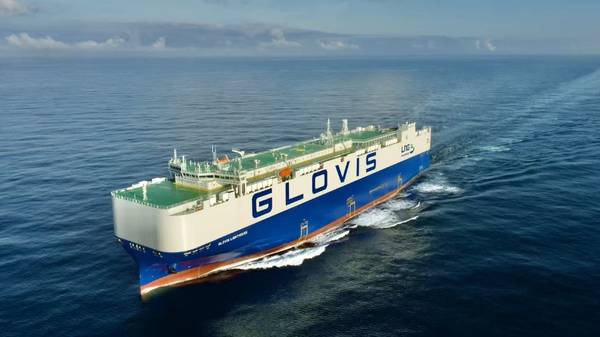
Glovis Lighthouse vessel. Seaspan takes delivery of first 10,800-ceu dual-fuel LNG car carrier  

Glovis Lighthouse enters service as one of a handful of vessels globally to exceed 10,000 CEU capacity.

Port of Rotterdam, Maersk, Core Power and Lloyd's Register logos. Rotterdam study maps pathway for nuclear-powered commercial ship port calls  

A joint study by Lloyd's Register, the Port of Rotterdam, Core Power and Maersk examines the feasibility of nuclear vessel port calls.

Hakata waterfront. Kinkai Yusen conducts first biofuel demonstration on domestic ro-ro vessel at Hakata Port  

Japanese shipping company to trial B24 biofuel blend aboard the vessel Nanotsu on 16 June.

Norwegian Energy Trading (NET) AS logo. Norwegian Energy Trading renews ISCC certification for biofuel trading  

Norwegian bunker trader says renewal reflects growing biofuel volumes and commitment to verifiable sustainability standards.

Ivy Cove vessel. Jiangnan delivers VLAC with LPG dual-fuel main engine  

Vessel is claimed to be the world’s first 93,000 cbm very large ammonia carrier.

BIMCO logo. BIMCO adopts biofuel clause for time charter parties  

Shipping body has introduced a new contractual clause to govern the use of biofuels under time charter agreements.

Prince Madog hydrogen fuel cell retrofit receives LR certification. UK research vessel Prince Madog wins LR certification for hydrogen fuel cell retrofit  

Lloyd’s Register certifies what is claimed to be the first sea-going, manned hydrogen retrofit of its kind.

World Fuel logo. World Fuel seeks marine lube operations and sales executive in Greece  

US firm is recruiting for a commercial role focused on marine lubricants, based out of its Glyfada office.

ECSA Parliamentary Breakfast event. European Shipowners calls for fuel supplier mandates and ETS revenue investment ahead of policy revision  

Industry body urges EU policymakers to redirect carbon revenues into clean marine fuel production.


↑  Back to Top