This is a legacy page. Please click here to view the latest version.
Tue 6 Jul 2010, 07:02 GMT

Air pollution cut with MARPOL amendments


Source: International Maritime Organization (IMO)

The revised Annex VI (Regulations for the Prevention of Air Pollution from Ships) of the International Convention for the Prevention of Pollution from Ships (MARPOL convention) entered into force globally on 1 July 2010, together with important reductions in sulphur oxide (SOx) emissions in specific areas. It was adopted in October 2008.

The main changes to MARPOL Annex VI will see a progressive reduction of SOx emissions from ships, with the global sulphur cap reduced initially to 3.50% (from the current 4.50%), effective from 1 January 2012; then progressively to 0.50 %, effective from 1 January 2020, subject to a feasibility review to be completed no later than 2018.

The revised Annex VI allows for Emission Control Areas (ECAs) to be designated for SOx and particulate matter, or NOx, or all three types of emissions from ships, subject to a proposal from a Party or Parties to the Annex, which would be considered for adoption by the Organization, if supported by a demonstrated need to prevent, reduce and control one or all three of those emissions from ships.

The limits applicable in sulphur ECAs are reduced to 1.00%, beginning on 1 July 2010 (from the current 1.50%); being further reduced to 0.10%, effective from 1 January 2015. This means that ships trading in the current ECAs will have to burn fuel of lower sulphur content (or use an alternative method to reduce emissions) from 1 July 2010.

The revised Annex lists two ECAs for the control of SOx, and particulate matter: the Baltic Sea area and the North Sea, which includes the English Channel.

A new North American ECA, for SOx, nitrogen oxide (NOx) and particulate matter was adopted by IMO in March 2010. The regulations to implement this ECA are expected to enter into force in August 2011, with the ECA becoming effective from August 2012.

Progressive reductions in NOx emissions from marine engines also come into force, with the most stringent controls on so-called "Tier III" engines, i.e. those installed on ships constructed on or after 1 January 2016, operating in ECAs.

The MARPOL Annex VI Regulations for the Prevention of Air Pollution from Ships have, to date, been ratified by 59 countries, representing approximately 84.23 % of the gross tonnage of the world's merchant shipping fleet.

Greenhouse gas emissions from ships

Meanwhile, IMO has been addressing the reduction of greenhouse gases (GHGs) from ships, as part of IMO's contribution to the worldwide efforts to stem climate change and global warming and good progress has already been made on related technical and operational measures, with further work being undertaken on market-based measures.

Further consideration of measures to reduce GHGs from ships will continue at the next session of IMO's Marine Environment Protection Committee (MEPC 61), which will meet from 27 September to 1 October 2010.


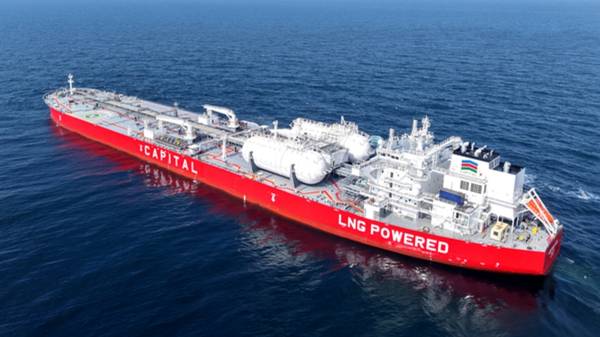
Capital's LNG-powered vessel. Chinese shipbuilder delivers 155,500-dwt LNG dual-fuel crude oil tanker  

Vessel handed over to Capital Ship Management Corp in China.

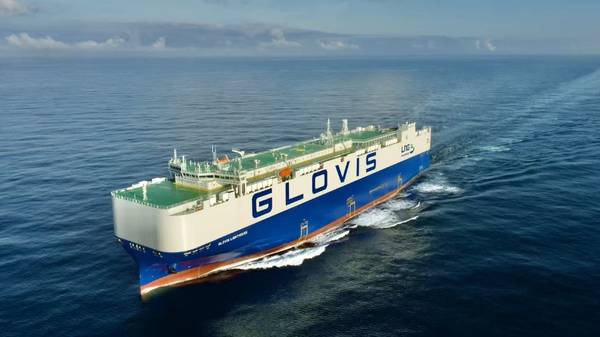
Glovis Lighthouse vessel. Seaspan takes delivery of first 10,800-ceu dual-fuel LNG car carrier  

Glovis Lighthouse enters service as one of a handful of vessels globally to exceed 10,000 CEU capacity.

Port of Rotterdam, Maersk, Core Power and Lloyd's Register logos. Rotterdam study maps pathway for nuclear-powered commercial ship port calls  

A joint study by Lloyd's Register, the Port of Rotterdam, Core Power and Maersk examines the feasibility of nuclear vessel port calls.

Hakata waterfront. Kinkai Yusen conducts first biofuel demonstration on domestic ro-ro vessel at Hakata Port  

Japanese shipping company to trial B24 biofuel blend aboard the vessel Nanotsu on 16 June.

Norwegian Energy Trading (NET) AS logo. Norwegian Energy Trading renews ISCC certification for biofuel trading  

Norwegian bunker trader says renewal reflects growing biofuel volumes and commitment to verifiable sustainability standards.

Ivy Cove vessel. Jiangnan delivers VLAC with LPG dual-fuel main engine  

Vessel is claimed to be the world’s first 93,000 cbm very large ammonia carrier.

BIMCO logo. BIMCO adopts biofuel clause for time charter parties  

Shipping body has introduced a new contractual clause to govern the use of biofuels under time charter agreements.

Prince Madog hydrogen fuel cell retrofit receives LR certification. UK research vessel Prince Madog wins LR certification for hydrogen fuel cell retrofit  

Lloyd’s Register certifies what is claimed to be the first sea-going, manned hydrogen retrofit of its kind.

World Fuel logo. World Fuel seeks marine lube operations and sales executive in Greece  

US firm is recruiting for a commercial role focused on marine lubricants, based out of its Glyfada office.

ECSA Parliamentary Breakfast event. European Shipowners calls for fuel supplier mandates and ETS revenue investment ahead of policy revision  

Industry body urges EU policymakers to redirect carbon revenues into clean marine fuel production.


↑  Back to Top