This is a legacy page. Please click here to view the latest version.
Tue 25 May 2010, 15:27 GMT

IMO to set construction standards for oil tankers


Newly-constructed oil tankers and bulk carriers will have to comply with IMO standards from July 2012.


The International Maritime Organization's (IMO) Maritime Safety Committee (MSC) has instigated an historic change in the way international standards for ship construction are to be determined and implemented in the future.

The adoption of so-called "goal-based standards" (GBS) for oil tankers and bulk carriers by the MSC, means that newly-constructed vessels of these types will have to comply with structural standards conforming to functional requirements developed and agreed by the Committee. This means that, for the first time in its history, IMO will be setting standards for ship construction.

The Committee also adopted guidelines that, equally for the first time, give the Organization a role in verifying conformity with SOLAS (International Convention for the Safety of Life at Sea) requirements. The guidelines establish the procedures to be followed in order to verify that the design and construction rules of an Administration or its recognized organization, for bulk carriers and/or oil tankers, conform to the adopted GBS. The verification process consists of two main elements: self assessment of the rules by the entity submitting them to IMO for verification; followed by an audit, to be carried out by experts appointed by the Organization, of the rules, the self-assessment and the supporting documentation.

Since the beginning of the 2000s, Governments and international organizations had expressed the view that the Organization should play a larger role in determining the structural standards to which new ships are built. The philosophy underpinning this move has been that ships should be designed and constructed for a specified design life and that, if properly operated and maintained, they should remain safe and environmentally friendly throughout their service life.

The MSC formally adopted International Goal based Ship Construction Standards for Bulk Carriers and Oil Tankers, along with amendments to Chapter II-1 of the International Convention for the Safety of Life at Sea (SOLAS), making their application mandatory, with an entry into force date of 1 July 2012.

The new SOLAS regulation II-1/3-10 will apply to oil tankers and bulk carriers of 150m in length and above. It will require new ships to be designed and constructed for a specified design life and to be safe and environmentally friendly, in intact and specified damage conditions, throughout their life. Under the regulation, ships should have adequate strength, integrity and stability to minimize the risk of loss of the ship or pollution to the marine environment due to structural failure, including collapse, resulting in flooding or loss of watertight integrity.

The MSC further adopted Guidelines for the information to be included in a Ship Construction File.

The notion of "goal-based ship construction standards" was introduced in IMO at the 89th session of the Council in November 2002, through a proposal by the Bahamas and Greece, suggesting that the Organization should develop ship construction standards that would permit innovation in design but ensure that ships are constructed in such a manner that, if properly maintained, they remain safe for their entire economic life. The standards would also have to ensure that all parts of a ship can be easily accessed to permit proper inspection and ease of maintenance. The Council referred the proposal to the 77th meeting of the MSC in May/June 2003 for consideration.

The MSC commenced detailed technical work on the development of goal-based ship construction standards at its 78th session in May 2004, when a comprehensive general debate of the issues involved took place and the Committee agreed to utilize a five tier system initially proposed by the Bahamas, Greece and the International Association of Classification Societies (IACS), consisting of the following:

Tier I - Goals
High-level objectives to be met.

Tier II - Functional requirements
Criteria to be satisfied in order to conform to the goals.

Tier III - Verification of conformity
Procedures for verifying that the rules and regulations for ship design and construction conform to the goals and functional requirements.

Tier IV - Rules and regulations for ship design and construction
Detailed requirements developed by IMO, national Administrations and/or recognized organizations and applied by national Administrations, and/or recognized organizations acting on their behalf, to the design and construction of a ship in order to conform to the goals and functional requirements.

Tier V - Industry practices and standards
Industry standards, codes of practice and safety and quality systems for shipbuilding, ship operation, maintenance, training, manning, etc., which may be incorporated into, or referenced in, the rules and regulations for the design and construction of a ship.

The goal-based standards adopted at this session reflect tiers I to III.

IMO Secretary-General Efthimios E. Mitropoulos described the adoption of GBS as "a significant and important breakthrough for the Organization, not only in terms of how future regulations will be developed, but also with respect to the role that IMO will play in verifying conformity with SOLAS requirements." He added, "the concept that IMO should state what has to be achieved, leaving classification societies, ship designers and naval architects, marine engineers and ship builders the freedom to decide on how best to employ their professional skills to meet the required standards is a sound one and I congratulate the Committee on the painstaking and hard work carried out to turn the concept into reality."


Yampu vessel. CSL delivers world’s first battery-powered self-unloading bulk carrier  

MV Yampu will transport limestone for Adbri in Australia, with full electric operation targeted by 2031.

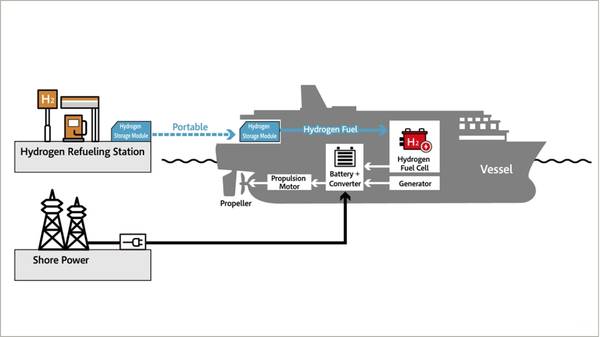
Illustration of hydrogen fuel cell system. NYK, Yanmar and Eneos to install hydrogen fuel cell system on new Tokyo dining cruise vessel  

Three Japanese companies are collaborating to bring hydrogen propulsion to a dining cruise ship due to enter service in 2027.

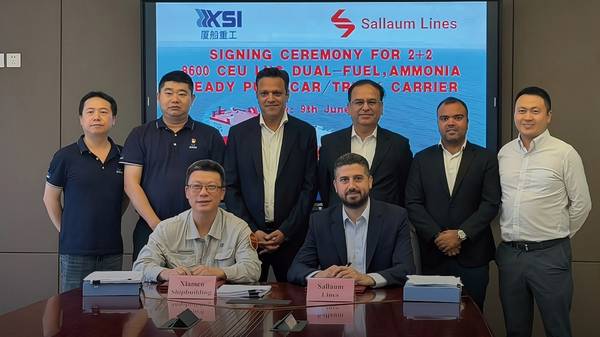
Signing ceremony for 8,600-ceu dual-fuel PCTCs. Sallaum Lines orders four 8,600-ceu dual-fuel PCTCs from Chinese yard — its largest vessels to date  

Ammonia-ready car carriers ordered from XSI mark the next phase of Sallaum Lines’ fleet renewal.

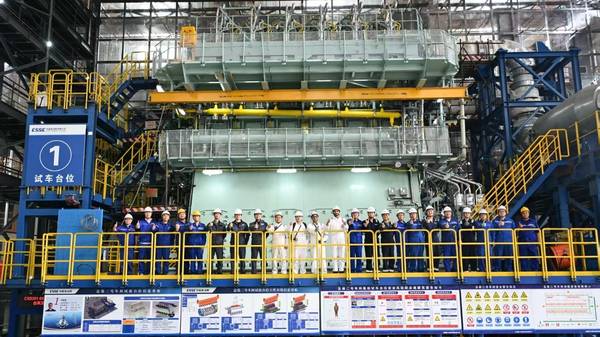
Factory acceptance test (FAT) for X72DF-A ammonia engine. WinGD completes factory acceptance test on X72DF-A ammonia engine destined for CMB.Tech bulker  

Swiss engine maker WinGD has completed factory acceptance testing of its ammonia-fuelled X72DF-A engine in China.

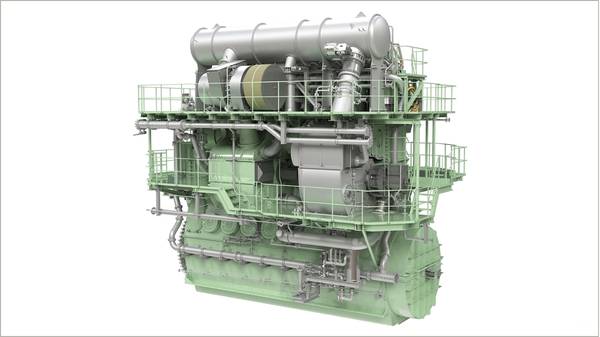
Everllence B&W S60ME-C10.5-GI-EcoEGR engine render. Everllence secures world’s first order for ME-GI Mk10.7 dual-fuel engine  

Norwegian car-carrier operator GCC selects next-generation methane engine for four newbuilds.

Capital Clean Energy Carriers Corp. (CCEC) and CMA CGM logos. Capital Clean Energy Carriers and CMA CGM form joint venture to build $82.8m LNG bunkering vessel  

The 20,000-cbm dual-fuel vessel is due for delivery in the third quarter of 2028.

Hong Kong flag. Hong Kong launches port dues and vessel registration incentives to boost green fuel bunkering  

Two new schemes offer financial concessions to attract green fuel vessels and grow the Hong Kong fleet.

Mein Schiff Flow vessel. Fincantieri delivers LNG-ready cruise ship Mein Schiff Flow to TUI Cruises  

The 160,000 gross-tonne vessel is the second of two InTUItion-class dual-fuel ships.

Monjasa logo. Monjasa seeks trader for Fredericia-based Northwest Europe desk  

Bunker firm is recruiting a trader to join its Northwest Europe team.

Port of Barcelona and Port of Shanghai signing ceremony. Barcelona and Shanghai sign strategic port cooperation agreement targeting green fuels and digital corridors  

Ports formalise a 'sister ports' relationship covering green shipping, digitalisation and intermodality.


↑  Back to Top