This is a legacy page. Please click here to view the latest version.
Mon 24 May 2010, 13:11 GMT

EU report: Bunker spill decline in 2009


New study says the total amount of bunker fuel spilled in 2009 decreased in comparison with the previous year.


The total amount of bunker fuel spilled in and around European Union waters is reported to have decreased in 2009, according a review published by the European Maritime Safety Agency (EMSA).

In the report, entitled "Maritime Accident Review 2009", the EMSA said the oil tanker industry kept a 'clean record' in terms of pollution disasters, both in and around EU waters and around the world. However, there were still 51 accidents reported by EMSA sources which involved oil tankers.

In an analysis of bunker spills in 2009, although the situation was said to have been better than in 2008, the EMSA added that there was still 'room for improvement'.

After adding together the known bunker spills for the year, and adding 'a little' for the larger number of very small spills, it is estimated that the total for accidental spills was in the region of 1,500-2,000 tonnes, a figure which compares favourably with the 2008 and 2007 estimates of 2,000-3,000 and 7,000-8,000 tonnes respectively.

The EMSA pointed out in its review that is was also useful to compare recent figures with those of the last 20 years in order to see how the situation has 'radically improved'.

This period witnessed major individual accidental spills such as the Haven (144,000 tonnes of Italy in 1991), the Sea Empress (72,000 tonnes off Wales in 1996), the Erika (20,000 tonnes off France in 1999) and the Prestige (63,000 tonnes off Spain in 2002).

The EMSA said that significantly improved pollution surveillance and the move towards ensuring that all oil tankers are properly constructed, maintained and operated with double hulls were significant drivers behind reductions in oil pollution.

With respect to improved surveillance, the EMSA CleanSeaNet system continues to provide a clear picture of the position on both accidental and illegal pollution, with significant numbers of potential slicks spotted on a daily basis.

The EMSA said the number of potential slicks detected had declined from 3,296 in 2008 to 2,107 in 2009, representing a reduction of over 36 percent.

Member State authorities checked 751 of these slicks in 2009, and 194 were confirmed to be oil spills, down from 232 in 2008.

The EMSA said the results showed that more comprehensive surveillance may be having an effect, whilst also pointing out that the figures still add up to almost 4 spills every week throughout the year.

Although it is impossible to calculate the total amount, it is believed that deliberate discharges account for a progressively greater proportion of pollution than accidental events. Consequently, the EMSA said more effort is needed to ensure that those operating ships are motivated to deposit their pollutants in approved facilities, rather than at sea.

Significant Events

Following the grounding of the 15,900 gt bulk carrier Full City in a storm outside Langesund, southern Norway, on 31st July, with up to 1,120 tonnes of fuel oil on board, the ship began to leak oil and, although the majority was recovered from the ship, estimates were that a total of 200-300 tonnes were spilled.

The bulker had just taken on over 1,000 tonnes of heavy fuel oil and diesel oil in preparation for a trans-Atlantic voyage. Although not a huge quantity in comparison to major spills in recent decades, the spill was in a sensitive area, and resulted in extensive pollution to popular summer holiday spots west of the Oslo fjord. At its maximum extent, the slick was reported to be over 150 km long, and it eventually led to pollution along a significant length of coastline in southern Norway. This, in turn, led to the deaths of hundreds of birds in colonies along the coast, and to problems in the fisheries and tourism sectors. The clean-up involved over 30 vessels and several hundred people.

A spill of a similar size occurred when the 65,000 gt fully cellular container ship MSC Shenzhen ruptured a fuel tank when it hit the dock entrance at the Cernaval dry dock, Algeciras Bay, Spain, on 28th October.

On this occasion, it was reported that around 280 tonnes of fuel oil leaked into the dock, and that a smaller quantity escaped to pollute beaches in the bay. At the time, Andalucia’s regional council said that 741 tonnes of sand, fuel and polluted water had been collected from the beach at Rinconcillo alone.


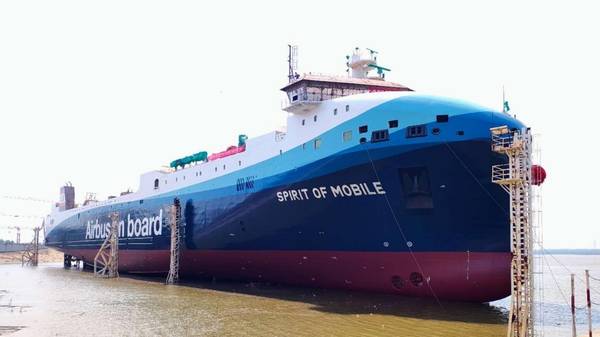
Spirit of Mobile vessel. LD Armateurs launches second low-emission ro-ro vessel for Airbus charter fleet  

French shipowner LD Armateurs has launched its second methanol-capable, rotor sail-equipped ro-ro vessel at a Chinese shipyard.

Verde Marine Energy (VME) logo. Verde Marine Energy renews ISCC EU certification and achieves RED III compliance  

Dutch bunker supplier Verde Marine Energy says it is now fully compliant with the EU's updated renewable energy rules.

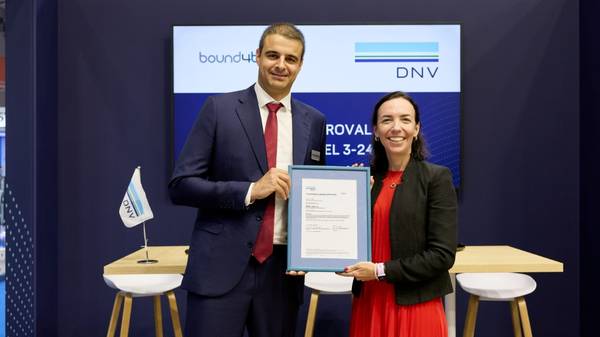
bound4blue receives DNV Type Approval. Bound4blue wins DNV type approval for its largest installed eSAIL suction sail  

DNV certification of the Model 3-24 eSAIL is said to support wider adoption of wind-assisted propulsion.

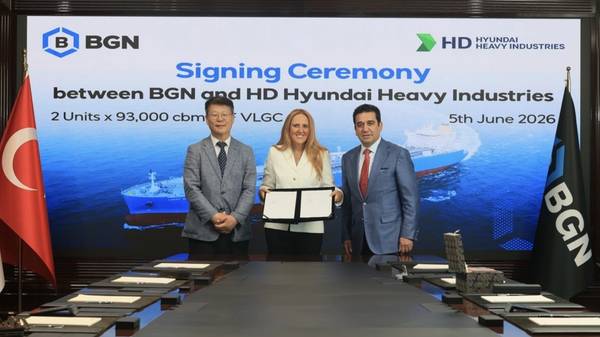
BGN and HD HHI signing ceremony. BGN expands owned LPG fleet with two additional VLGCs from HD HHI  

BGN signs a new shipbuilding contract, bringing its owned VLGC fleet to 19 vessels.

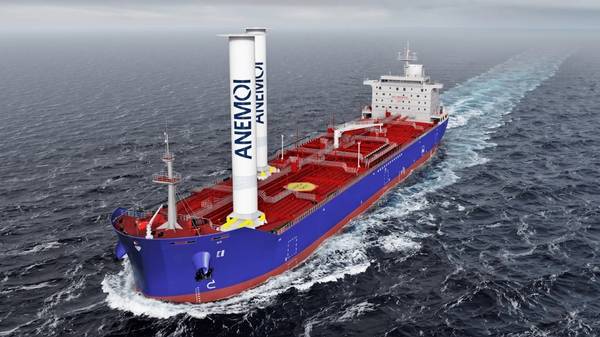
Medium-range (MR) tanker with Rotor Sails render. Anemoi and partners win DNV approval in principle for rotor sail integration on MR tankers  

DNV issues approval in principle for EX-rated rotor sail design on medium-range product tankers.

TMS Tankers logo. Lloyd’s Register delivers fleet-wide energy transition roadmap for TMS Tankers  

LR Advisory maps vessel-level compliance risk and decarbonisation pathways across the Greek owner’s tanker fleet.

Dr Prapisala Thepsithar, GCMD. GCMD shares biofuel assurance and green finance insights at Hong Kong shipping decarbonisation forum  

The Global Centre for Maritime Decarbonisation presented pilot findings on biofuels and energy efficiency financing.

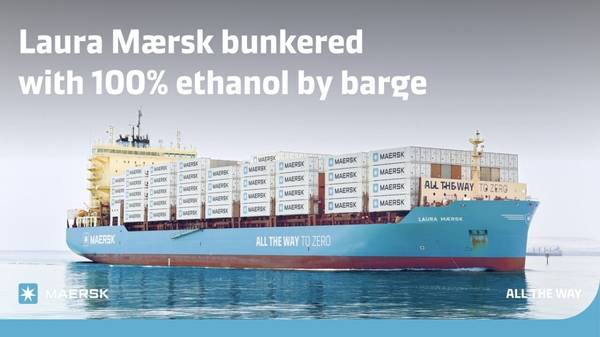
Laura Maersk ethanol bunkering graphic. Maersk conducts large-scale ethanol bunkering trial on Laura Maersk in Rotterdam  

A.P. Moller – Maersk has conducted a barge-delivered ethanol bunkering operation as part of ongoing fuel trials.

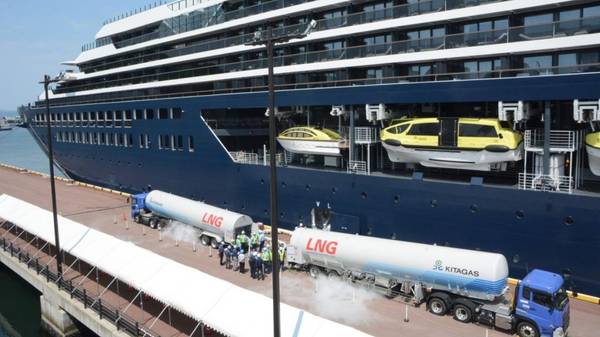
Luminara vessel truck-to-ship bunkering. MOL Techno-Trade completes first LNG bunkering for international cruise ship in Hokkaido  

Truck-to-ship LNG operation at Hakodate marks first such supply to an international cruise vessel in Hokkaido.

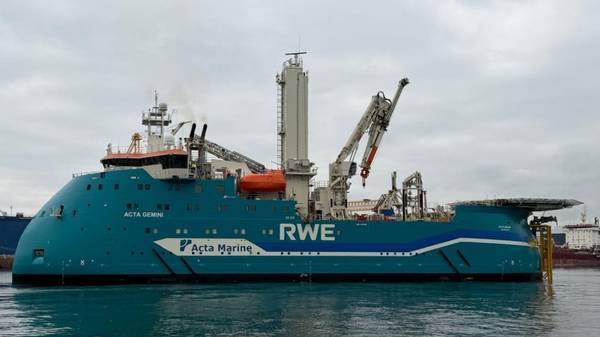
Acta Gemini vessel. Acta Marine takes delivery of methanol dual-fuel CSOV Acta Gemini for RWE wind farm charter  

The vessel will support operations at the Sofia Offshore Wind Farm at Dogger Bank.


↑  Back to Top