This is a legacy page. Please click here to view the latest version.
Tue 11 May 2010, 06:43 GMT

0.1 percent survey reveals 'potentially critical issues'


New survey documents fuel segregation, filter choking and fuel pump seizure issues.


A DNV Petroleum Services (DNVPS) survey on the operational impact of the European Union 0.1% marine fuel sulphur limit – enforced on Jan 1 this year – has revealed potentially critical issues.

Among the 65 shipping companies that responded to the survey, 40 percent felt the EU member states were not harmonised in applying regulatory standards when verifying compliance with the 0.1% marine fuel sulphur limit.

According to DNVPS, this lack of uniformity could confuse and dampen the shipping community’s confidence in the ability of the EU to enforce its own environmental regulations.

“DNV had previously expressed concerns that the 0.1% sulphur cap effectively meant ships at berth in the community ports must use marine gas oil, notwithstanding many of the boilers on board would not have been modified by Jan 1 to burn this type of fuel,” said DNVPS managing director Tore Morten Wetterhus.

“Now that more ships are presumably equipped with the installations to minimize gas oil-related risks, such as fuel pump leakage and boiler explosion, shipboard personnel face new worries not knowing what to expect from port state inspections in different EU ports,” added Wetterhus.

Close to 40% of the respondents said their vessels did not have the tank flexibility to segregate gas oil and heavy fuel oil. Another 15% reported filter choking and fuel pump seizures when switching from normal sulphur heavy fuel oil to the much more expensive gas oil on entering the EU community ports.

Surprisingly, almost a third of the respondents did not routinely test the quality of their gas oil purchases, despite the risks of their ships consuming fuels not compliant with the 0.1% fuel sulphur limit.

In the worst case, an untested fuel could be so severely ‘off-specification’ that it causes substantial engine damage and jeopardizes the safety of crew and cargo at sea, DNVPS said.

“As a marine fuel management company, it is especially unsettling for DNVPS to find that some ship operators are gambling with safety when they choose to use gas oil of unknown quality. There must be much more awareness on problems commonly associated with this type of fuel; for instance, low flashpoint and low viscosity,” Wetterhus cautioned.

On a brighter note, he said 90% of the survey respondents believed their crews were familiar with the onboard routines for complying with the EU fuel regulations, but many also felt continuous training would be necessary.

To update the shipping community on marine fuel regulations, related operational challenges, and the latest changes to the ISO 8217 marine fuel specification, DNVPS has been organising seminars and round-table discussions in its key markets. Targeted locations include Singapore, the Netherlands, Norway, Greece, Germany, Dubai, USA and Canada.

More about DNVPS marine fuel seminars and round-table discussions:

May-June 2010 schedule

May 18 Dubai
May 19 Piraeus
May 26 Mahwah
(New Jersey)
May 26 Rotterdam
May 27 Oslo
May 27 Leer (Germany)
May 27 Istanbul
Jun 4 Hamburg
Jun 22 Bergen


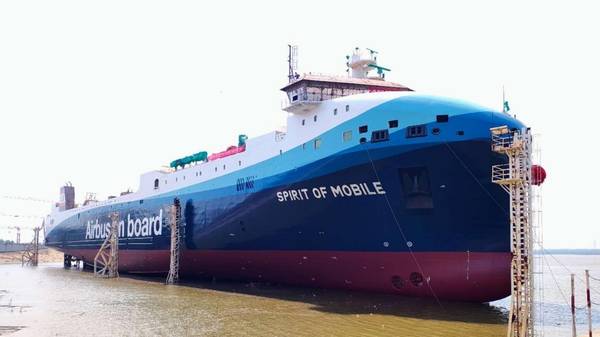
Spirit of Mobile vessel. LD Armateurs launches second low-emission ro-ro vessel for Airbus charter fleet  

French shipowner LD Armateurs has launched its second methanol-capable, rotor sail-equipped ro-ro vessel at a Chinese shipyard.

Verde Marine Energy (VME) logo. Verde Marine Energy renews ISCC EU certification and achieves RED III compliance  

Dutch bunker supplier Verde Marine Energy says it is now fully compliant with the EU's updated renewable energy rules.

bound4blue receives DNV Type Approval. Bound4blue wins DNV type approval for its largest installed eSAIL suction sail  

DNV certification of the Model 3-24 eSAIL is said to support wider adoption of wind-assisted propulsion.

BGN and HD HHI signing ceremony. BGN expands owned LPG fleet with two additional VLGCs from HD HHI  

BGN signs a new shipbuilding contract, bringing its owned VLGC fleet to 19 vessels.

Medium-range (MR) tanker with Rotor Sails render. Anemoi and partners win DNV approval in principle for rotor sail integration on MR tankers  

DNV issues approval in principle for EX-rated rotor sail design on medium-range product tankers.

TMS Tankers logo. Lloyd’s Register delivers fleet-wide energy transition roadmap for TMS Tankers  

LR Advisory maps vessel-level compliance risk and decarbonisation pathways across the Greek owner’s tanker fleet.

Dr Prapisala Thepsithar, GCMD. GCMD shares biofuel assurance and green finance insights at Hong Kong shipping decarbonisation forum  

The Global Centre for Maritime Decarbonisation presented pilot findings on biofuels and energy efficiency financing.

Laura Maersk ethanol bunkering graphic. Maersk conducts large-scale ethanol bunkering trial on Laura Maersk in Rotterdam  

A.P. Moller – Maersk has conducted a barge-delivered ethanol bunkering operation as part of ongoing fuel trials.

Luminara vessel truck-to-ship bunkering. MOL Techno-Trade completes first LNG bunkering for international cruise ship in Hokkaido  

Truck-to-ship LNG operation at Hakodate marks first such supply to an international cruise vessel in Hokkaido.

Acta Gemini vessel. Acta Marine takes delivery of methanol dual-fuel CSOV Acta Gemini for RWE wind farm charter  

The vessel will support operations at the Sofia Offshore Wind Farm at Dogger Bank.


↑  Back to Top


 Recommended