This is a legacy page. Please click here to view the latest version.
Mon 10 May 2010, 07:01 GMT

Illegal oil spills decline in Baltic Sea


The number of illicit oil discharges from ships in the Baltic Sea drops by 63 percent over a 10-year period.


The number of deliberate, illegal oil discharges from ships observed by national surveillance planes and satellites over the Baltic Sea area decreased by more than 25 percent last year compared to 2007 and by 63 percent since 1999, according to a study by the Helsinki Commission (HELCOM).

According to the latest national annual reports provided by member states to HELCOM, 178 illicit oil spills were detected during a total of 5,046 hours of surveillance flights during 2009. This compares to 210 discharges during a total of 4,603 air patrol hours in 2008, and 238 discharges observed during 3,969 air patrol hours in 2007. A decade ago in 1999 a total of 488 discharges were detected during 4,883 air patrol hours.

"This is a very excellent development, showing the results of HELCOM's work," said Anne Christine Brusendorff, HELCOM's Executive Secretary. "The number and size of detected oil spillages in the Baltic Sea has been decreasing over the past years, even though the density of shipping has rapidly grown and the aerial surveillance activity in the countries has been substantially improved."

This positive trend is attributed to the complex set of measures known as the Baltic Strategy to prevent illegal discharges of oil and waste into the sea, which the HELCOM countries have been implementing since the 1990s.

"The best way to evaluate the number of illegal oil discharges is to reflect it as pollution per flight hour index, which compares the total number of observed oil spills to the total number of flight hours," said Monika Stankiewicz, HELCOM's Maritime and Response Professional Secretary. "The index for the Baltic Sea has been decreasing over the past years, which indicates less oil spills or/and increased surveillance activity."

Deliberate oil discharges from ships have been regularly observed during surveillance flights over the Baltic Sea since 1988. One of the peak years was 1989, when 763 spills were detected during 3,491 flight hours. Most of the illegal oil discharges detected during 2009 were along major shipping routes.

Some 168 of the oil discharges (98%) detected in 2009 were smaller than one cubic metre, and of these oil spills as many as 138 were even smaller than 0.1 cubic metre or 100 litres. Only one spill was over 10 cubic metres in size and the total estimated volume of oil spills observed in 2009 amounted to 40.3 cubic metres. In 2007, there were four discharges of over 10 cubic metres, and the total estimated volume of oil spills amounted to 125.4 cubic metres.

In the vast majority of cases of detected illegal discharges the polluters generally remain unknown. In 2009, the polluters were identified in 8 cases (4.5%).

Regular aerial surveillance flights have contributed significantly to the decrease in discharges, as ships are increasingly aware that their illicit polluting activities can be detected. The HELCOM aerial surveillance fleet today consists of more than 25 airplanes and helicopters, many of which are equipped with remote sensing equipment such as side-looking airborne radar (SLAR), infrared (IR) and ultraviolet (UV) cameras, photo and video equipment.

HELCOM also uses satellite surveillance to detect illegal polluters. Satellite images are provided by the CleanSeaNet (CSN) satellite service of the European Maritime Safety Agency (EMSA).

In 2009, 608 satellite images were delivered to the Baltic Sea countries, indicating 280 possible oil slicks. From these images, on an average 0.46 oil spill indications were detected. Satellite images can indicate "candidates" for oil spills at sea, which can then be verified on location by a vessel or aircraft.

Both aerial and satellite surveillance have contributed to the enforcement of the Baltic Strategy. The main objectives of the Strategy, which was operationalized by the HELCOM Ministerial Meeting in 1998, are to ensure ships' compliance with global and regional discharge regulations, and to eliminate illegal discharges into the sea of all wastes from all ships, and thus prevent pollution.

Another objective is to ensure that ship-generated wastes are delivered to suitable port reception facilities where they can be treated in an environmentally-friendly manner.


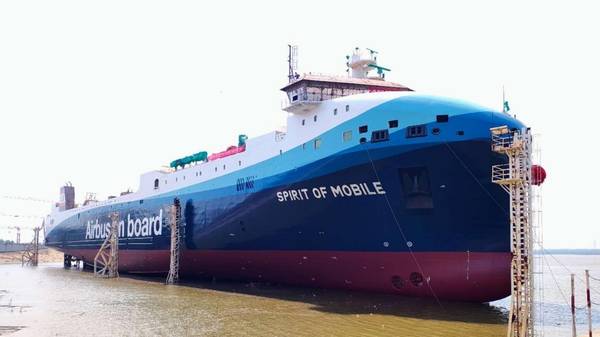
Spirit of Mobile vessel. LD Armateurs launches second low-emission ro-ro vessel for Airbus charter fleet  

French shipowner LD Armateurs has launched its second methanol-capable, rotor sail-equipped ro-ro vessel at a Chinese shipyard.

Verde Marine Energy (VME) logo. Verde Marine Energy renews ISCC EU certification and achieves RED III compliance  

Dutch bunker supplier Verde Marine Energy says it is now fully compliant with the EU's updated renewable energy rules.

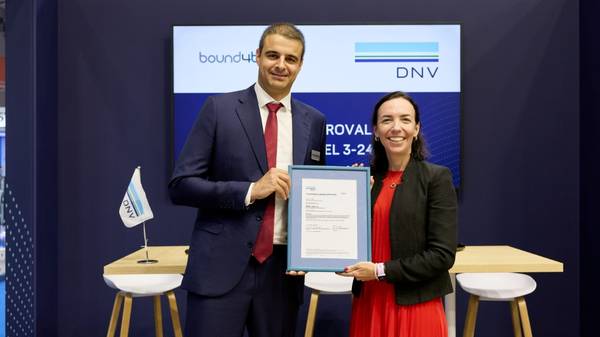
bound4blue receives DNV Type Approval. Bound4blue wins DNV type approval for its largest installed eSAIL suction sail  

DNV certification of the Model 3-24 eSAIL is said to support wider adoption of wind-assisted propulsion.

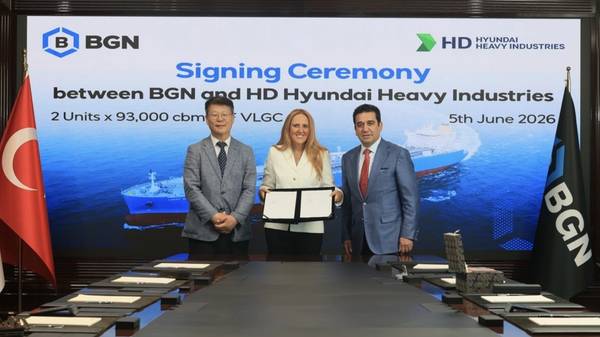
BGN and HD HHI signing ceremony. BGN expands owned LPG fleet with two additional VLGCs from HD HHI  

BGN signs a new shipbuilding contract, bringing its owned VLGC fleet to 19 vessels.

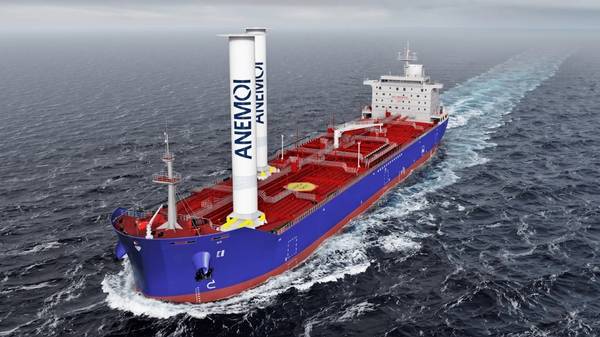
Medium-range (MR) tanker with Rotor Sails render. Anemoi and partners win DNV approval in principle for rotor sail integration on MR tankers  

DNV issues approval in principle for EX-rated rotor sail design on medium-range product tankers.

TMS Tankers logo. Lloyd’s Register delivers fleet-wide energy transition roadmap for TMS Tankers  

LR Advisory maps vessel-level compliance risk and decarbonisation pathways across the Greek owner’s tanker fleet.

Dr Prapisala Thepsithar, GCMD. GCMD shares biofuel assurance and green finance insights at Hong Kong shipping decarbonisation forum  

The Global Centre for Maritime Decarbonisation presented pilot findings on biofuels and energy efficiency financing.

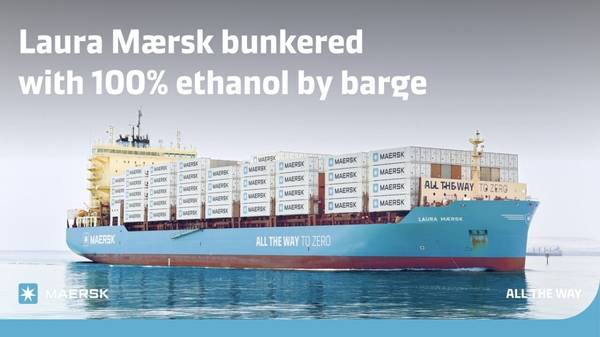
Laura Maersk ethanol bunkering graphic. Maersk conducts large-scale ethanol bunkering trial on Laura Maersk in Rotterdam  

A.P. Moller – Maersk has conducted a barge-delivered ethanol bunkering operation as part of ongoing fuel trials.

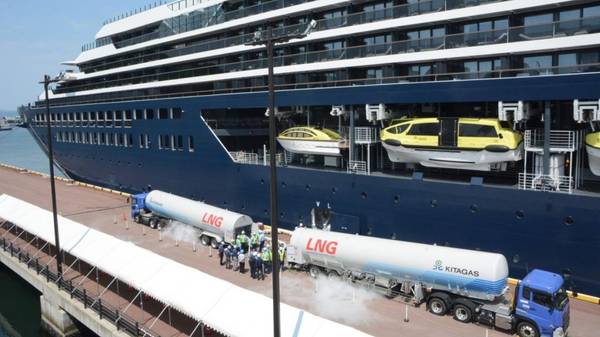
Luminara vessel truck-to-ship bunkering. MOL Techno-Trade completes first LNG bunkering for international cruise ship in Hokkaido  

Truck-to-ship LNG operation at Hakodate marks first such supply to an international cruise vessel in Hokkaido.

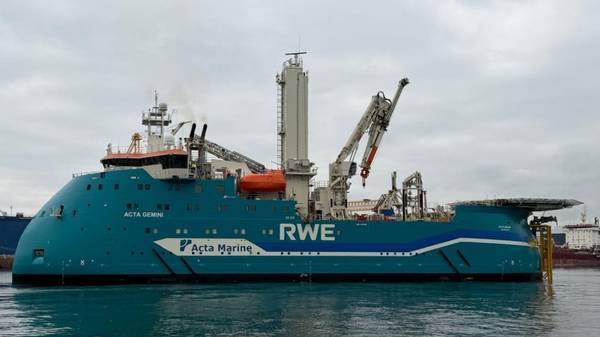
Acta Gemini vessel. Acta Marine takes delivery of methanol dual-fuel CSOV Acta Gemini for RWE wind farm charter  

The vessel will support operations at the Sofia Offshore Wind Farm at Dogger Bank.


↑  Back to Top


 Recommended