This is a legacy page. Please click here to view the latest version.
Tue 30 Mar 2010, 08:41 GMT

Sinopec aims to increase fuel oil market share


Asia's leading refiner says that 'greater efforts' will be made to increase sales of fuel oil.


Asia's leading refiner Sinopec has said that it will aim to increase its market share of fuel oil in 2010.

News of Sinopec's fuel oil expansion strategy was outlined in the announcement of the company's annual results for 2009, where net profit attributable to equity holders was RMB 61.26 billion (US$8.96 billion), representing an increase of 109.0 percent over the same period last year.

In 2009, the company sold 124 million tonnes of refined oil products, a slight increase over 2008, while the segment's operating profit recorded RMB 30.3 billion (US$4.4 billion), a decline of 21.3 percent compared to 2008.

The company processed 183 million tonnes of crude oil and produced 113.69 million tonnes of refined oil products, up 6.7 percent and 5.9 percent from the previous year respectively.

Thanks to the implementation of a new pricing mechanism for oil products and tax reform, and a series of operational measures including a programme to optimize production and high capacity utilization rates, the operating profit of its refining business was RMB23.1 billion (US$3.37 billion), a significant increase of RMB86.7 billion (US$12.68 billion) over an operating loss of RMB 63.6 billion (US$9.3 billion) last year.

Commenting on the results Mr. Su Shulin, Chairman of Sinopec, said: "In 2009, the global financial crisis and intense market competition posed severe challenges to the Company's production and operations. In particular, the beginning of the year witnessed plummeting price and demand for petroleum and petrochemical products, and a harsh contraction in E&P segment profits, while the refining, petrochemical and marketing businesses were faced with high inventories. Despite the challenges, the Company achieved impressive results by taking a series of proactive measures including vigorous efforts to develop new markets, targeted management for refinement on details, as well as structural adjustments.

"As the international crude price gradually recovered, the E&P [Exploration and Production] segment realized sound returns which enhanced the sustainability of its business. Fully leveraging its capability to accommodate various crude feeds, the refineries maximized refining throughput by running at almost full capacity ever since the second quarter of 2009. In the meantime, the refining segment introduced business process optimization initiatives across several functions, from crude procurement and resource allocation, to inventory and logistics management, and product mix adjustment, thus generating better profits.

"Over the course of the past year, China's macro economy gradually recovered, and a fuel pricing policy paired with tax and fee reform were implemented in the domestic market. The company's four business segments all achieved satisfactory operating performance, resulting from our effective counter-measures to the economic crisis, as well as from advantages gained from our integrated upstream, midstream and downstream business model. The company's asset structure and quality have been enhanced, net assets increased by 14.6% compared to that at the end of 2008."

Outlook for 2010

Commenting on the fuel oil market, Sinopec said that 'greater efforts' would be made to expand and increase its market share for both fuel oil and jet fuel.

The company added that it would improve its sales of lubricants, asphalt and petroleum coke by "leveraging its brand advantages".

In 2010, Sinopec plans to process 203 million tonnes of crude oil and produce 121 million tonnes of refined oil products.

China 

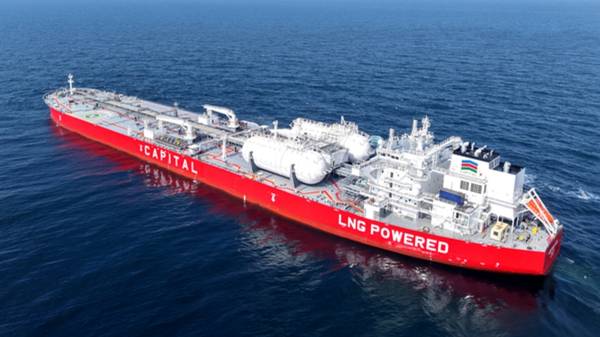
Capital's LNG-powered vessel. Chinese shipbuilder delivers 155,500-dwt LNG dual-fuel crude oil tanker  

Vessel handed over to Capital Ship Management Corp in China.

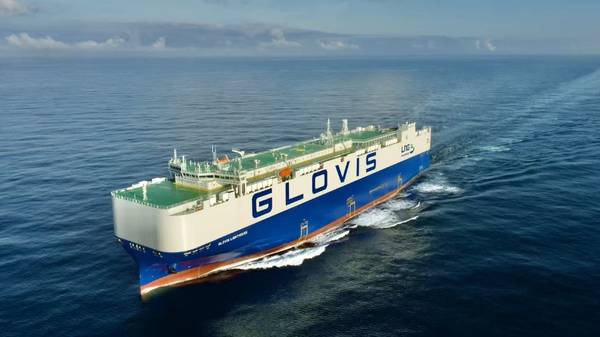
Glovis Lighthouse vessel. Seaspan takes delivery of first 10,800-ceu dual-fuel LNG car carrier  

Glovis Lighthouse enters service as one of a handful of vessels globally to exceed 10,000 CEU capacity.

Port of Rotterdam, Maersk, Core Power and Lloyd's Register logos. Rotterdam study maps pathway for nuclear-powered commercial ship port calls  

A joint study by Lloyd's Register, the Port of Rotterdam, Core Power and Maersk examines the feasibility of nuclear vessel port calls.

Hakata waterfront. Kinkai Yusen conducts first biofuel demonstration on domestic ro-ro vessel at Hakata Port  

Japanese shipping company to trial B24 biofuel blend aboard the vessel Nanotsu on 16 June.

Norwegian Energy Trading (NET) AS logo. Norwegian Energy Trading renews ISCC certification for biofuel trading  

Norwegian bunker trader says renewal reflects growing biofuel volumes and commitment to verifiable sustainability standards.

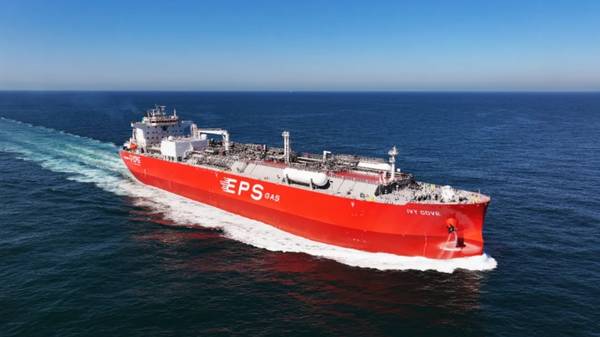
Ivy Cove vessel. Jiangnan delivers VLAC with LPG dual-fuel main engine  

Vessel is claimed to be the world’s first 93,000 cbm very large ammonia carrier.

BIMCO logo. BIMCO adopts biofuel clause for time charter parties  

Shipping body has introduced a new contractual clause to govern the use of biofuels under time charter agreements.

Prince Madog hydrogen fuel cell retrofit receives LR certification. UK research vessel Prince Madog wins LR certification for hydrogen fuel cell retrofit  

Lloyd’s Register certifies what is claimed to be the first sea-going, manned hydrogen retrofit of its kind.

World Fuel logo. World Fuel seeks marine lube operations and sales executive in Greece  

US firm is recruiting for a commercial role focused on marine lubricants, based out of its Glyfada office.

ECSA Parliamentary Breakfast event. European Shipowners calls for fuel supplier mandates and ETS revenue investment ahead of policy revision  

Industry body urges EU policymakers to redirect carbon revenues into clean marine fuel production.


↑  Back to Top


 Recommended