This is a legacy page. Please click here to view the latest version.
Mon 29 Mar 2010, 07:41 GMT

Agreement to buy Shell NZ downstream assets


Deal includes the acquisition of marine fuel supply facilities and a stake in the Marsden Point oil refinery.


A consortium owned 50% by Infratil Limited and 50% by the Guardians of New Zealand Superannuation today announced it has executed a sale and purchase agreement for the acquisition of Shell New Zealand’s distribution and retail businesses and 17.1% interest in the New Zealand Refining Company. The agreement is scheduled to complete on April 1, 2010, after which the business will trade under the name of Greenstone Energy Limited.

The agreement remains conditional on the drawdown of bank facilities (the relevant bank facilities agreement has been signed) and finalising certain third party consents.

The base purchase price is $696.5 million plus an adjustment for actual net working capital in excess of $208 million at settlement date. Normal net working capital levels are estimated to average $250 million during a 12 month period.

In addition to an extensive retail network and commercial customer base, the acquisition includes NZ-wide distribution, storage, aviation and marine fuel supply facilities; a 25% share in Loyalty New Zealand (Fly Buys); and the ongoing supply of Shell fuels and products.

The consortium is also due to make an advance payment of $13.5 million for “medium term” rights to continue using the Shell retail brand, meaning there will be no immediately visible change for customers while the company puts in place local management and investment plans.

Total equity provided by Infratil and the NZ Superannuation Fund will amount to $420 million with the balance of the purchase consideration bank funded. The banks are also providing a working capital facility to accommodate the fluctuating inventory of the business.

"This transaction has taken almost a year to conclude and follows very extensive due diligence. A comprehensive transition plan has been developed to ensure the business continues to reliably provide excellent products and services," Infratil said in a statement.

"The businesses being acquired have been built up by Shell over almost a century and their decision to sell due to changes in the global oil market has presented a once in a generation opportunity," said Marko Bogoievski, CEO and Managing Director, Infratil.

“The goal from here is to continue to provide high-quality fuels at competitive prices and to leverage the benefits of a New Zealand owned and managed downstream business,” Bogoievski added.

Over the last year Infratil has divested approximately $400 million of assets and with this transaction, will have invested over $400 million in new assets.

"The transactions leave Infratil with a more focused portfolio of investments that is well placed to generate good returns for its shareholders on both a short term and longer term basis," Infratil said.

New Zealand Refining Company

New Zealand Refining Co.’s Marsden Point oil refinery is the country’s only refinery, providing around 75% of the country’s annual fuel needs.

New Zealand Refining Company's 240 million shares are also held by BP, Exxon Mobil, Chevron, Emerald Capital, as well as approximately 3,000 private and institutional investors.

Each of the four oil majors has processing rights to a share of the refinery's capacity. This is calculated on the basis of their average market share over the preceeding three years. The theoretical effect of this is that the refinery is run as if it were four small refineries, with each company selecting and supplying its own crude diet and setting its own product output.

With their shared access to the country's sole refinery, the four majors have dominated the New Zealand oil and bunker markets for number of years, although there was a brief challenge in the late 1990s from Fletcher Challenge Energy. The company's oil and gas operations were acquired by Shell in March 2001 and its wholesale fuels business was purchased by Caltex.


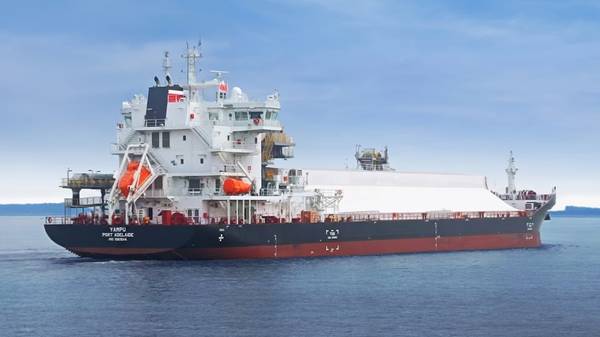
Yampu vessel. CSL delivers world’s first battery-powered self-unloading bulk carrier  

MV Yampu will transport limestone for Adbri in Australia, with full electric operation targeted by 2031.

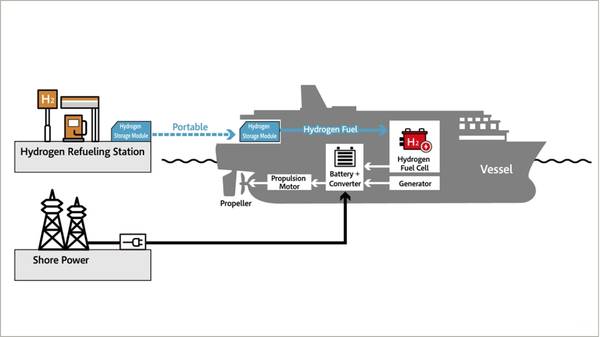
Illustration of hydrogen fuel cell system. NYK, Yanmar and Eneos to install hydrogen fuel cell system on new Tokyo dining cruise vessel  

Three Japanese companies are collaborating to bring hydrogen propulsion to a dining cruise ship due to enter service in 2027.

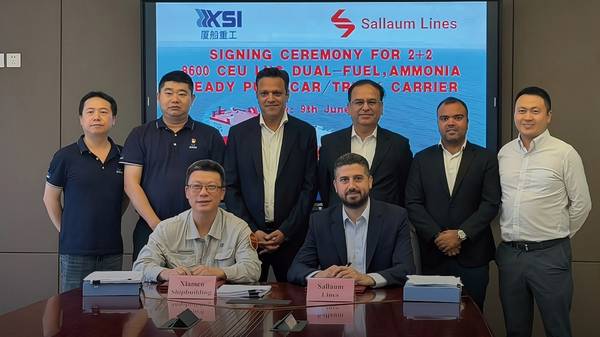
Signing ceremony for 8,600-ceu dual-fuel PCTCs. Sallaum Lines orders four 8,600-ceu dual-fuel PCTCs from Chinese yard — its largest vessels to date  

Ammonia-ready car carriers ordered from XSI mark the next phase of Sallaum Lines’ fleet renewal.

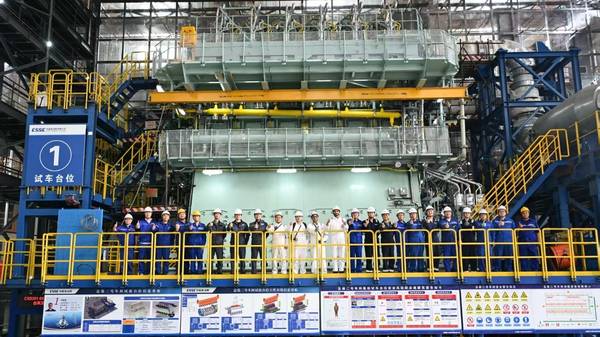
Factory acceptance test (FAT) for X72DF-A ammonia engine. WinGD completes factory acceptance test on X72DF-A ammonia engine destined for CMB.Tech bulker  

Swiss engine maker WinGD has completed factory acceptance testing of its ammonia-fuelled X72DF-A engine in China.

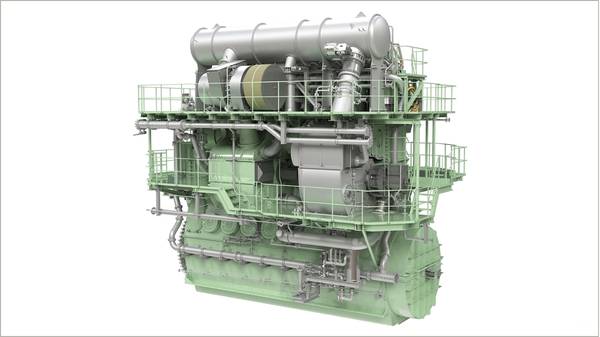
Everllence B&W S60ME-C10.5-GI-EcoEGR engine render. Everllence secures world’s first order for ME-GI Mk10.7 dual-fuel engine  

Norwegian car-carrier operator GCC selects next-generation methane engine for four newbuilds.

Capital Clean Energy Carriers Corp. (CCEC) and CMA CGM logos. Capital Clean Energy Carriers and CMA CGM form joint venture to build $82.8m LNG bunkering vessel  

The 20,000-cbm dual-fuel vessel is due for delivery in the third quarter of 2028.

Hong Kong flag. Hong Kong launches port dues and vessel registration incentives to boost green fuel bunkering  

Two new schemes offer financial concessions to attract green fuel vessels and grow the Hong Kong fleet.

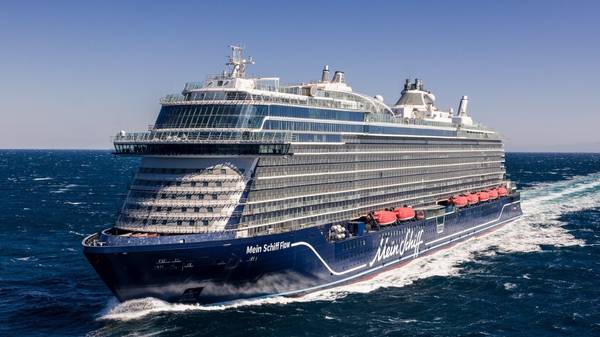
Mein Schiff Flow vessel. Fincantieri delivers LNG-ready cruise ship Mein Schiff Flow to TUI Cruises  

The 160,000 gross-tonne vessel is the second of two InTUItion-class dual-fuel ships.

Monjasa logo. Monjasa seeks trader for Fredericia-based Northwest Europe desk  

Bunker firm is recruiting a trader to join its Northwest Europe team.

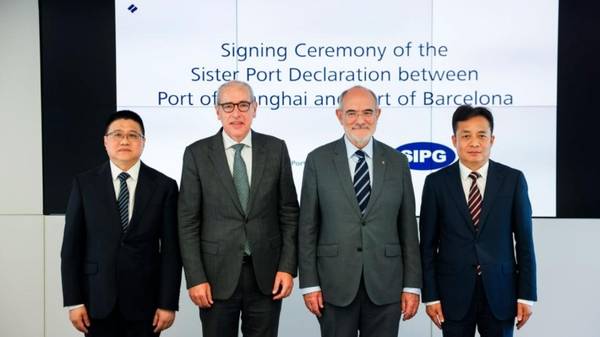
Port of Barcelona and Port of Shanghai signing ceremony. Barcelona and Shanghai sign strategic port cooperation agreement targeting green fuels and digital corridors  

Ports formalise a 'sister ports' relationship covering green shipping, digitalisation and intermodality.


↑  Back to Top


 Recommended