This is a legacy page. Please click here to view the latest version.
Thu 18 Mar 2010, 06:36 GMT

OW: Suppliers should support owners in compliancy drive


Danish firm says a partnership-based relationship founded on an understanding of the technical issues is key to success.


O.W. Bunker, one of the world’s leading suppliers and traders of marine fuel, has announced that it believes that fuel suppliers must take a greater responsibility in working with ship owners and operators to help them overcome the technical difficulties that they are experiencing in striving to meet sulphur dioxide regulation such as the recently implemented EU Directive 2005/33/EC, which sets a 0.1% sulphur fuel limit for ships at berth in EU ports.

Some ship owners and operators have been experiencing problems when switching fuel, including loss of propulsion, engine failure, filter blockages, and damage to auxiliary pumps. This is corroborated by recent statistics from California following the implementation of CARB’s (Californian Air Resources Board) July 2009 low sulphur regulation, which showed that loss of propulsion incidents increased in 2009 to 67, from an average of 23.6 incidents per year between 2004 and 2008. All these problems have a cost for the ship owners and the operators.

OW Bunker believes that these incidents can be reduced if suppliers, who are responsible for quality and have a real technical understanding, work closer and collaborate with their customers to help manage the complexities of the switching process. And thereby helping the customers to save money, increase efficiencies and minimize downtime.

Steffen Kortegaard, Technical Director, OW Bunker, said: “Switching to low sulphur fuel oils and distillates is complex, and there needs to be a deep understanding of the technical process. From appropriate flash points and safety margins for storing and handling, to testing lubricity prior to distillate utilization; from ensuring the quality of fuel pumps and appropriately cooling the gas oil, to implementing the right training procedures for crews; from ensuring that there is a good length of time in changing between fuel oil and gas oil and analyzing the filter pressure, to only using duplex filters and making sure that there is compatibility with the blended fuels; from fitting a cooler with sufficient capacity in the low viscosity line and frequently testing pumps for leakages, right down to understanding unusual noises that might mean that there is a problem.”

Kortegaard added: “There is much that can be done to minimise risk and mitigate potential problems. But it requires a change in the relationship between the fuel supplier and the ship operator, where the onus is on developing a partnership of responsibility based on a mutual understanding of the challenges and a focus on implementing effective solutions – the customers’ success is equal to our success.

“Clearly ship owners and operators must develop an appropriate procurement strategy depending on their trading routes and indeed their brand commitments to the environment, whether it’s always purchasing fuel oil with a quality of 1.5% sulphur and under, or if they have sporadic forays into ECAs and regulated zones they might be better utilizing a double fuel oil system. The key is to have a plan, both from a technical perspective and as part of an overall risk management strategy. However, success is based on and driven by a partnership approach between the fuel supplier and the customer.”

O.W. Bunker says is committed to ensuring that the customer is the primary focus, providing products and services as well as knowledge, expertise and advice that adds value. The company is in the process of developing technical collateral and presentations to provide customers with a guide for managing the technical, economical and risk management issues related to low sulphur legislation and compliance.

Götz Lehsten, Vice President, OW Bunker, said: “Our focus must always be on the customer and their needs, taking every opportunity to add value, rather than simply just supplying the physical product. In the current economic and legislative environment it is vital that suppliers take responsibility for every aspect of the customer relationship, delivering solutions that meet their needs in order to generate efficiencies and improve profitability. Maintaining that preferred partner status can only be achieved by delivering solutions, as well as quality products, that helps them solve the issues that they face, founded on a fundamental knowledge and expertise of the market that they operate in.”

O.W. Bunker is encouraging all ship owners and operators to contact them if they are having economical, technical or risk management challenges with the low sulphur fuel limits for ships so they can get a valid solution to their challenges.

Specific documentation on how to deal with compliancy and technical issues related to switching to low sulphur grades of fuel can be obtained by emailing marketing@owbunker.com


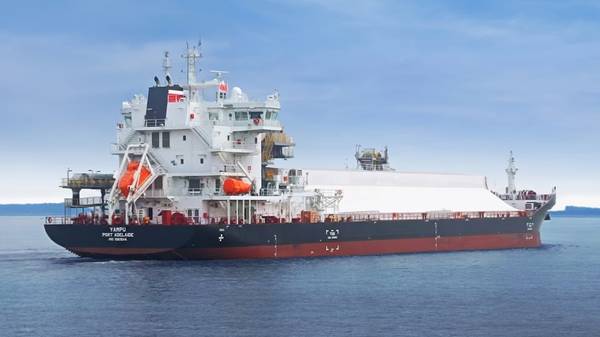
Yampu vessel. CSL delivers world’s first battery-powered self-unloading bulk carrier  

MV Yampu will transport limestone for Adbri in Australia, with full electric operation targeted by 2031.

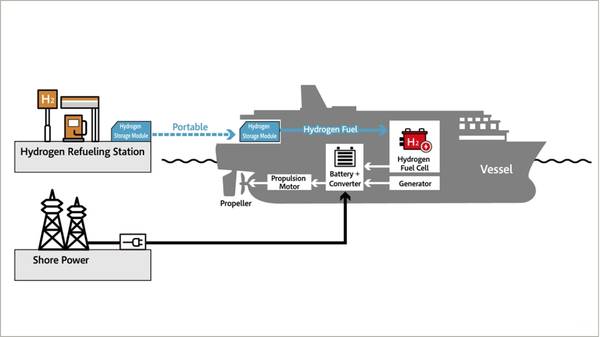
Illustration of hydrogen fuel cell system. NYK, Yanmar and Eneos to install hydrogen fuel cell system on new Tokyo dining cruise vessel  

Three Japanese companies are collaborating to bring hydrogen propulsion to a dining cruise ship due to enter service in 2027.

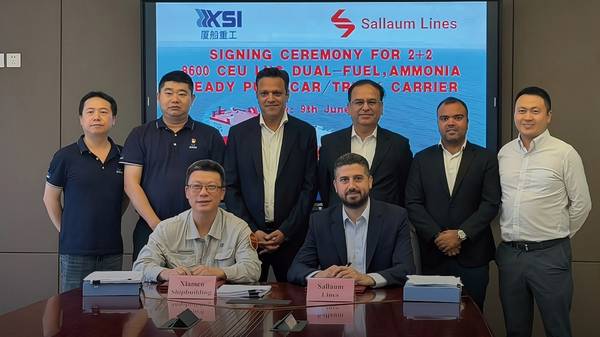
Signing ceremony for 8,600-ceu dual-fuel PCTCs. Sallaum Lines orders four 8,600-ceu dual-fuel PCTCs from Chinese yard — its largest vessels to date  

Ammonia-ready car carriers ordered from XSI mark the next phase of Sallaum Lines’ fleet renewal.

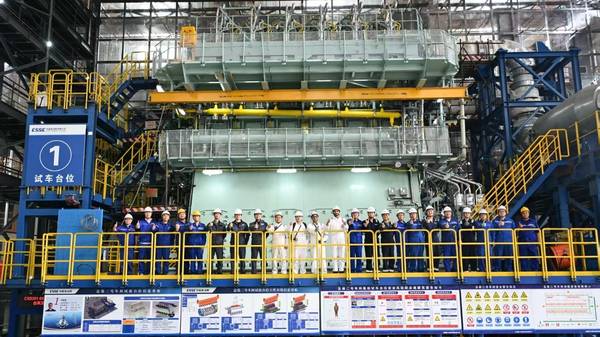
Factory acceptance test (FAT) for X72DF-A ammonia engine. WinGD completes factory acceptance test on X72DF-A ammonia engine destined for CMB.Tech bulker  

Swiss engine maker WinGD has completed factory acceptance testing of its ammonia-fuelled X72DF-A engine in China.

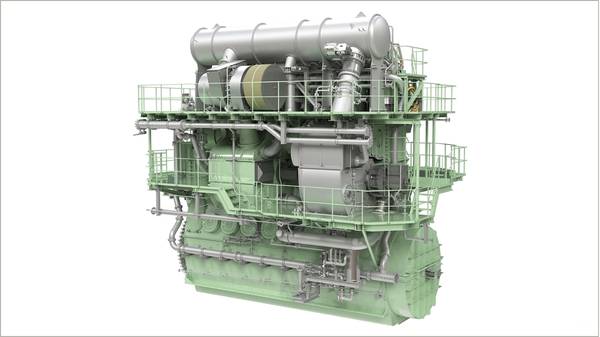
Everllence B&W S60ME-C10.5-GI-EcoEGR engine render. Everllence secures world’s first order for ME-GI Mk10.7 dual-fuel engine  

Norwegian car-carrier operator GCC selects next-generation methane engine for four newbuilds.

Capital Clean Energy Carriers Corp. (CCEC) and CMA CGM logos. Capital Clean Energy Carriers and CMA CGM form joint venture to build $82.8m LNG bunkering vessel  

The 20,000-cbm dual-fuel vessel is due for delivery in the third quarter of 2028.

Hong Kong flag. Hong Kong launches port dues and vessel registration incentives to boost green fuel bunkering  

Two new schemes offer financial concessions to attract green fuel vessels and grow the Hong Kong fleet.

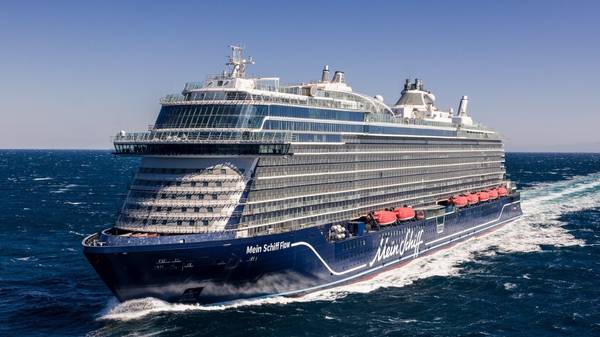
Mein Schiff Flow vessel. Fincantieri delivers LNG-ready cruise ship Mein Schiff Flow to TUI Cruises  

The 160,000 gross-tonne vessel is the second of two InTUItion-class dual-fuel ships.

Monjasa logo. Monjasa seeks trader for Fredericia-based Northwest Europe desk  

Bunker firm is recruiting a trader to join its Northwest Europe team.

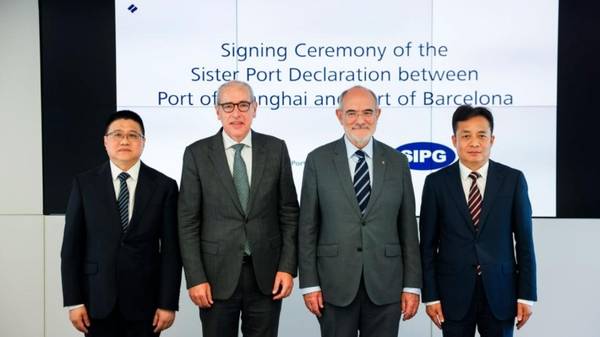
Port of Barcelona and Port of Shanghai signing ceremony. Barcelona and Shanghai sign strategic port cooperation agreement targeting green fuels and digital corridors  

Ports formalise a 'sister ports' relationship covering green shipping, digitalisation and intermodality.


↑  Back to Top