This is a legacy page. Please click here to view the latest version.
Mon 15 Mar 2010, 11:18 GMT

EU funding to achieve shipping 'breakthrough'


Martime research project receives EU funding to produce a breakthrough in eco-friendly shipping solutions.


Maritime research project "BESST" has signed a contractual grant agreement with the European Commission aimed at achieving a breakthrough in competitive, environmentally-friendly shipping.

"BESST - Breakthrough in European Ship and Shipbuilding Technologies" is made up of Europe's leading shipbuilders, including STX Finland, STX France, Fincantieri, Meyer Werft, Thyssen Krupp Marine Systems and Damen Group. In addition, Germanischer Lloyd (GL) along with 20 research institutes and universities, further four classification societies and 31 industrial companies form part of the research network.

Initiated by European Economic Interest Group EUROYARDS, BESST aims to achieve a breakthrough in competitiveness, environmental friendliness and safety in EU built ships with a focus on passenger ships, ferries and mega-yachts. The strategic objective of BESST is to secure and improve the competitive position of European shipyards in a sustainable way.

The primary goal is to increase the competitiveness of European built ships through decreased life cycle cost, drastically reduced environmental impact and continually improved safety. The estimated overall impact of BESST will result in a reduction of life cycle cost of roughly 120 million Euro per Panamax ship and a reduction of CO2 emissions by approximately 12 % per ship each year.

The key areas of technical developments include improved energy efficiency and reduced emissions, space optimisation and easy maintenance, improving payload to gross tonnage ratio, cost efficient building and refurbishment processes, noise and vibration, improved reliability through model-based design and condition monitoring, optimization of logistic chains as well as improving safety and security.

Advancements from the project will also be applied to other ship types built in Europe through modular and adaptable solutions. This will aim to ensure an impact reaching far beyond the passenger ship sector. The results will be integrated into virtual show cases, i.e. ship concepts demonstrating the technical solutions as well as the life cycle impact compared to current designs.

Continuously improved R&D cooperation and networking is seen by the project consortium as the European answer to the challenge of large Asian yards, overcoming the historic fragmentation of European shipbuilding and combining the high flexibility of smaller industry groups with the critical mass to achieve a breakthrough in innovation and market impact.

BESST will aim to achieve a close interaction with ship operators through a dedicated Advisory Group. A multi-level management structure, based on experience of the shipyards in previous research and development as well as commercial projects, will ensure efficient and targeted work of the large consortium to ensure the desired impact. The maritime research project began its work in September 2009 and will be completed in the summer of 2013.

EU   Ferry  

Yampu vessel. CSL delivers world’s first battery-powered self-unloading bulk carrier  

MV Yampu will transport limestone for Adbri in Australia, with full electric operation targeted by 2031.

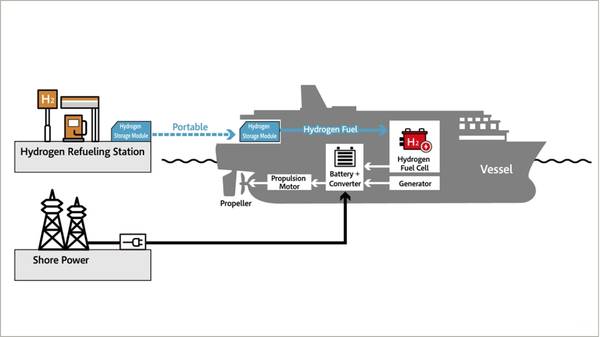
Illustration of hydrogen fuel cell system. NYK, Yanmar and Eneos to install hydrogen fuel cell system on new Tokyo dining cruise vessel  

Three Japanese companies are collaborating to bring hydrogen propulsion to a dining cruise ship due to enter service in 2027.

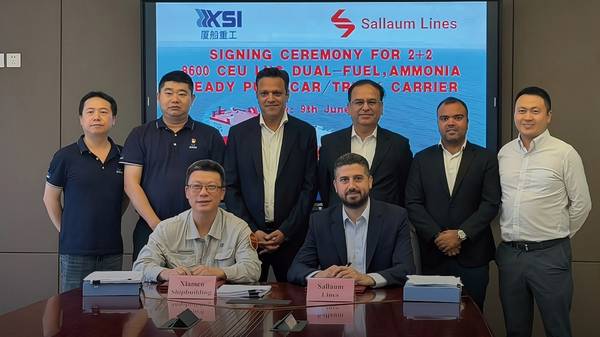
Signing ceremony for 8,600-ceu dual-fuel PCTCs. Sallaum Lines orders four 8,600-ceu dual-fuel PCTCs from Chinese yard — its largest vessels to date  

Ammonia-ready car carriers ordered from XSI mark the next phase of Sallaum Lines’ fleet renewal.

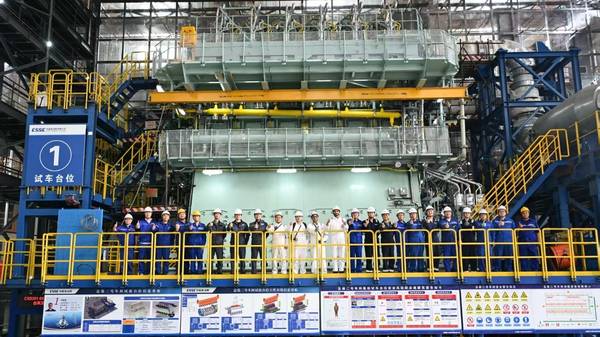
Factory acceptance test (FAT) for X72DF-A ammonia engine. WinGD completes factory acceptance test on X72DF-A ammonia engine destined for CMB.Tech bulker  

Swiss engine maker WinGD has completed factory acceptance testing of its ammonia-fuelled X72DF-A engine in China.

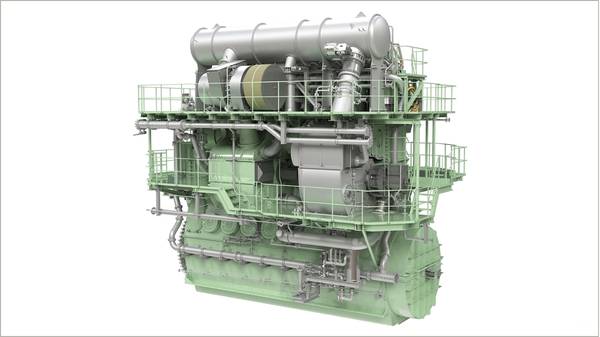
Everllence B&W S60ME-C10.5-GI-EcoEGR engine render. Everllence secures world’s first order for ME-GI Mk10.7 dual-fuel engine  

Norwegian car-carrier operator GCC selects next-generation methane engine for four newbuilds.

Capital Clean Energy Carriers Corp. (CCEC) and CMA CGM logos. Capital Clean Energy Carriers and CMA CGM form joint venture to build $82.8m LNG bunkering vessel  

The 20,000-cbm dual-fuel vessel is due for delivery in the third quarter of 2028.

Hong Kong flag. Hong Kong launches port dues and vessel registration incentives to boost green fuel bunkering  

Two new schemes offer financial concessions to attract green fuel vessels and grow the Hong Kong fleet.

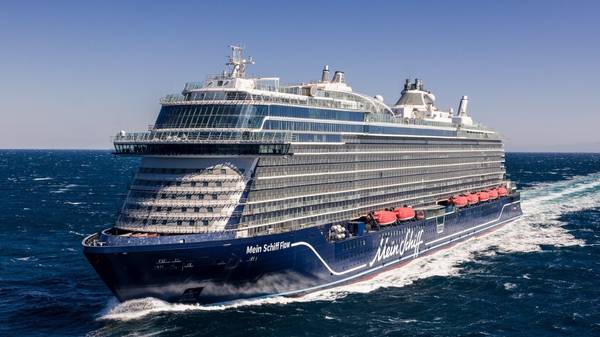
Mein Schiff Flow vessel. Fincantieri delivers LNG-ready cruise ship Mein Schiff Flow to TUI Cruises  

The 160,000 gross-tonne vessel is the second of two InTUItion-class dual-fuel ships.

Monjasa logo. Monjasa seeks trader for Fredericia-based Northwest Europe desk  

Bunker firm is recruiting a trader to join its Northwest Europe team.

Port of Barcelona and Port of Shanghai signing ceremony. Barcelona and Shanghai sign strategic port cooperation agreement targeting green fuels and digital corridors  

Ports formalise a 'sister ports' relationship covering green shipping, digitalisation and intermodality.


↑  Back to Top