This is a legacy page. Please click here to view the latest version.
Wed 3 Mar 2010, 07:07 GMT

Retrofit can cut fuel consumption by 15%, says tech firm


New retrofit for existing vessels is said to have an average fuel cost payback of under two years.


DK Group, one of the world’s leading maritime technology companies, has announced the launch of the Air Cavity System (ACS) Retrofit for existing vessels.

The new, breakthrough technology - a development of the original ACS that was specifically designed for new vessels - can be retrofitted at standard drydock or in most ship and repair yards in just fourteen days.

ACS Retrofit, which during seatrials is said to have reduced fuel consumption by up to 15% depending on vessel type, has been calculated to have an average fuel cost payback of under two years at current bunker fuel prices, with some ship classes achieving substantially better payback periods, according to DK Group.

Research and development carried out by DK Group Founder Jorn Winkler and his team have also reduced the size and length of the cavity of the ACS system by 90% since it was first developed.

DK Group, which has over ten years of experience in devleoping air lubrication technology for Ocean Going Vessels, has also announced the appointment of Ken Bloch Soerensen as chief executive officer. Soerensen has significant experience in the shipping industry following his tenure as chief executive of United Arab Shipping Company (UASC), executive director of the European Liner Affairs Association, senior vice president of NOL Group, as well as 18 years working with A.P. Moller - Maersk.

Soerensen commented: “One of the key attractions in taking the position of CEO with DK Group was the understanding that ACS could be adapted to exsisting vessels and provide an offering for ship owners and operators that will be hard to turn down given the current market cycle of needing to drive efficiences, high bunker fuel prices, reduction in long term vessel orders and impending environmental legislation.”

“Few, if any, current efficiency technologies provide such a simple retrofit procedure with such significant payback timelines. ACS Retrofit is a proven technology following rigorous testing on our own test ship ACS Demonstrator – the only demonstration vessel in the market.”

Jorn Winkler said: “I am delighted that a person of Ken’s calibre and experience has decided to join DK Group, which provides real validation for ACS Retrofit as well as the market opportunity. The company is now well positioned to reap the rewards as the industry begins to respond to the demands for eco-efficiency. We have a viable and proven technology, and now we have a CEO that understands the dynamics of the shipping industry, as well as real access to the contacts and networks that are essential in taking ACS Retrofit to market.”

ACS can be installed on existing and newbuild vessels for many classes of vessels in the ocean-going commercial fleet, including: tanker vessels, containerships, bulk carriers, general cargo ships and LNG/LPG vessels.

DK Group said ACS will continue to be offered to shipowners building new vessels in tandem with ACS for existing vessels.

[Image: The 2,550 dwt, 83-metre MPV, ACS Demonstrator - on which DG Group seatrials have been conducted.]


VPS logo. Fuel quality management for vessels in extended idle: Arabian Gulf, Gulf of Oman and adjacent anchorages | Rahul Choudhuri, VPS  

Managing fuel quality deterioration following the closure of the Strait of Hormuz.

Person signing a document. Agastya Green Fuels signs 250,000 t/yr e-methanol offtake deal with Sri Lanka’s SAR Group  

Indian producer and Sri Lankan maritime firm agree long-term green methanol supply partnership.

Bunker Holding logo. Bunker Holding seeks risk specialist for Copenhagen internal pricing desk  

Danish bunker group is expanding its internal pricing team to meet growing demand for fixed-price solutions.

Global biofuels demand chart. Biofuel demand could surge 70% by 2030 as food price fears mount  

T&E warns governments risk trading an oil crisis for a food crisis as biofuel targets strain vegetable oil and fertiliser markets.

Shore power illustration. Shore power shifts from voluntary measure to compliance requirement, DNV white paper finds  

Shore power is moving from an optional emissions tool to a regulatory obligation for shipowners in key trades.

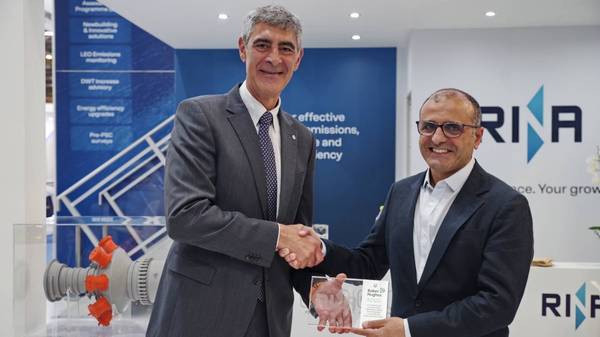
Giosuè Vezzuto and Ahmed Eldemerdash. Baker Hughes’ NovaLT 16 gas turbine receives RINA type approval for marine propulsion on hydrogen and natural gas  

Certification covers operation on natural gas and blends up to 100% hydrogen for marine use.

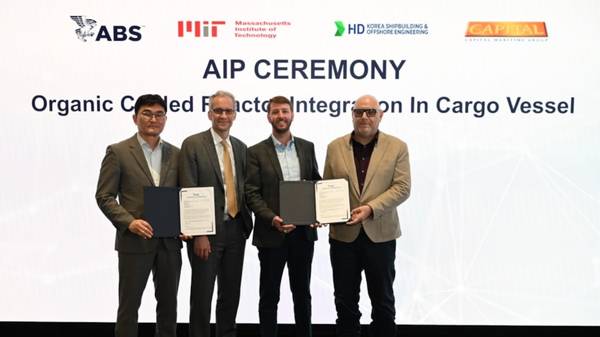
AiP award ceremony for nuclear reactor integration in cargo vessel design. ABS grants approval in principle for nuclear reactor integration in cargo vessel design  

ABS, HD KSOE, Capital Maritime Group and MIT have received approval in principle for a nuclear-powered cargo vessel propulsion system.

Green e-fuel export corridor consortium partners logos. Green e-fuel export corridor between Brazil and Belgium advances to feasibility stage  

A consortium has been formed to develop a green e-fuel corridor linking Porto do Açu to Antwerp-Bruges.

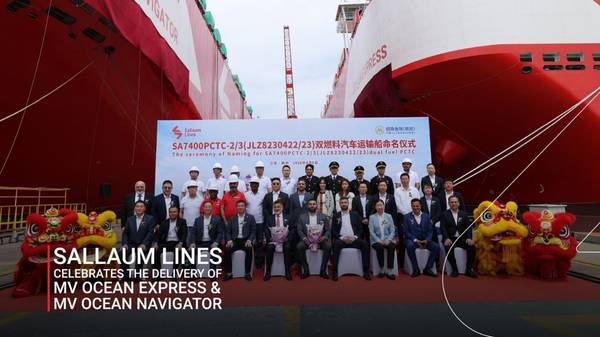
Naming ceremony of Ocean Express and Ocean Navigator vessels. Sallaum Lines takes delivery of two LNG-fuelled PCTCs in simultaneous handover ceremony  

RoRo carrier receives MV Ocean Express and MV Ocean Navigator from Chinese shipyard.

Person signing a document. Agastya Group signs MoU with Andhra Pradesh government for 1 MTPA green methanol hub at Mulapeta Port  

India-based Agastya Group plans a $6.5bn green methanol export facility on the country's east coast.


↑  Back to Top