This is a legacy page. Please click here to view the latest version.
Wed 3 Feb 2010, 10:44 GMT

Shipbuilder to develop LNG and fuel cell technology


South Korean firm unveils its plan to build only eco-friendly ships from 2015.


On January 28th, at its corporate headquarters in Seocho-dong, Seoul, Samsung Heavy Industries (SHI) declared its new green management policies at a ceremony that was attended by more than 120 guests, including ship owners such as SK Shipping and Hanjin Shipping, and respected academics in the field of environmental issues.

The company unveiled its plan to build only eco-friendly ships from 2015, by achieving a 30% reduction in greenhouse gas emissions. As part of the strategy SHI also plans to develop LNG and fuel cells in order to launch a groundbreaking eco-friendly ship in the future.

"The announcement makes SHI the first shipbuilder in the global shipbuilding industry to declare a green management policy that includes a detailed vision for the development of eco-friendly products and the reduction of greenhouse gas emissions," SSi said in a statement.

In relation to its green management plan, SHI announced three key strategies, which include the development of eco-friendly ships with up to 30% less greenhouse gas emissions, the development of green workplaces and green networks, and the development of zero-energy houses.

As the first step of its journey, the company aims by 2015 to design the optimal shape of ships that will maximize fuel efficiency, and to develop diverse technologies to improve energy efficiency, including heat recovery devices and low-temperature combustion devices, in order to reduce the greenhouse emissions of its ships.

In particular, the company has set a goal of building the world's first eco-friendly ship by developing LNG and hydrogen fuel cells, superconduction electricity-powered motors and cables, and CO2 collection technology, jointly with universities and private research centers.

The company has applied the diverse green technologies that it is developing to its 13,000 TEU-class container ships, and simulations are said to show that these technologies will reduce greenhouse emissions by up to 30%.

"The greenhouse gas reduction achieved by building a single ship in this manner is the equivalent to the gases absorbed by 12 million pine trees in a year. In other words, building a single eco-friendly ship is like planting 12 million pine trees in the sea," SHI said.

Experts predict that companies that enter the green technology shipbuilding market early will lead the shipbuilding and marine transportation industries in the future, as ships account for 3.3% of CO2 emissions worldwide, and IMO is introducing standards for the reduction of the greenhouse gas emissions of ships.

SHI said is favorably positioned to respond to this trend, as it built double-skin oil tankers in 1992 and electricity-powered LNG carriers in 2001, both of which were world firsts that gained the company high recognition in the field green shipbuilding technology, including the Environment Minister's Prize as the leading company with the best resource management practice, the Special Prize at the Korea Technology Awards, and the Eco-Friendly Ship Award of Nor-Shipping in 2009.

The company also announced that it has organized a green management committee, chaired by its CEO, which aims to develop eco-friendly ships and introduce green management policies to its shipyards and partner firms.

SHI aims to make the Geojeo Shipyard a green workplace by developing eco-friendly shipbuilding facilities, using eco-friendly paints and saving energy, while building a green network by providing technical support to its partners to reduce greenhouse gas emissions, and by introducing a certification system.

By 2011, SHI's construction business unit will launch the Zero-Energy House, in which residents will be able to live without an external energy supply, through research on major technologies such as highly efficient heat insulating materials, renewable energy, and high-efficiency power facilities.

CEO Roh In-sik of SHI said, "We will preoccupy the eco-friendly ship market and contribute to the preservation of the earth by voluntarily introducing green management before environmental regulations are tightened."


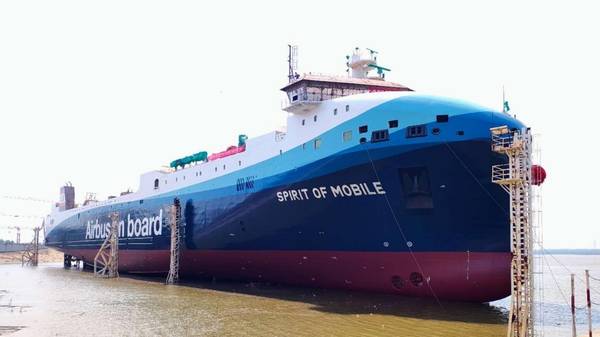
Spirit of Mobile vessel. LD Armateurs launches second low-emission ro-ro vessel for Airbus charter fleet  

French shipowner LD Armateurs has launched its second methanol-capable, rotor sail-equipped ro-ro vessel at a Chinese shipyard.

Verde Marine Energy (VME) logo. Verde Marine Energy renews ISCC EU certification and achieves RED III compliance  

Dutch bunker supplier Verde Marine Energy says it is now fully compliant with the EU's updated renewable energy rules.

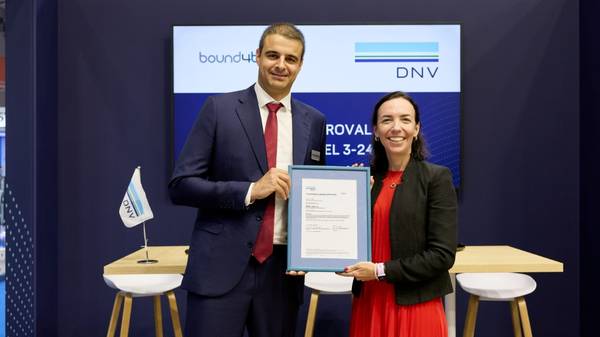
bound4blue receives DNV Type Approval. Bound4blue wins DNV type approval for its largest installed eSAIL suction sail  

DNV certification of the Model 3-24 eSAIL is said to support wider adoption of wind-assisted propulsion.

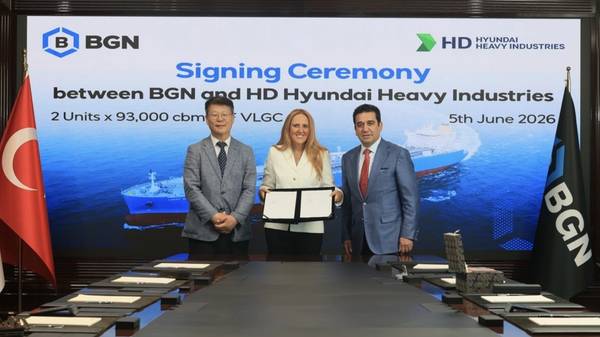
BGN and HD HHI signing ceremony. BGN expands owned LPG fleet with two additional VLGCs from HD HHI  

BGN signs a new shipbuilding contract, bringing its owned VLGC fleet to 19 vessels.

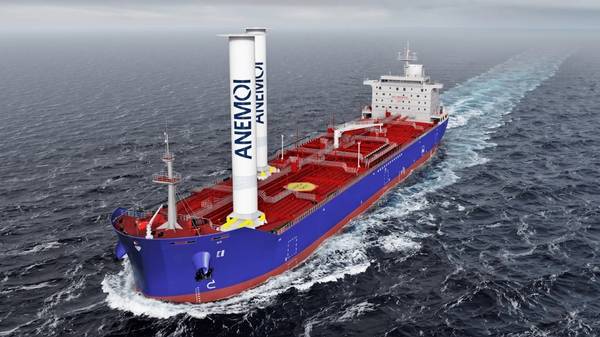
Medium-range (MR) tanker with Rotor Sails render. Anemoi and partners win DNV approval in principle for rotor sail integration on MR tankers  

DNV issues approval in principle for EX-rated rotor sail design on medium-range product tankers.

TMS Tankers logo. Lloyd’s Register delivers fleet-wide energy transition roadmap for TMS Tankers  

LR Advisory maps vessel-level compliance risk and decarbonisation pathways across the Greek owner’s tanker fleet.

Dr Prapisala Thepsithar, GCMD. GCMD shares biofuel assurance and green finance insights at Hong Kong shipping decarbonisation forum  

The Global Centre for Maritime Decarbonisation presented pilot findings on biofuels and energy efficiency financing.

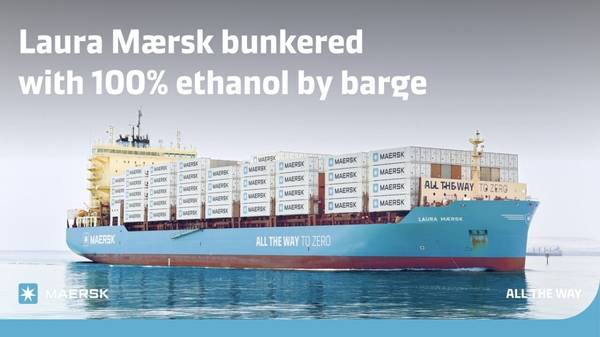
Laura Maersk ethanol bunkering graphic. Maersk conducts large-scale ethanol bunkering trial on Laura Maersk in Rotterdam  

A.P. Moller – Maersk has conducted a barge-delivered ethanol bunkering operation as part of ongoing fuel trials.

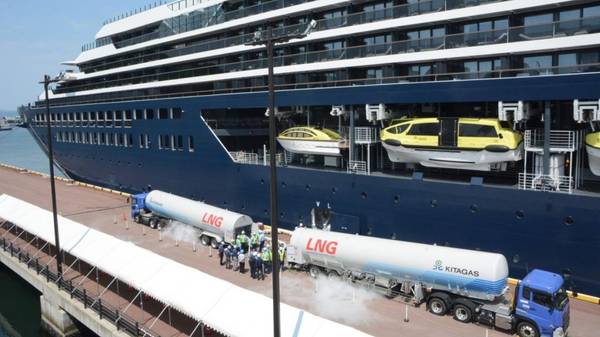
Luminara vessel truck-to-ship bunkering. MOL Techno-Trade completes first LNG bunkering for international cruise ship in Hokkaido  

Truck-to-ship LNG operation at Hakodate marks first such supply to an international cruise vessel in Hokkaido.

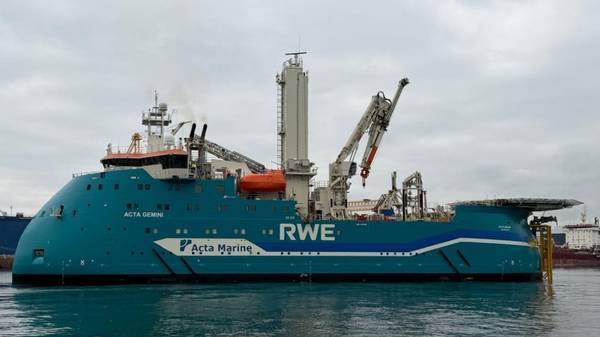
Acta Gemini vessel. Acta Marine takes delivery of methanol dual-fuel CSOV Acta Gemini for RWE wind farm charter  

The vessel will support operations at the Sofia Offshore Wind Farm at Dogger Bank.


↑  Back to Top