This is a legacy page. Please click here to view the latest version.
Fri 15 Jan 2010, 11:15 GMT

Japan to submit bunker levy proposal


Japanese government to propose global bunker tax ahead of MEPC meeting in March.


The government of Japan is planning to submit details of its proposed global tax on bunker fuel ahead of the upcoming International Maritime Organization (IMO) Marine Environment Protection Committee (MEPC) Meeting in March, Reuters reports.

Under Japan's proposal, charges would be pooled into a fund to help reduce carbon dioxide (CO2) emissions from shipping in developing countries and, as an incentive, part of the money would be refunded to vessels that improve their energy efficiency.

The objective of the plan is to encourage research and development for ships powered by renewable energy and help support developing countries. The funds raised would be allocated towards improving conditions at ship recycling yards in locations such as India and Bangladesh.

According to data released recently by the International Energy Agency (IEA), CO2 emissions from marine fuels worldwide have increased from 344.5 million tonnes in 1971 to 610.4 million tonnes in 2007, representing an increase of 265.9 million tonnes, or 77.2 percent, over this 36-year period.

The IEA report says global CO2 emissions from marine fuels made up 2.1 percent of total worldwide CO2 emissions in 2007.

Japan has said that capping emissions in absolute terms would be difficult given high volatility in demand for international shipping, in which developing economies play a key role.

Instead, Japan argues the maritime sector should target improvements in the energy efficiency of individual ships and support developing countries' efforts to do so.

Japan's levy plan differs from the European Commission's idea of incorporate shipping into a global emissions trading scheme.

The Council of the European Union has already agreed on plans to set a target of reducing emissions for the maritime sector by 20 percent on 2005 levels by 2020.

The EU Council's emissions targets for the shipping and aviation sectors form part of a global target of achieving at least a 50 percent reduction of global emissions as compared with 1990 levels by 2050 and for developed countries to reduce their emissions in aggregate by 80 percent or more by 2050 and by 30 percent by 2020 as part of that goal.

At the last meeting of the Marine Environment Protection Committee (MEPC) in July, an in-depth discussion was held on market-based instruments and a work plan was agreed for its further consideration of the topic, as of its next session (MEPC 60, March 2010).

"Such instruments would have two main purposes: to offset growing emissions in other sectors; and to serve as an incentive for the industry to invest in more fuel-efficient technologies," the IMO said in July.

In addition, delegates approved voluntary guidelines on an Energy Efficiency Design Index for new ships and a guidance on the development of a Ship Energy Efficiency Management Plan.

The next MEPC meeting is due to be held in London on 22-23 March 2010.


Capital's LNG-powered vessel. Chinese shipbuilder delivers 155,500-dwt LNG dual-fuel crude oil tanker  

Vessel handed over to Capital Ship Management Corp in China.

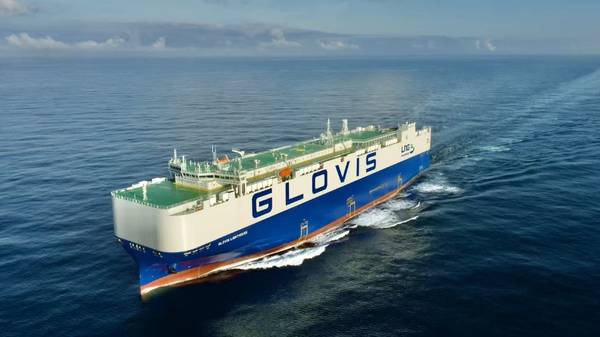
Glovis Lighthouse vessel. Seaspan takes delivery of first 10,800-ceu dual-fuel LNG car carrier  

Glovis Lighthouse enters service as one of a handful of vessels globally to exceed 10,000 CEU capacity.

Port of Rotterdam, Maersk, Core Power and Lloyd's Register logos. Rotterdam study maps pathway for nuclear-powered commercial ship port calls  

A joint study by Lloyd's Register, the Port of Rotterdam, Core Power and Maersk examines the feasibility of nuclear vessel port calls.

Hakata waterfront. Kinkai Yusen conducts first biofuel demonstration on domestic ro-ro vessel at Hakata Port  

Japanese shipping company to trial B24 biofuel blend aboard the vessel Nanotsu on 16 June.

Norwegian Energy Trading (NET) AS logo. Norwegian Energy Trading renews ISCC certification for biofuel trading  

Norwegian bunker trader says renewal reflects growing biofuel volumes and commitment to verifiable sustainability standards.

Ivy Cove vessel. Jiangnan delivers VLAC with LPG dual-fuel main engine  

Vessel is claimed to be the world’s first 93,000 cbm very large ammonia carrier.

BIMCO logo. BIMCO adopts biofuel clause for time charter parties  

Shipping body has introduced a new contractual clause to govern the use of biofuels under time charter agreements.

Prince Madog hydrogen fuel cell retrofit receives LR certification. UK research vessel Prince Madog wins LR certification for hydrogen fuel cell retrofit  

Lloyd’s Register certifies what is claimed to be the first sea-going, manned hydrogen retrofit of its kind.

World Fuel logo. World Fuel seeks marine lube operations and sales executive in Greece  

US firm is recruiting for a commercial role focused on marine lubricants, based out of its Glyfada office.

ECSA Parliamentary Breakfast event. European Shipowners calls for fuel supplier mandates and ETS revenue investment ahead of policy revision  

Industry body urges EU policymakers to redirect carbon revenues into clean marine fuel production.


↑  Back to Top