This is a legacy page. Please click here to view the latest version.
Mon 11 Jan 2010, 07:43 GMT

Concern raised over 'rushed and ill-advised' ISO 8217 revision proposals


Chemoil warns that proposed changes could lead to operators taking 'unnecessary risks' when buying bunkers.


Chemoil, one of the world’s leading independent physical suppliers of marine fuel, is urging the International Standard Organization’s (ISO) working group, which is currently reviewing changes to bunker fuel specifications ISO 8217, to ensure that there is a broad, cross-industry consensus for a fair and equitable revision to the Standard.

Responding to recent claims that current recommendations ISO/DIS (Draft International Standard) 8217 were too lenient and in favour of the bunker supplier, Chemoil has highlighted a number of issues raised within the proposed revision that, if implemented, could trigger rising bunker fuel costs for ship operators and will increase disputes over fuel specifications.

Adrian Tolson, Chemoil’s Vice President of Sales and Marketing, said: “Chemoil is alarmed at a number of rushed and ill-advised changes proposed to ISO 8217 that could lead to a reduction in the availability of bunker fuel in many ports, increase bunker fuel costs for ship operators and generate an increase in unnecessary contractual disputes at multiple stages of the bunker supply transaction. There is a real danger of the proposed regulations forcing ship operators to take unnecessary risks in buying bunkers that do not meet the new specifications because suppliers are forced to sell fuel with multiple exceptions to the new ISO 8217.

“With the proposed reductions of Aluminium (AI) and Silicon (Si) to 60 parts per million (ppm) from 80 ppm, Chemoil is against further reductions from current levels. Historically, levels of Al+Si up to 80ppm have not caused any abnormal wear issues on ships engines provided that a ship’s fuel treatment plant is working properly.

“This current limit has served this industry well for many years and a decrease to 60ppm is completely unnecessary. Moreover, the increasing trend towards low sulphur residual bunker fuel conflicts directly with the proposed reduction of Al+Si. These metals (Al+Si) are found typically in the lower sulphur blend stocks used to produce low sulphur bunker fuel. The net result would be the increased use of more costly, blend stocks.

“In addition, Chemoil joins multiple industry experts in our belief that Calculated Carbon Aromaticity Index (CCAI) is not always a reliable indicator of ignition quality. CCAI values are not derived from standard testing protocols, rather it is a calculated value based on other measurements and parameters. The current proposals not only validate CCAI as a measure of ignition quality, but also would define as ‘offspec’ a high percentage of higher viscosity RMK bunker fuels currently being sold and used with no problem. The loss of these fuels from the market would reduce the supply of RMK and lead to an increase in costs to bunker fuel buyers.”

Tolson said massively conflicting views over the proposed changes to Aluminium and Silicon as well as the CCAI introduction are only two of many areas of controversy, which highlight the need for more industry consultation and consideration to be taken into account when laying out what are substantive changes to ISO 8217.

“The current DIS is disputable on many levels,” Tolson said. “What is needed and expected is cross industry consensus. We must ensure that any revisions to ISO 8217 are both balanced and reflect the realities of the marketplace.”


TMS Tankers logo. Lloyd’s Register delivers fleet-wide energy transition roadmap for TMS Tankers  

LR Advisory maps vessel-level compliance risk and decarbonisation pathways across the Greek owner’s tanker fleet.

Dr Prapisala Thepsithar, GCMD. GCMD shares biofuel assurance and green finance insights at Hong Kong shipping decarbonisation forum  

The Global Centre for Maritime Decarbonisation presented pilot findings on biofuels and energy efficiency financing.

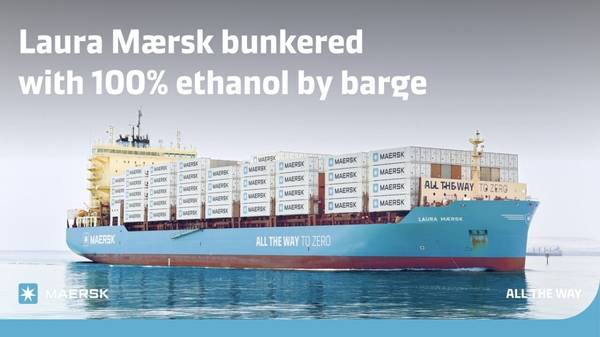
Laura Maersk ethanol bunkering graphic. Maersk conducts large-scale ethanol bunkering trial on Laura Maersk in Rotterdam  

A.P. Moller – Maersk has conducted a barge-delivered ethanol bunkering operation as part of ongoing fuel trials.

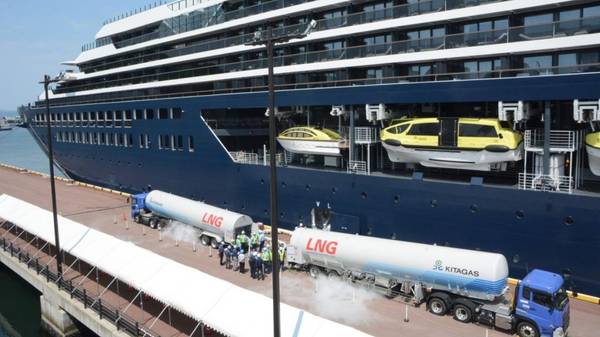
Luminara vessel truck-to-ship bunkering. MOL Techno-Trade completes first LNG bunkering for international cruise ship in Hokkaido  

Truck-to-ship LNG operation at Hakodate marks first such supply to an international cruise vessel in Hokkaido.

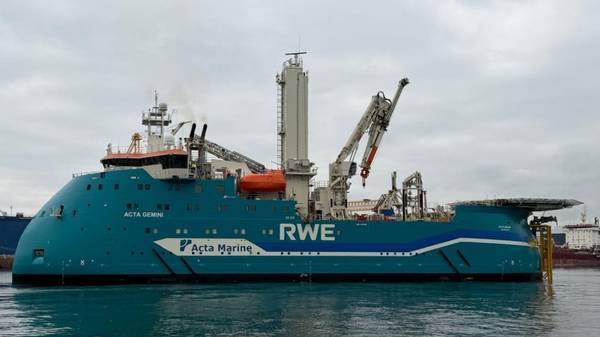
Acta Gemini vessel. Acta Marine takes delivery of methanol dual-fuel CSOV Acta Gemini for RWE wind farm charter  

The vessel will support operations at the Sofia Offshore Wind Farm at Dogger Bank.

Yeva Wood and Kirsten Møller Jørgensen. Malik Supply expands Danish team with bunker trader and finance hire  

Danish bunker supplier Malik Supply adds two new staff across its Fredericia and Aalborg offices.

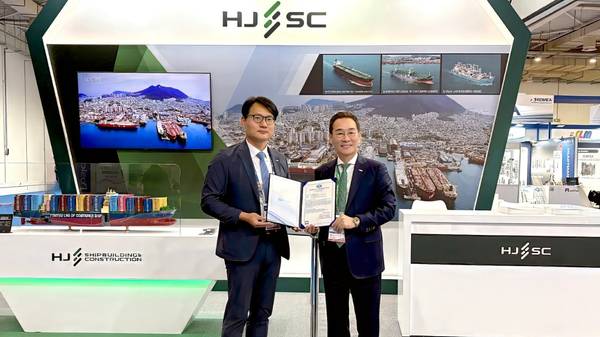
AiP award ceremony for a 10,000-teu biofuel-powered container ship. HJSC wins AiP for 10,000-teu biofuel-powered container ship design  

South Korean shipbuilder HJ Shipbuilding & Construction receives classification society approval for its biofuel vessel design at Posidonia.

Active vessel. Capital Clean Energy Carriers takes delivery of LNG carrier and dual-fuel gas carrier, secures five new charters  

Athens-based CCEC expands its fleet and pushes contracted revenue backlog to $3.1bn.

VPS logo. Fuel quality management for vessels in extended idle: Arabian Gulf, Gulf of Oman and adjacent anchorages | Rahul Choudhuri, VPS  

Managing fuel quality deterioration following the closure of the Strait of Hormuz.

Person signing a document. Agastya Green Fuels signs 250,000 t/yr e-methanol offtake deal with Sri Lanka’s SAR Group  

Indian producer and Sri Lankan maritime firm agree long-term green methanol supply partnership.


↑  Back to Top


 Recommended