This is a legacy page. Please click here to view the latest version.
Wed 23 Dec 2009, 08:07 GMT

Expansion project planned for St. Petersburg


Peterburg Oil Terminal plans to expand its capacity by approximately 25 percent.


Russia’s Petersburg Oil Terminal has said that it is planning to expand its capacity further in order to bring annual throughput of its terminal complex to 15 million tonnes.

The planned construction project would be the last phase of Petersburg Oil Terminal's four-stage plan, which has so far cost a total of US$ 130 million.

The facility operates the largest Russian terminal for oil products in the Baltic Sea region, providing the transshipment and storage of oil products for export, as well as bunkering.

The modern shore tanks of the terminal have a capacity of 354 000 m3 and can store a wide variety of oil products, including high viscosity fuel oil. There is no requirement for a clear-cut division into dirty and clean shore tanks - the tanks are general purpose and can be switched from one type of oil product to another at short notice. Oil products are delivered to the terminal by rail, pipeline and by water. Loading is to sea vessels and road transport.

Petersburg Oil Terminal also conducts quality analysis of oil products, and accepts and treats slops discharged from vessels calling at the Port of St. Petersburg.

Last year, the terminal transshipped 11.8 million tonnes of oil products. The figure was 300,000 tonnes higher than in 2007 and included 8.4 million tonnes of dirty oil products.

Commenting on the last phase of the project, Petersburg Oil Terminal said "The expansion of POT is one of the most significant and promising projects in the City. The social significance of the project lies in the strengthening of St. Petersburg's status as the "Sea Gates" of the Russia and status of the country as a sea power. It will also make a positive impact upon the economy of both St. Petersburg and the North West region."

"The activities of JSC Petersburg Oil Terminal make an important contribution to one of the fundamental branches of the country's economy - the export of oil products," the terminal operator said.

Once the final phase of the project is completed, the annual throughput capacity of the facility is expected to rise by around 25 percent to 15 million tonnes of oil products. The total cost of the construction project will be approximately US$ 160 million.


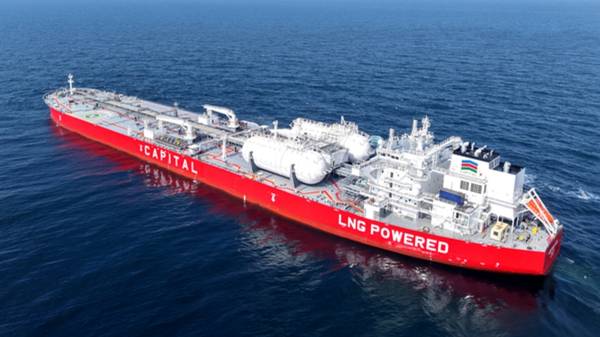
Capital's LNG-powered vessel. Chinese shipbuilder delivers 155,500-dwt LNG dual-fuel crude oil tanker  

Vessel handed over to Capital Ship Management Corp in China.

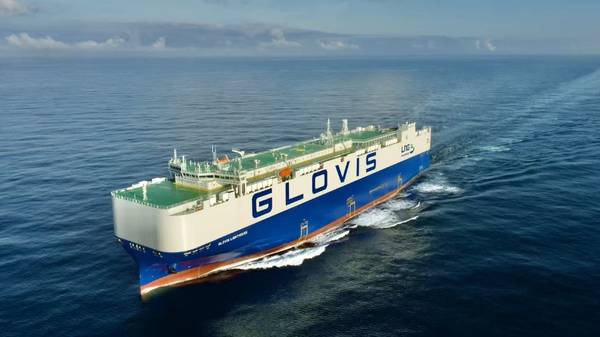
Glovis Lighthouse vessel. Seaspan takes delivery of first 10,800-ceu dual-fuel LNG car carrier  

Glovis Lighthouse enters service as one of a handful of vessels globally to exceed 10,000 CEU capacity.

Port of Rotterdam, Maersk, Core Power and Lloyd's Register logos. Rotterdam study maps pathway for nuclear-powered commercial ship port calls  

A joint study by Lloyd's Register, the Port of Rotterdam, Core Power and Maersk examines the feasibility of nuclear vessel port calls.

Hakata waterfront. Kinkai Yusen conducts first biofuel demonstration on domestic ro-ro vessel at Hakata Port  

Japanese shipping company to trial B24 biofuel blend aboard the vessel Nanotsu on 16 June.

Norwegian Energy Trading (NET) AS logo. Norwegian Energy Trading renews ISCC certification for biofuel trading  

Norwegian bunker trader says renewal reflects growing biofuel volumes and commitment to verifiable sustainability standards.

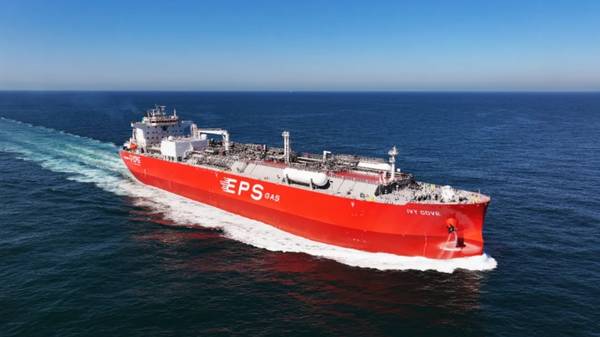
Ivy Cove vessel. Jiangnan delivers VLAC with LPG dual-fuel main engine  

Vessel is claimed to be the world’s first 93,000 cbm very large ammonia carrier.

BIMCO logo. BIMCO adopts biofuel clause for time charter parties  

Shipping body has introduced a new contractual clause to govern the use of biofuels under time charter agreements.

Prince Madog hydrogen fuel cell retrofit receives LR certification. UK research vessel Prince Madog wins LR certification for hydrogen fuel cell retrofit  

Lloyd’s Register certifies what is claimed to be the first sea-going, manned hydrogen retrofit of its kind.

World Fuel logo. World Fuel seeks marine lube operations and sales executive in Greece  

US firm is recruiting for a commercial role focused on marine lubricants, based out of its Glyfada office.

ECSA Parliamentary Breakfast event. European Shipowners calls for fuel supplier mandates and ETS revenue investment ahead of policy revision  

Industry body urges EU policymakers to redirect carbon revenues into clean marine fuel production.


↑  Back to Top