This is a legacy page. Please click here to view the latest version.
Wed 23 Dec 2009, 06:33 GMT

Shell NZ signs letter of intent


Letter of intent is signed for the sale of Shell New Zealand's downstream assets.


Energy investment company Infratil Ltd, in consortium with the Guardians of New Zealand Superannuation Fund, have announced that a letter of intent has been signed relating to the potential acquisition of Shell New Zealand’s refining and downstream businesses, which includes the company's marine fuel operations.

The letter was signed by Shell’s country chairman for New Zealand Rob Jager, Infratil’s Chairman David Newman and Guardians’ Chair David May.

In a joint statement Infratil and New Zealand Superannuation Fund said the letter of intent is not an acquisition contract.

"However it does represent Infratil and the Guardians’ clear intention to proceed to acquire Shell’s New Zealand downstream assets if relevant pre-requisites are met including the securing of third-party approvals," the statement said.

According to sources a price has been agreed by the parties involved but there would be no announcement on price until the deal had been signed. Market speculation has valued Shell's assets at between $700 million and $1 billion.

Infratil said previously the scope of the proposed transaction includes but is not limited to a 17.1% stake in the New Zealand Refining Company, Shell New Zealand’s supply and distribution infrastructure and it’s retail and B2B fuel business.

Shell announced in February 2009 that it had begun a strategic review to study the long-term ownership options of its downstream businesses in New Zealand.

Shell New Zealand Holding Company Limited holds 17.14 percent (41,142,840 shares) in the publicly-listed New Zealand Refining Company Ltd., which owns and operates the Marsden Point refinery.

New Zealand Refining Company's 240 million shares are also held by BP, Exxon Mobil, Chevron, Emerald Capital, as well as approximately 3,000 private and institutional investors.

Each of the four oil majors has processing rights to a share of the refinery's capacity. This is calculated on the basis of their average market share over the preceeding three years. The theoretical effect of this is that the refinery is run as if it were four small refineries, with each company selecting and supplying its own crude diet and setting its own product output.

With their shared access to the country's sole refinery, the four majors have dominated the New Zealand oil and bunker markets for number of years, although there was a brief challenge in the late 1990s from Fletcher Challenge Energy. The company's oil and gas operations were acquired by Shell in March 2001 and its wholesale fuels business was purchased by Caltex.

Infratil is an owner and operator of businesses in the energy (mainly renewable), airport and public transport sectors. Its energy operations are predominantly in New Zealand and Australia. The company owns Wellington Airport in New Zealand and airports in Glasgow, Kent and Lübeck. Infratil’s public transport services are in Auckland and Wellington, New Zealand.

Background on Shell Downstream assets:

* 17.1% of listed company NZ Refining

* Access to refinery and pipeline capacity

* Ownership/access arrangements to joint national distribution network, including 13 nationwide terminals and shipping infrastructure

* 25% ownership of Loyalty New Zealand (FlyBuys) sales and distribution network including:

229 retail outlets

95 truck stops

Facilities at Auckland and Christchurch airports


VPS logo. Fuel quality management for vessels in extended idle: Arabian Gulf, Gulf of Oman and adjacent anchorages | Rahul Choudhuri, VPS  

Managing fuel quality deterioration following the closure of the Strait of Hormuz.

Person signing a document. Agastya Green Fuels signs 250,000 t/yr e-methanol offtake deal with Sri Lanka’s SAR Group  

Indian producer and Sri Lankan maritime firm agree long-term green methanol supply partnership.

Bunker Holding logo. Bunker Holding seeks risk specialist for Copenhagen internal pricing desk  

Danish bunker group is expanding its internal pricing team to meet growing demand for fixed-price solutions.

Global biofuels demand chart. Biofuel demand could surge 70% by 2030 as food price fears mount  

T&E warns governments risk trading an oil crisis for a food crisis as biofuel targets strain vegetable oil and fertiliser markets.

Shore power illustration. Shore power shifts from voluntary measure to compliance requirement, DNV white paper finds  

Shore power is moving from an optional emissions tool to a regulatory obligation for shipowners in key trades.

Giosuè Vezzuto and Ahmed Eldemerdash. Baker Hughes’ NovaLT 16 gas turbine receives RINA type approval for marine propulsion on hydrogen and natural gas  

Certification covers operation on natural gas and blends up to 100% hydrogen for marine use.

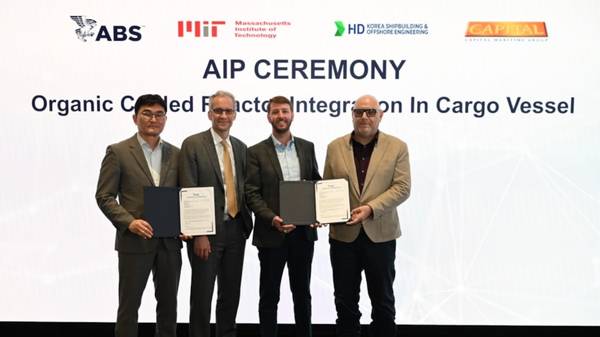
AiP award ceremony for nuclear reactor integration in cargo vessel design. ABS grants approval in principle for nuclear reactor integration in cargo vessel design  

ABS, HD KSOE, Capital Maritime Group and MIT have received approval in principle for a nuclear-powered cargo vessel propulsion system.

Green e-fuel export corridor consortium partners logos. Green e-fuel export corridor between Brazil and Belgium advances to feasibility stage  

A consortium has been formed to develop a green e-fuel corridor linking Porto do Açu to Antwerp-Bruges.

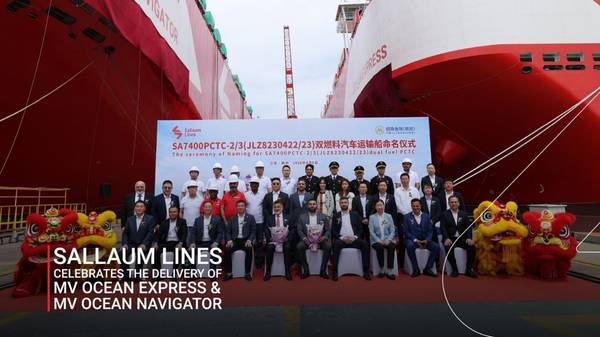
Naming ceremony of Ocean Express and Ocean Navigator vessels. Sallaum Lines takes delivery of two LNG-fuelled PCTCs in simultaneous handover ceremony  

RoRo carrier receives MV Ocean Express and MV Ocean Navigator from Chinese shipyard.

Person signing a document. Agastya Group signs MoU with Andhra Pradesh government for 1 MTPA green methanol hub at Mulapeta Port  

India-based Agastya Group plans a $6.5bn green methanol export facility on the country's east coast.


↑  Back to Top


 Recommended