This is a legacy page. Please click here to view the latest version.
Fri 11 Dec 2009, 12:22 GMT

Speed reduction project aims to cut emissions


Working group intends to make a submission to the IMO in March next year.


The International Association of Independent Tanker Owners (INTERTANKO) has announced that it is working together with the Oil Companies International Marine Forum (OCIMF) to develop a project which is aimed at reducing emissions.

Named the 'Virtual Arrival' concept, the primary aim of the project is to reduce actual CO2 emissions by taking advantage of 'inefficiencies in the market'.

"Often ships steam from port to port at full speed, only to wait for days to load or discharge. This causes unnecessary fuel consumption and thus CO2 emissions," says INTERTANKO.

With the Virtaul Arrival concept, operators and charterers can both gain from agreeing to reduce speed to a reasonable level in order to arrive at the next port in time to load or discharge. Besides reducing fuel consumption, and thus CO2 emissions, this can also have additional benefits such as reducing congestion in port areas and reducing wear and tear on the ship.

However, INTERTANKO makes clear that this is not a slow-steaming project, since the loading/discharging will take place at the time originally set.

"Sometimes the operator may need to use waiting time in port for regular maintenance, and it should therefore be in the operator's option to make such an agreement.

"To make such an agreement work there need to be incentives for both parties. The operator should not lose the demurrage he otherwise would have received. It may also be reasonable for an agreement to be drawn up between operator and charterer to share bunkers saved and maybe share potential CO2 credits," INTERTANKO said.

INTERTANKO added that the agreement needs to be robust so as not to cause disputes after the voyage has been completed. The voyage calculations would therefore be done by a quality-controlled weather routing company with a balanced charter party clause covering each voyage, with the charterer indemnifying the operator for possible Bill of Lading claims due to any reduced speed required by the charterer.

Three working groups have been set up to take the Virtual Arrival project further. One working group is establishing a model Virtual Arrival clause; another is setting up criteria against which the weather routing companies can be quality controlled; the third is arranging pilot projects which will be actual voyages.

"The success of the project will depend on whether it can be made into a win-win situation for all parties, operating under terms and conditions which ensure that there are no unnecessary post voyage disputes," INTERTANKO said.

One INTERTANKO member has calculated that it spends 40% of its fleet time in port, so there is a therefore considerable potential for saving.

The OCIMF/INTERTANKO project group intends to be ready to make a submission to the IMO in March next year.


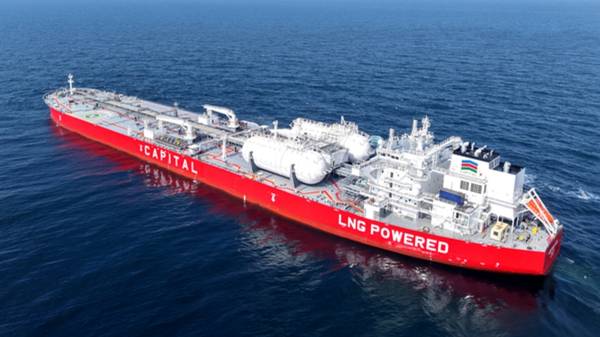
Capital's LNG-powered vessel. Chinese shipbuilder delivers 155,500-dwt LNG dual-fuel crude oil tanker  

Vessel handed over to Capital Ship Management Corp in China.

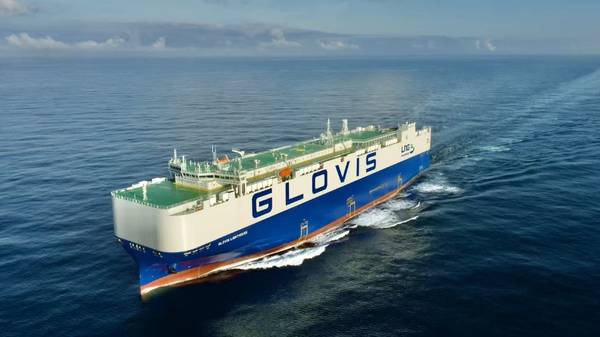
Glovis Lighthouse vessel. Seaspan takes delivery of first 10,800-ceu dual-fuel LNG car carrier  

Glovis Lighthouse enters service as one of a handful of vessels globally to exceed 10,000 CEU capacity.

Port of Rotterdam, Maersk, Core Power and Lloyd's Register logos. Rotterdam study maps pathway for nuclear-powered commercial ship port calls  

A joint study by Lloyd's Register, the Port of Rotterdam, Core Power and Maersk examines the feasibility of nuclear vessel port calls.

Hakata waterfront. Kinkai Yusen conducts first biofuel demonstration on domestic ro-ro vessel at Hakata Port  

Japanese shipping company to trial B24 biofuel blend aboard the vessel Nanotsu on 16 June.

Norwegian Energy Trading (NET) AS logo. Norwegian Energy Trading renews ISCC certification for biofuel trading  

Norwegian bunker trader says renewal reflects growing biofuel volumes and commitment to verifiable sustainability standards.

Ivy Cove vessel. Jiangnan delivers VLAC with LPG dual-fuel main engine  

Vessel is claimed to be the world’s first 93,000 cbm very large ammonia carrier.

BIMCO logo. BIMCO adopts biofuel clause for time charter parties  

Shipping body has introduced a new contractual clause to govern the use of biofuels under time charter agreements.

Prince Madog hydrogen fuel cell retrofit receives LR certification. UK research vessel Prince Madog wins LR certification for hydrogen fuel cell retrofit  

Lloyd’s Register certifies what is claimed to be the first sea-going, manned hydrogen retrofit of its kind.

World Fuel logo. World Fuel seeks marine lube operations and sales executive in Greece  

US firm is recruiting for a commercial role focused on marine lubricants, based out of its Glyfada office.

ECSA Parliamentary Breakfast event. European Shipowners calls for fuel supplier mandates and ETS revenue investment ahead of policy revision  

Industry body urges EU policymakers to redirect carbon revenues into clean marine fuel production.


↑  Back to Top