This is a legacy page. Please click here to view the latest version.
Wed 9 Dec 2009, 13:08 GMT

Maersk: World's 'first' biodiesel tests on container ship


Shipping giant to carry out biofuel tests on container vessel in a bid to cut CO2 emissions.


Maersk Line is set to become the first shipping company in the world to test biodiesel on a container ship.

The world's largest bunker buyer will carry out initial tests on its vessel Maersk Kalmar in Rotterdam over a two-year period in a bid to reduce its CO2 emissions.

In a statement, Maersk said "Today’s biodiesel is made from vegetable oils, animal fats and recycled grease using a process called transesterification, and is currently the leading form of biofuel used in Europe. Our initial testing will study the effects of this “1st generation” biodiesel on our engines and on vessel performance."

Maersk hopes that in the longer term, more advanced “2nd generation” biofuels will be able to help them reduce our CO2 emissions. However, the fuel will have to meet some tough demands. ”It’s crucial that biofuels used in shipping are truly sustainable. Their CO2 emissions will have to be far better than conventional fuels, and they’ll need to be made from biomass that can be produced without negative impacts on food production and biodiversity,” said Jacob Sterling, Maersk Line’s general manager for sustainability.

“To the best of our knowledge, this is the first time biodiesel has been tested on a container vessel. It’s still early days, but we want to be ready when sustainable biofuels become available in large volumes,” Mr Sterling said.

Maersk announced earlier this year that in 2008 it had reduced its impact on the environment with a drop of 9 percent in carbon dioxide (CO2) emissions compared to the previous year, representing a drop of 5 million tonnes. It was said to have been mainly achieved through lower fuel consumption by its ships.

“We have taken many important initiatives in 2008 and we firmly believe they will enhance improvements in our performance in coming years,” said Head of Group HSSE (Health, Safety, Security and Environment), Joseph Nazareth in May.

Maersk Line has set a voluntary target to reduce its CO2 emissions by 20 percent per container moved by 2017. The majority of the measures they are taking to achieve this goal involve technological and operational innovations – including optimised engines, eco-friendly vessel designs and slow and super-slow steaming – together with sustainable biofuels.

Summary: Maersk Line and the environment

* Maersk Line operates more than 500 container vessels that consume a total of some 11 million tonnes of bunker fuel per year.

* From 2002 to 2006, Maersk reduced its CO2 emissions by 15% per container moved, and set a target to cut emissions by an additional 20% per container moved by 2017.

* Maersk is looking closely at biofuel sustainability. It sees the greatest potential in 2nd generation technologies that can convert biomass into biofuels.

* Maersk will be testing biodiesel on the Maersk Kalmar in Rotterdam over a period of two years, using biodiesel derived from crops grown in temperate regions or from recycled oils.


VPS logo. Fuel quality management for vessels in extended idle: Arabian Gulf, Gulf of Oman and adjacent anchorages | Rahul Choudhuri, VPS  

Managing fuel quality deterioration following the closure of the Strait of Hormuz.

Person signing a document. Agastya Green Fuels signs 250,000 t/yr e-methanol offtake deal with Sri Lanka’s SAR Group  

Indian producer and Sri Lankan maritime firm agree long-term green methanol supply partnership.

Bunker Holding logo. Bunker Holding seeks risk specialist for Copenhagen internal pricing desk  

Danish bunker group is expanding its internal pricing team to meet growing demand for fixed-price solutions.

Global biofuels demand chart. Biofuel demand could surge 70% by 2030 as food price fears mount  

T&E warns governments risk trading an oil crisis for a food crisis as biofuel targets strain vegetable oil and fertiliser markets.

Shore power illustration. Shore power shifts from voluntary measure to compliance requirement, DNV white paper finds  

Shore power is moving from an optional emissions tool to a regulatory obligation for shipowners in key trades.

Giosuè Vezzuto and Ahmed Eldemerdash. Baker Hughes’ NovaLT 16 gas turbine receives RINA type approval for marine propulsion on hydrogen and natural gas  

Certification covers operation on natural gas and blends up to 100% hydrogen for marine use.

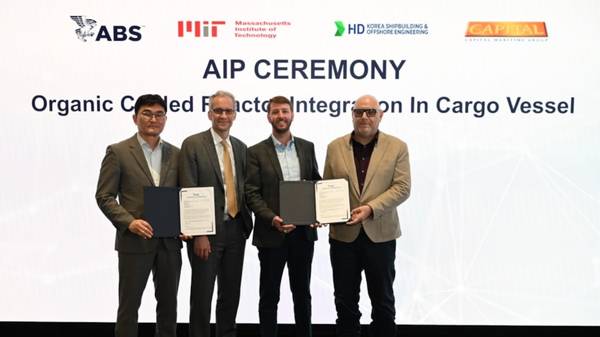
AiP award ceremony for nuclear reactor integration in cargo vessel design. ABS grants approval in principle for nuclear reactor integration in cargo vessel design  

ABS, HD KSOE, Capital Maritime Group and MIT have received approval in principle for a nuclear-powered cargo vessel propulsion system.

Green e-fuel export corridor consortium partners logos. Green e-fuel export corridor between Brazil and Belgium advances to feasibility stage  

A consortium has been formed to develop a green e-fuel corridor linking Porto do Açu to Antwerp-Bruges.

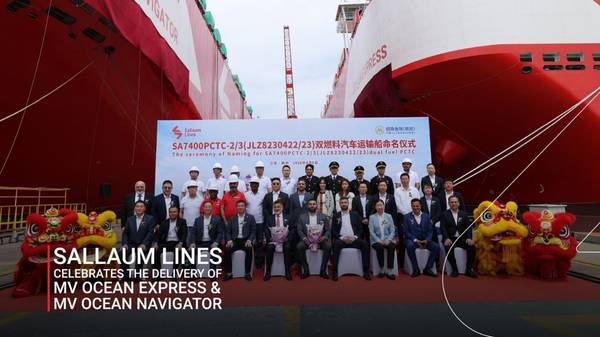
Naming ceremony of Ocean Express and Ocean Navigator vessels. Sallaum Lines takes delivery of two LNG-fuelled PCTCs in simultaneous handover ceremony  

RoRo carrier receives MV Ocean Express and MV Ocean Navigator from Chinese shipyard.

Person signing a document. Agastya Group signs MoU with Andhra Pradesh government for 1 MTPA green methanol hub at Mulapeta Port  

India-based Agastya Group plans a $6.5bn green methanol export facility on the country's east coast.


↑  Back to Top