This is a legacy page. Please click here to view the latest version.
Tue 8 Dec 2009, 12:27 GMT

Concept design for LNG distribution vessel completed


New vessel could be used to distribute LNG to key bunker supply hubs in the future.


Ship design firm FKAB has released its latest designs for the FKAB L2 - a 16 500 m3 LNG vessel designed primarily for regional distribution of liquefied natural gas (LNG).

The newly-designed vessel follows the company's previous concept design FKAB L1 - a bunker tanker used for the distribution of LNG and light marine oils, which was launched at this year's Nor-Shipping 2009 trade fair in Oslo.

According to Swedish firm FKAB the new vessel form's part of the company's contribution to the development of an efficient and sustainable sea based regional and local distribution system for LNG.

FKAB says the FKAB L2 design is tailor made for the regional distribution of LNG. Speaking to Bunker Index, Johan Algell, Head of Project & Marketing, said that unlike the FKAB L1, which is tailor-made for the delivery of LNG and light marine oils as a bunker tanker, the FKAB L2 will be more suited to the distribution of LNG on a larger scale between regional hubs.

The LNG is stored in three insulated cargo tanks of bilobe type, classified by the International Maritime Organization (IMO) as "Independent Type C". The tanks have spherical heads and a design pressure of 4,1 barg. Each tank is equipped with two submerged deep well pumps for easy discharging. The discharge capacity is 6 x 300 m3/h.

The FKAB L2 main fuel is boil-off gas and regasified LNG from the cargo tanks. FKAB says this will reduce fuel costs when operating the vessel. Despite this the L2 is designed to be as energy efficient as possible with, amongst other features, a slender hull and a heat recovery system.

These measures reduce costs further but will also reduce the environmental footprint of the vessel. To maintain flexibility and for emergency use the machinery is of dual fuel type and the vessel has the capacity to carry MGO as fuel also.

The launch of the FKAB's latest concept design follows several years of research. In 2006 the company identified natural gas in liquefied form (LNG) as a realistic alternative to conventional fuels on ships.

Since then FKAB has closely monitored the development and spent significant resources in the development of various designs using LNG as fuel as well as designs used in the supply chain of LNG for ships.

As a result of FKAB's efforts to evaluate potential LNG solutions, the company presented its FESC (FKAB Environmental Ship Concept) at the RoRo2008 in Gothenburg.

FESC is based on its R13-design and highlights the potential benefits of alternative fuels and emission abatement technologies on ships. Within this concept one of the main topics was the implementation of a LNG propulsion system.

Since the launch of FESC, FKAB has continuously kept up the development and focus on gas-propelled solutions through a number of customer-commissioned projects whilst simultaneously spending in-house resources on research and development.

Areas on which FKAB has focused its attention are:

*Rules and regulations, both present and approaching changes

*Both available, as well as upcoming, engine-options and techniques

*Tank-technologies and handling of fuel

*Ventilation

*Misc safety-aspects on the use of gas on ships

*Fuel-logistics and availability, regionally as well as locally

*Price

*Fuel-economy


VPS logo. Fuel quality management for vessels in extended idle: Arabian Gulf, Gulf of Oman and adjacent anchorages | Rahul Choudhuri, VPS  

Managing fuel quality deterioration following the closure of the Strait of Hormuz.

Person signing a document. Agastya Green Fuels signs 250,000 t/yr e-methanol offtake deal with Sri Lanka’s SAR Group  

Indian producer and Sri Lankan maritime firm agree long-term green methanol supply partnership.

Bunker Holding logo. Bunker Holding seeks risk specialist for Copenhagen internal pricing desk  

Danish bunker group is expanding its internal pricing team to meet growing demand for fixed-price solutions.

Global biofuels demand chart. Biofuel demand could surge 70% by 2030 as food price fears mount  

T&E warns governments risk trading an oil crisis for a food crisis as biofuel targets strain vegetable oil and fertiliser markets.

Shore power illustration. Shore power shifts from voluntary measure to compliance requirement, DNV white paper finds  

Shore power is moving from an optional emissions tool to a regulatory obligation for shipowners in key trades.

Giosuè Vezzuto and Ahmed Eldemerdash. Baker Hughes’ NovaLT 16 gas turbine receives RINA type approval for marine propulsion on hydrogen and natural gas  

Certification covers operation on natural gas and blends up to 100% hydrogen for marine use.

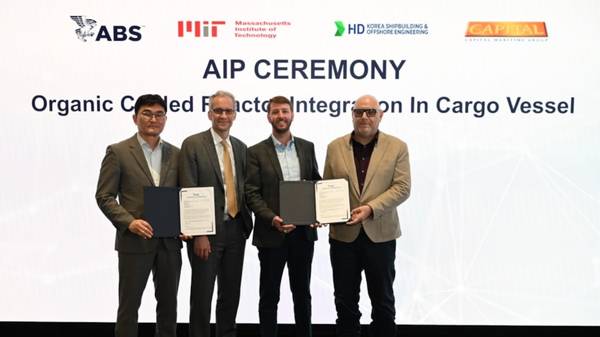
AiP award ceremony for nuclear reactor integration in cargo vessel design. ABS grants approval in principle for nuclear reactor integration in cargo vessel design  

ABS, HD KSOE, Capital Maritime Group and MIT have received approval in principle for a nuclear-powered cargo vessel propulsion system.

Green e-fuel export corridor consortium partners logos. Green e-fuel export corridor between Brazil and Belgium advances to feasibility stage  

A consortium has been formed to develop a green e-fuel corridor linking Porto do Açu to Antwerp-Bruges.

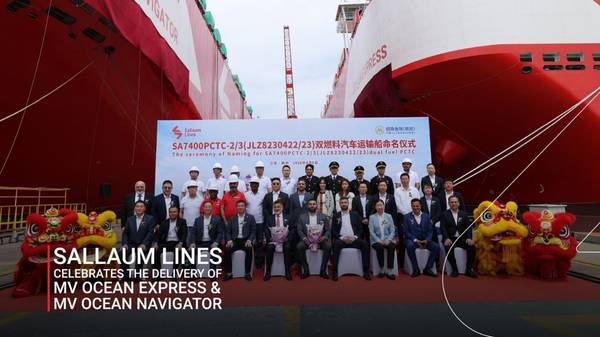
Naming ceremony of Ocean Express and Ocean Navigator vessels. Sallaum Lines takes delivery of two LNG-fuelled PCTCs in simultaneous handover ceremony  

RoRo carrier receives MV Ocean Express and MV Ocean Navigator from Chinese shipyard.

Person signing a document. Agastya Group signs MoU with Andhra Pradesh government for 1 MTPA green methanol hub at Mulapeta Port  

India-based Agastya Group plans a $6.5bn green methanol export facility on the country's east coast.


↑  Back to Top