This is a legacy page. Please click here to view the latest version.
Mon 16 Nov 2009, 07:26 GMT

US West Coast ports promote bunker savings


Ports say there is a 'compelling case' for US West Coast deployments with lower fuel costs.


Six major US West Coast ports came together at the World Shipping Summit (WSS) in Qingdao, China last week to announce their collaboration.

They addressed leaders and customers of the maritime industry including ocean carriers, beneficial cargo owners (BCOs) and marine terminal and intermodal operators. The US West Coast Collaboration (USWCC) is comprised of the major container-ports on the US West Coast – Seattle, Tacoma, Portland, Oakland, Long Beach, and Los Angeles – along with BNSF Railway Company and Union Pacific Railroad. The USWCC showcased the benefits of the US West Coast as the premier region for trans-Pacific trade.

Bill Wyatt, executive director, Port of Portland, talked about the US West Coast Ports’ distinct advantage because of its geographic proximity to China and the potential savings in bunker fuel costs in comparison with US East Coast ports. “This makes a compelling case for US West Coast deployments because these deployments require fewer vessels, transit times are faster. The resultant bunker fuel requirement is much lower.” Wyatt added, “The typical US East Coast services from North China into Norfolk or New York/New Jersey for example will require nine-11 vessels in a single loop vs. five-seven vessels required for most deployments into US West Coast ports.”

According to Omar Benjamin, executive director, Port of Oakland who chaired the session that included the USWCC panel, “Today’s economic conditions have compelled all of us to take a closer look at how we conduct our business to discover new approaches that yield improved results. This is happening throughout the entire supply chain and U.S. West Coast ports and Western railroads are no exception. Our mission is to further strengthen the US West Coast ports’ position as the preferred gateway for Asia cargo to and from the US Midwest and US cities further east.”

The concept behind the collaboration began earlier this year when the top leadership of these ports met to discuss ways to take advantage of their combined resources, experience, and proximity to Asia.

Members of the USWCC traveled to Washington DC this past summer, to carry the message to the federal level – a national goods movement plan is essential for sustaining America’s role in global trade; and that more federal resources are necessary to maximize the advantages of moving goods from Asia through the U.S. West Coast.

Meetings with top leadership among the ports and rails followed soon thereafter and a strong commitment was made to develop a new collaborative effort that would achieve the following objectives: Identify and communicate the strengths and advantages of shipping through the U.S. West Coast with ocean carriers and cargo owners; Clarify and correct misinformation and/or misperceptions about the U.S. West Coast ports and the Western railroads; Create one strong voice in Washington, DC advocating for investment in US West Coast gateway intermodal infrastructure and promoting a strong National Goods Movement Strategy.

The USWCC presentation at the WSS was part of the effort to communicate globally the USWCC trade advantages. Although there is currently a downturn in maritime trade, future growth looks promising as officials talked about the growth in population in the US and the anticipated American consumer demand for imports over the next two decades.

Together USWCC speakers highlighted the benefits of their combined gateway relative to: Service: 30+ ocean carriers, two Class I rail networks, supported by trucking and logistics services and warehousing facilities. 31 container terminals with 225 cranes and more than 2000 hectares of capacity; Network: 100+ weekly vessel calls with direct connections to 80 ports in 36 countries and links to multiple North American road and rail routes; Cost Efficiency: Closest U.S. ports to Asia, lower fuel consumption, larger economies of scale; Reliability: Multiple ports/routing options, ample labor force, proven track record; Responsibility: Lowest carbon emissions to U.S. markets, pro-active environmental programs.

The U.S. West Coast handles approximately 70 percent of all containerized trade between Asia and the U.S.


TMS Tankers logo. Lloyd’s Register delivers fleet-wide energy transition roadmap for TMS Tankers  

LR Advisory maps vessel-level compliance risk and decarbonisation pathways across the Greek owner’s tanker fleet.

Dr Prapisala Thepsithar, GCMD. GCMD shares biofuel assurance and green finance insights at Hong Kong shipping decarbonisation forum  

The Global Centre for Maritime Decarbonisation presented pilot findings on biofuels and energy efficiency financing.

Laura Maersk ethanol bunkering graphic. Maersk conducts large-scale ethanol bunkering trial on Laura Maersk in Rotterdam  

A.P. Moller – Maersk has conducted a barge-delivered ethanol bunkering operation as part of ongoing fuel trials.

Luminara vessel truck-to-ship bunkering. MOL Techno-Trade completes first LNG bunkering for international cruise ship in Hokkaido  

Truck-to-ship LNG operation at Hakodate marks first such supply to an international cruise vessel in Hokkaido.

Acta Gemini vessel. Acta Marine takes delivery of methanol dual-fuel CSOV Acta Gemini for RWE wind farm charter  

The vessel will support operations at the Sofia Offshore Wind Farm at Dogger Bank.

Yeva Wood and Kirsten Møller Jørgensen. Malik Supply expands Danish team with bunker trader and finance hire  

Danish bunker supplier Malik Supply adds two new staff across its Fredericia and Aalborg offices.

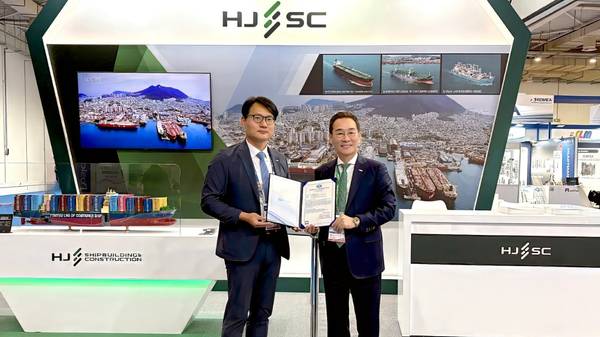
AiP award ceremony for a 10,000-teu biofuel-powered container ship. HJSC wins AiP for 10,000-teu biofuel-powered container ship design  

South Korean shipbuilder HJ Shipbuilding & Construction receives classification society approval for its biofuel vessel design at Posidonia.

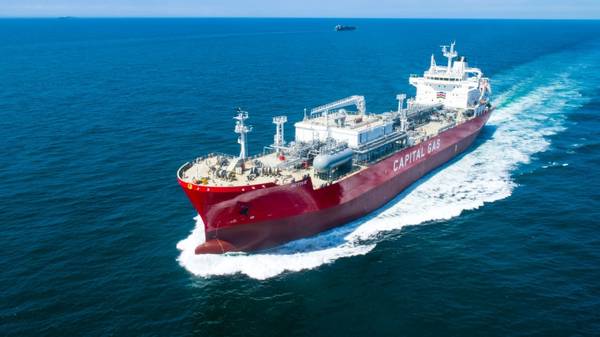
Active vessel. Capital Clean Energy Carriers takes delivery of LNG carrier and dual-fuel gas carrier, secures five new charters  

Athens-based CCEC expands its fleet and pushes contracted revenue backlog to $3.1bn.

VPS logo. Fuel quality management for vessels in extended idle: Arabian Gulf, Gulf of Oman and adjacent anchorages | Rahul Choudhuri, VPS  

Managing fuel quality deterioration following the closure of the Strait of Hormuz.

Person signing a document. Agastya Green Fuels signs 250,000 t/yr e-methanol offtake deal with Sri Lanka’s SAR Group  

Indian producer and Sri Lankan maritime firm agree long-term green methanol supply partnership.


↑  Back to Top