This is a legacy page. Please click here to view the latest version.
Fri 13 Nov 2009, 12:21 GMT

OW: 'Physical hedging is key to managing risk'


General Manager says hedging will play a key part of risk management strategies in 2010 and beyond.


The adoption of physical hedging as an instrument for managing risk will play a key part of risk management strategies in 2010 and beyond, according to Morten Dehn, General Manager, OW Bunker Risk Management.

Speaking at the Platts’ Managing Oil and Energy Risk conference in London, Dehn said: “The physical hedging of bunker fuel purchases enables customers to buy products on a forward basis, and is a definitive and easily auditable hedging instrument that provides cost stability.

"Following the economic downturn, we are now operating in a new era of responsibility, where companies have to exercise an appropriate level of conservatism. They must caution themselves against unnecessary risk taking, even if the appetite for risk returns as the markets begin to recover. Physical hedging provides this stability as part of a comprehensive risk management strategy that incorporates a mix of tools and instruments.”

Physical hedging allows customers to fix and lock in the price of bunker fuel in a specific port where they know they will be purchasing products, whilst still being able to lift in any port in the world, and maintain the use of the contract.

Morten Dehn stressed that the key to an effective risk management strategy is ensuring that it is embedded into the infrastructure of an organisation, it’s corporate and financial processes, and the day-to-day operations of the business.

“There has to be a planned and formulaic approach to risk management and the implementation of an holistic strategy that becomes a way of corporate life. There must be a clear understanding of a company’s risk exposure, its appetite for risk as well as its motives for managing risk. And most importantly, any risk management strategy must incorporate a variety of tools, instruments and analytical processes that provide balance and stability against the increasing elements of risk that organisations now face, from basis and time risk, to volume, and especially counterparty risk.”

"As bunker fuel becomes an increasingly higher valued requirement for ship operation, OW Bunker sees the interaction between the customer and the risk management solutions provider becoming more critical, where the relationship moves from being perceived as a supplier, to one of partnership," OW Bunker said.

Dehn added: “The nature of the relationship must be consultancy-based, founded on a complete dedication to maximising operational and financial performance. This can only be achieved if there is a total understanding of the customer’s business and their corporate strategy in conjunction with an in depth knowledge of the market, its complexities as well as its continually changing dynamics.”


TMS Tankers logo. Lloyd’s Register delivers fleet-wide energy transition roadmap for TMS Tankers  

LR Advisory maps vessel-level compliance risk and decarbonisation pathways across the Greek owner’s tanker fleet.

Dr Prapisala Thepsithar, GCMD. GCMD shares biofuel assurance and green finance insights at Hong Kong shipping decarbonisation forum  

The Global Centre for Maritime Decarbonisation presented pilot findings on biofuels and energy efficiency financing.

Laura Maersk ethanol bunkering graphic. Maersk conducts large-scale ethanol bunkering trial on Laura Maersk in Rotterdam  

A.P. Moller – Maersk has conducted a barge-delivered ethanol bunkering operation as part of ongoing fuel trials.

Luminara vessel truck-to-ship bunkering. MOL Techno-Trade completes first LNG bunkering for international cruise ship in Hokkaido  

Truck-to-ship LNG operation at Hakodate marks first such supply to an international cruise vessel in Hokkaido.

Acta Gemini vessel. Acta Marine takes delivery of methanol dual-fuel CSOV Acta Gemini for RWE wind farm charter  

The vessel will support operations at the Sofia Offshore Wind Farm at Dogger Bank.

Yeva Wood and Kirsten Møller Jørgensen. Malik Supply expands Danish team with bunker trader and finance hire  

Danish bunker supplier Malik Supply adds two new staff across its Fredericia and Aalborg offices.

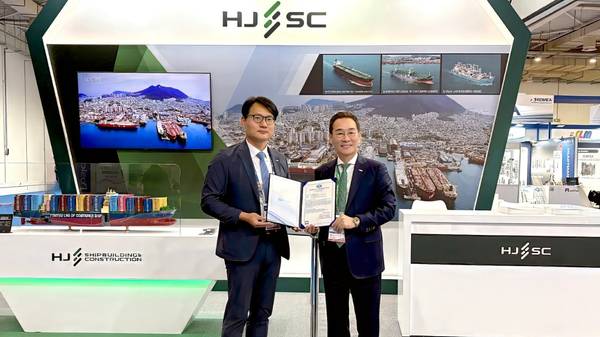
AiP award ceremony for a 10,000-teu biofuel-powered container ship. HJSC wins AiP for 10,000-teu biofuel-powered container ship design  

South Korean shipbuilder HJ Shipbuilding & Construction receives classification society approval for its biofuel vessel design at Posidonia.

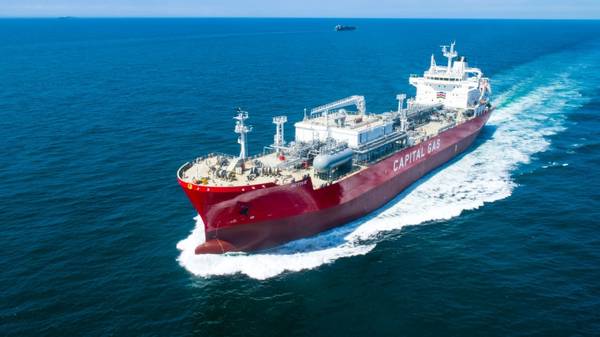
Active vessel. Capital Clean Energy Carriers takes delivery of LNG carrier and dual-fuel gas carrier, secures five new charters  

Athens-based CCEC expands its fleet and pushes contracted revenue backlog to $3.1bn.

VPS logo. Fuel quality management for vessels in extended idle: Arabian Gulf, Gulf of Oman and adjacent anchorages | Rahul Choudhuri, VPS  

Managing fuel quality deterioration following the closure of the Strait of Hormuz.

Person signing a document. Agastya Green Fuels signs 250,000 t/yr e-methanol offtake deal with Sri Lanka’s SAR Group  

Indian producer and Sri Lankan maritime firm agree long-term green methanol supply partnership.


↑  Back to Top