This is a legacy page. Please click here to view the latest version.
Tue 3 Nov 2009, 07:27 GMT

Infratil in talks to buy Shell NZ assets


Consortium enters into negotiations with oil major over acquisition of refining and downstream businesses.


Energy investment company Infratil Ltd, in consortium with the New Zealand Superannuation Fund, has announced that it has entered into exclusive negotiations with Shell over the possible acquisition of Shell New Zealand’s refining and downstream businesses, which includes the company's marine fuel operations.

In a statement, Infratil said the scope of the proposed transaction includes but is not limited to a 17.1% stake in the New Zealand Refining Company, Shell New Zealand’s supply and distribution infrastructure and it’s retail and B2B fuel business.

"The consortium has submitted a non-binding conditional proposal to Shell and has entered into the final phase of due diligence.

"Discussions and negotiation will continue during November and further advice on the status of the discussions will be provided as material developments occur," the statement said.

Shell announced in February 2009 that it had begun a strategic review to study the long-term ownership options of its downstream businesses in New Zealand.

Shell New Zealand Holding Company Limited holds 17.14 percent (41,142,840 shares) in the publicly-listed New Zealand Refining Company Ltd., which owns and operates the Marsden Point refinery.

New Zealand Refining Company's 240 million shares are also held by BP, Exxon Mobil, Chevron, Emerald Capital, as well as approximately 3,000 private and institutional investors.

Each of the four oil majors has processing rights to a share of the refinery's capacity. This is calculated on the basis of their average market share over the preceeding three years. The theoretical effect of this is that the refinery is run as if it were four small refineries, with each company selecting and supplying its own crude diet and setting its own product output.

With their shared access to the country's sole refinery, the four majors have dominated the New Zealand oil and bunker markets for number of years, although there was a brief challenge in the late 1990s from Fletcher Challenge Energy. The company's oil and gas operations were acquired by Shell in March 2001 and its wholesale fuels business was purchased by Caltex.

Infratil is an owner and operator of businesses in the energy (mainly renewable), airport and public transport sectors. Its energy operations are predominantly in New Zealand and Australia. The company owns Wellington Airport in New Zealand and airports in Glasgow, Kent and Lübeck. Infratil’s public transport services are in Auckland and Wellington, New Zealand.

Background on Shell Downstream assets:

* 17.1% of listed company NZ Refining
* Access to refinery and pipeline capacity
* Ownership/access arrangements to joint national distribution network, including 13 nationwide terminals and shipping infrastructure
* 25% ownership of Loyalty New Zealand (FlyBuys) sales and distribution network including:
229 retail outlets
95 truck stops
Facilities at Auckland and Christchurch airports


TMS Tankers logo. Lloyd’s Register delivers fleet-wide energy transition roadmap for TMS Tankers  

LR Advisory maps vessel-level compliance risk and decarbonisation pathways across the Greek owner’s tanker fleet.

Dr Prapisala Thepsithar, GCMD. GCMD shares biofuel assurance and green finance insights at Hong Kong shipping decarbonisation forum  

The Global Centre for Maritime Decarbonisation presented pilot findings on biofuels and energy efficiency financing.

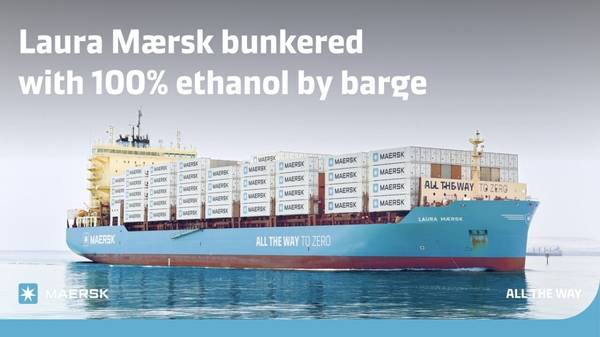
Laura Maersk ethanol bunkering graphic. Maersk conducts large-scale ethanol bunkering trial on Laura Maersk in Rotterdam  

A.P. Moller – Maersk has conducted a barge-delivered ethanol bunkering operation as part of ongoing fuel trials.

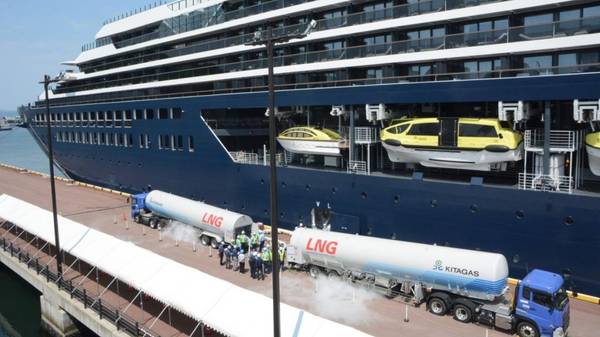
Luminara vessel truck-to-ship bunkering. MOL Techno-Trade completes first LNG bunkering for international cruise ship in Hokkaido  

Truck-to-ship LNG operation at Hakodate marks first such supply to an international cruise vessel in Hokkaido.

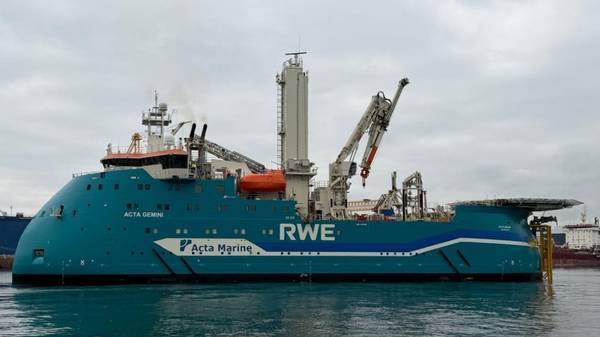
Acta Gemini vessel. Acta Marine takes delivery of methanol dual-fuel CSOV Acta Gemini for RWE wind farm charter  

The vessel will support operations at the Sofia Offshore Wind Farm at Dogger Bank.

Yeva Wood and Kirsten Møller Jørgensen. Malik Supply expands Danish team with bunker trader and finance hire  

Danish bunker supplier Malik Supply adds two new staff across its Fredericia and Aalborg offices.

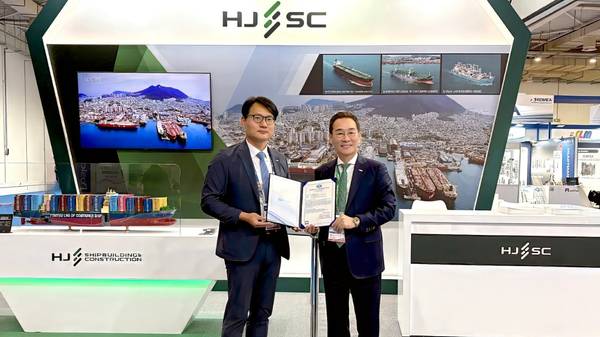
AiP award ceremony for a 10,000-teu biofuel-powered container ship. HJSC wins AiP for 10,000-teu biofuel-powered container ship design  

South Korean shipbuilder HJ Shipbuilding & Construction receives classification society approval for its biofuel vessel design at Posidonia.

Active vessel. Capital Clean Energy Carriers takes delivery of LNG carrier and dual-fuel gas carrier, secures five new charters  

Athens-based CCEC expands its fleet and pushes contracted revenue backlog to $3.1bn.

VPS logo. Fuel quality management for vessels in extended idle: Arabian Gulf, Gulf of Oman and adjacent anchorages | Rahul Choudhuri, VPS  

Managing fuel quality deterioration following the closure of the Strait of Hormuz.

Person signing a document. Agastya Green Fuels signs 250,000 t/yr e-methanol offtake deal with Sri Lanka’s SAR Group  

Indian producer and Sri Lankan maritime firm agree long-term green methanol supply partnership.


↑  Back to Top