This is a legacy page. Please click here to view the latest version.
Thu 8 Oct 2009, 07:31 GMT

Association committed to MBI consensus


ICS says it is committed to developing a consensus on Market Based Instruments to cut emissions.


The International Chamber of Shipping (ICS) has reaffirmed its commitment to developing a consensus among its member national shipowner associations about possible Market Based Instruments (MBIs) to help reduce the shipping industry’s CO2 emissions.

ICS is the principal international trade association for shipowners, with a membership of 33 national shipowners’ associations representing all sectors and trades and about 75% of the world merchant fleet.

MBIs are widely expected to form part of the comprehensive package for reducing shipping’s CO2 emissions that the International Maritime Organization (IMO) will develop during 2010, subject to IMO being given a mandate to finalise its work by the United Nations Climate Change Conference in Copenhagen.

ICS has said that it is committed to reaching a broad agreement with national associations concerning MBIs in order to present a common international industry position with governments, at IMO and UNFCCC, during the complex negotiations in the months ahead.

Commenting on the isse, ICS said "This is an extremely complex task given the wide range of national perspectives on the issue, and differences of approach between large and small companies, and the extent to which individual companies may perceive the impact of various options on their own commercial operations. Moreover, many of the proposals for MBIs that have so far been suggested - whether by governments or within the industry - are largely conceptual, and still do not contain enough practical detail, about how they would operate in practice, to fully assess their impact. The task of ICS, however, is to represent the best interests of the international shipping industry as whole."

Over a year ago the ICS Executive Committee established a high level working group which is continuing to examine the ‘pros and cons’ of various options for MBI, including a possible fuel levy, emission trading schemes, or some hybrid combination of the two.

"It has never been the intention of ICS to seek to reach agreement on a single preferred MBI; during recent discussions real progress has been made towards a consensus on the essential characteristics of any MBI for shipping, i.e. that it should be ‘flag neutral’ in its effect to avoid distorting markets, simple to administer and provide overall environmental benefit in respect of climate change. Above all, any MBI for shipping must be acceptable to all IMO Member States, including those that are non-Annex I nations under the existing Kyoto Protocol on Climate Change," ICS said.

"Many ICS member associations have publically expressed a preference for one form of MBI or another. There are actually remarkable similarities between those proposals based on a levy and those based on some form of emission trading, and the diversity of views is an indication of the complexity involved in finding a solution that is fit for purpose and capable of offering real CO2 emissions reduction, " ICS added.

The Chamber said it will continue to pursue its role as an ‘honest broker’, providing "considered comment" on the implications of proposals that may be made by governments in the months ahead.

Meanwhile, the ICS said its immediate priority is to persuade government negotiators attending the UNFCCC Conference, in Copenhagen in December, that IMO should be given a mandate to complete its work on technical measures to reduce CO2 as well as possible MBIs.


TMS Tankers logo. Lloyd’s Register delivers fleet-wide energy transition roadmap for TMS Tankers  

LR Advisory maps vessel-level compliance risk and decarbonisation pathways across the Greek owner’s tanker fleet.

Dr Prapisala Thepsithar, GCMD. GCMD shares biofuel assurance and green finance insights at Hong Kong shipping decarbonisation forum  

The Global Centre for Maritime Decarbonisation presented pilot findings on biofuels and energy efficiency financing.

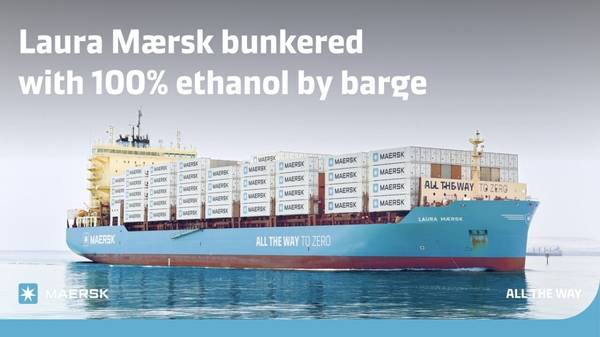
Laura Maersk ethanol bunkering graphic. Maersk conducts large-scale ethanol bunkering trial on Laura Maersk in Rotterdam  

A.P. Moller – Maersk has conducted a barge-delivered ethanol bunkering operation as part of ongoing fuel trials.

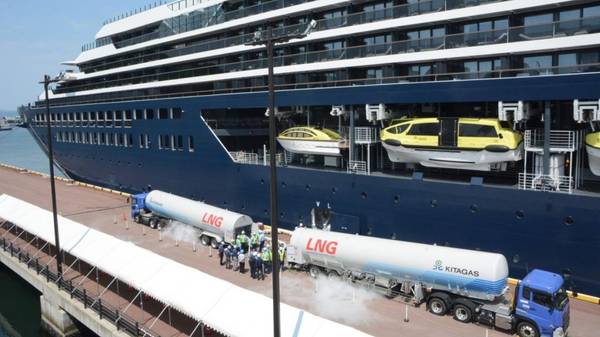
Luminara vessel truck-to-ship bunkering. MOL Techno-Trade completes first LNG bunkering for international cruise ship in Hokkaido  

Truck-to-ship LNG operation at Hakodate marks first such supply to an international cruise vessel in Hokkaido.

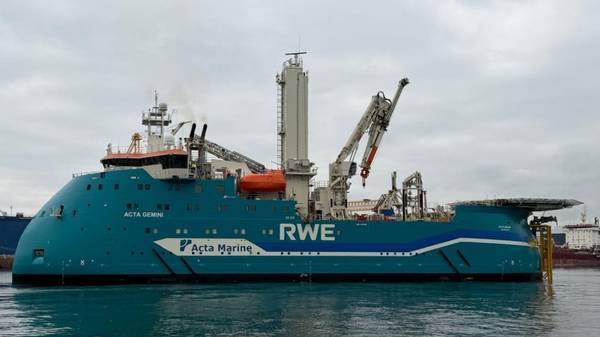
Acta Gemini vessel. Acta Marine takes delivery of methanol dual-fuel CSOV Acta Gemini for RWE wind farm charter  

The vessel will support operations at the Sofia Offshore Wind Farm at Dogger Bank.

Yeva Wood and Kirsten Møller Jørgensen. Malik Supply expands Danish team with bunker trader and finance hire  

Danish bunker supplier Malik Supply adds two new staff across its Fredericia and Aalborg offices.

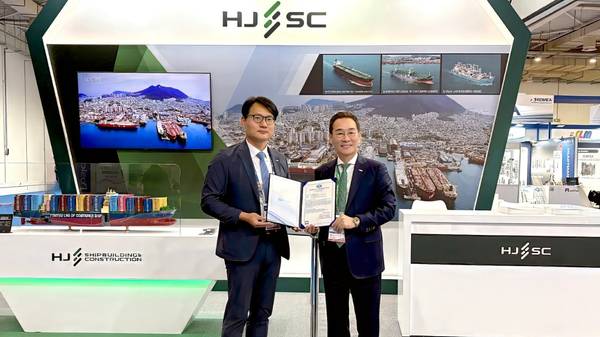
AiP award ceremony for a 10,000-teu biofuel-powered container ship. HJSC wins AiP for 10,000-teu biofuel-powered container ship design  

South Korean shipbuilder HJ Shipbuilding & Construction receives classification society approval for its biofuel vessel design at Posidonia.

Active vessel. Capital Clean Energy Carriers takes delivery of LNG carrier and dual-fuel gas carrier, secures five new charters  

Athens-based CCEC expands its fleet and pushes contracted revenue backlog to $3.1bn.

VPS logo. Fuel quality management for vessels in extended idle: Arabian Gulf, Gulf of Oman and adjacent anchorages | Rahul Choudhuri, VPS  

Managing fuel quality deterioration following the closure of the Strait of Hormuz.

Person signing a document. Agastya Green Fuels signs 250,000 t/yr e-methanol offtake deal with Sri Lanka’s SAR Group  

Indian producer and Sri Lankan maritime firm agree long-term green methanol supply partnership.


↑  Back to Top