This is a legacy page. Please click here to view the latest version.
Thu 24 Sep 2009, 14:10 GMT

Sovcomflot expects to cut consumption by 10-12%


Russian shipowner says fuel costs will be reduced by optimising voyage planning.


Russian state-owned shipowner Sovcomflot has revealed that bunker consumption this year is expected to be reduced by 10-12 percent.

Commenting on the issue of quality of service and costs, Sergey Popravko, COO of tanker operations and MD of Unicom Management Services said “Providing a high quality of service to our customers and maintaining advanced standards of navigational safety is our primary task and the basis for the Group’s steady growth. The decline in the freight market is forcing many ship owners to reduce their operational expenses in order to control costs. In our Group this task is completed but not at the expense of the quality or safety of shipping service. Optimisation is first of all achieved by the improvement of logistics and the monitoring of costs. By optimising voyage planning only, in 2009, we’ll manage to reduce the consumption of bunker fuel by the Group’s ships by 10-12 per cent”.

Details regarding Sovcomflot's bunker consumption were disclosed yesterday during the announcement of the group's 2009 first half results.

During the first six months of 2009 Sovcomflot recorded a net profit of US$116.8 million compared to US$ 330.1 million during the same period last year, representing a profit decrease of 64.6 percent.

Howevever, despite the significant drop in first half net income, the company said it remained optimistic about the future.

Commenting on the results, Sergey Frank, Sovcomflot Group President and CEO, said “As anticipated the first half of this year proved to be a challenging time for the shipping industry. However the scale of the Group’s operations and our conservative chartering policy, combined with our industrial projects that provide considerable forward contract cover, allowed us to be much less impacted than many other players. SCF Group has maintained healthy profit margins and posted respectable bottom-line profits. More importantly, the Group continued to expand its fleet and made further progress in its diversification of services offered to Russian and international oil and gas majors and in providing integrated Seaborne Energy Solutions”.

Sergey Naryshkin, Chairman of the Board of Directors, commented: “Due to a well balanced freight policy and reasonable investment decisions, the Group managed not only to overcome the negative impact of the world economic crisis on the freight market, but also to continue the implementation of its fleet renovation and expansion programme, optimisation of its structure, as well as the Group’s entry in new market segments - initially related to the development of the offshore sector in Russia. This allows the Group to meet the growing requirements of its customers with new scale and quality, and to strengthen the market position of the company.

Naryshkin also confirmed that a stake of the company may be sold through a share placement in 2010-2011.

"The Board considers it possible for Sovcomflot to tap the capital markets through a public offering of its shares towards the end of 2010 or the beginning of 2011 with the proceeds of such an issue to be used to fund the Group’s investment programme, and in particular its entry into offshore services. The final decision on this matter will be taken by the shareholder in line with the recovery of the freight and stock markets.” said Naryshkin.

Russia 

TMS Tankers logo. Lloyd’s Register delivers fleet-wide energy transition roadmap for TMS Tankers  

LR Advisory maps vessel-level compliance risk and decarbonisation pathways across the Greek owner’s tanker fleet.

Dr Prapisala Thepsithar, GCMD. GCMD shares biofuel assurance and green finance insights at Hong Kong shipping decarbonisation forum  

The Global Centre for Maritime Decarbonisation presented pilot findings on biofuels and energy efficiency financing.

Laura Maersk ethanol bunkering graphic. Maersk conducts large-scale ethanol bunkering trial on Laura Maersk in Rotterdam  

A.P. Moller – Maersk has conducted a barge-delivered ethanol bunkering operation as part of ongoing fuel trials.

Luminara vessel truck-to-ship bunkering. MOL Techno-Trade completes first LNG bunkering for international cruise ship in Hokkaido  

Truck-to-ship LNG operation at Hakodate marks first such supply to an international cruise vessel in Hokkaido.

Acta Gemini vessel. Acta Marine takes delivery of methanol dual-fuel CSOV Acta Gemini for RWE wind farm charter  

The vessel will support operations at the Sofia Offshore Wind Farm at Dogger Bank.

Yeva Wood and Kirsten Møller Jørgensen. Malik Supply expands Danish team with bunker trader and finance hire  

Danish bunker supplier Malik Supply adds two new staff across its Fredericia and Aalborg offices.

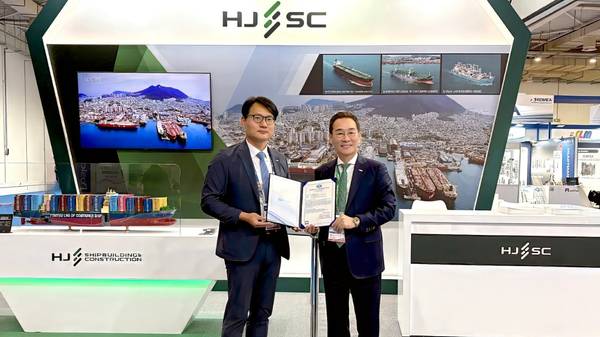
AiP award ceremony for a 10,000-teu biofuel-powered container ship. HJSC wins AiP for 10,000-teu biofuel-powered container ship design  

South Korean shipbuilder HJ Shipbuilding & Construction receives classification society approval for its biofuel vessel design at Posidonia.

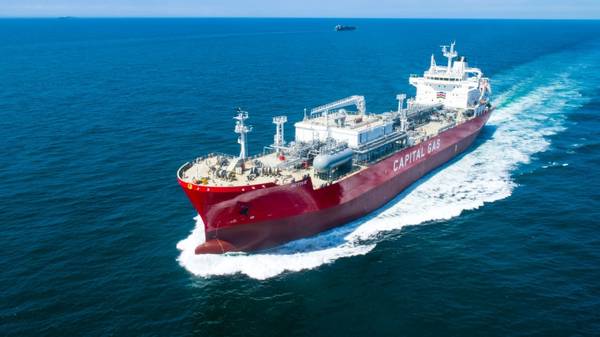
Active vessel. Capital Clean Energy Carriers takes delivery of LNG carrier and dual-fuel gas carrier, secures five new charters  

Athens-based CCEC expands its fleet and pushes contracted revenue backlog to $3.1bn.

VPS logo. Fuel quality management for vessels in extended idle: Arabian Gulf, Gulf of Oman and adjacent anchorages | Rahul Choudhuri, VPS  

Managing fuel quality deterioration following the closure of the Strait of Hormuz.

Person signing a document. Agastya Green Fuels signs 250,000 t/yr e-methanol offtake deal with Sri Lanka’s SAR Group  

Indian producer and Sri Lankan maritime firm agree long-term green methanol supply partnership.


↑  Back to Top