This is a legacy page. Please click here to view the latest version.
Thu 24 Sep 2009, 09:41 GMT

Northeast Passage fuel savings for operator


Operator reports savings due to global warming with commercial transit accross the Northeast Passage.


The onset of global warming could lead to a surge in commercial shipping accross the Northern Sea Route and potentially enable operators to save millions of dollars in bunker fuel costs and reduce greenhouse gas emissions as a consequence.

German firm Beluga Shipping GmbH has begun to operate a commercial transit of the Northern Sea Route, also known as the the Northeast Passage, which is said to have saved the operator around 300,000 euros per vesel in fuel costs and also led to a reduction in emissions.

With Arctic ice melting at a rapid rate, this has led to ships being able to navigate the Northern Sea Route without the assistance of icebreakers during the warmer part of the year.

Several seaports along the route are now ice-free all year round. They include, from west to east, Murmansk on the Kola Peninsula, Petropavlovsk in Kamchatka, and Magadan, Vanino, Nakhodka and Vladivostok on Russia's Pacific seaboard.

The MV Beluga Fraternity began its first commercial voyage across the Northern Sea Route on September 12th 2009.

Commenting on the company's decision to use the route, Verena Beckhusen, spokeswoman for Beluga Shipping GmbH told Russia Today “If we had taken the southern way – let’s say for example from South Korea to a European port then the voyage time would have been 32 days. Using the Northern Sea Route it would only be 23 days; that is, nine days less. Therefore if you have less voyage time, obviously you need a lesser tanker of fuel in order to go from the port of loading to the port of destination and the port of discharging. And therefore, by using a lesser tanker you can also reduce the emission.”

Niels Stolberg, President and CEO of Beluga Shipping GmbH added in a company statement: "By the completion of the Northeast-Passage transit and previously the safe discharging of the cargo in a rather remote area in Siberia, we have opened the gate to a seaway which will further gain in importance in the future. The savings of voyage costs to a total amount of about 300,000 Euro for each multipurpose heavy lift project carrier of the F-class, later about 600,000 Euro for each travelling vessel of our new Beluga P-class, are a major achievement particularly in times that have become economically more difficult. With regard to the global CO2 balance we are able to reduce the bunker consumption and cut down the environmentally harmful emissions by using the Northern Sea Route”.


TMS Tankers logo. Lloyd’s Register delivers fleet-wide energy transition roadmap for TMS Tankers  

LR Advisory maps vessel-level compliance risk and decarbonisation pathways across the Greek owner’s tanker fleet.

Dr Prapisala Thepsithar, GCMD. GCMD shares biofuel assurance and green finance insights at Hong Kong shipping decarbonisation forum  

The Global Centre for Maritime Decarbonisation presented pilot findings on biofuels and energy efficiency financing.

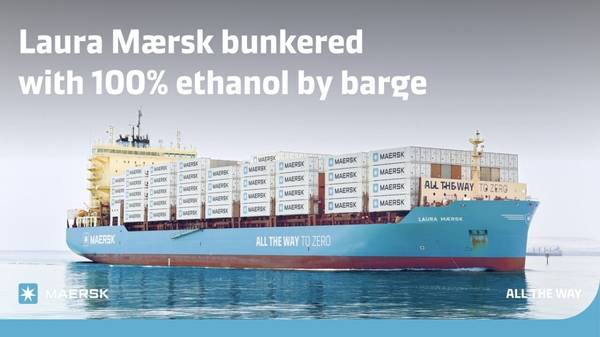
Laura Maersk ethanol bunkering graphic. Maersk conducts large-scale ethanol bunkering trial on Laura Maersk in Rotterdam  

A.P. Moller – Maersk has conducted a barge-delivered ethanol bunkering operation as part of ongoing fuel trials.

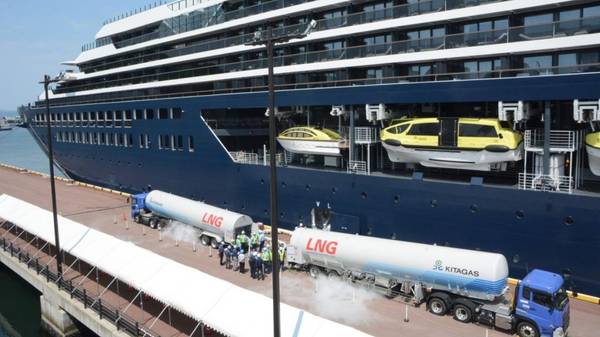
Luminara vessel truck-to-ship bunkering. MOL Techno-Trade completes first LNG bunkering for international cruise ship in Hokkaido  

Truck-to-ship LNG operation at Hakodate marks first such supply to an international cruise vessel in Hokkaido.

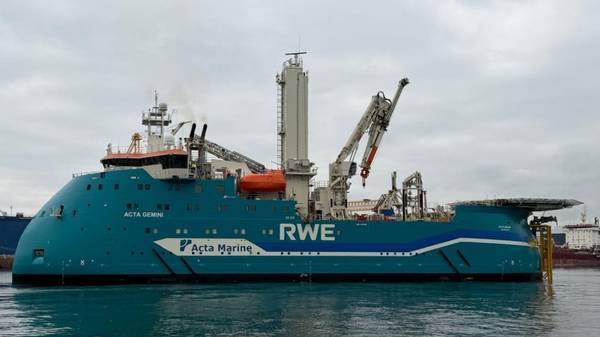
Acta Gemini vessel. Acta Marine takes delivery of methanol dual-fuel CSOV Acta Gemini for RWE wind farm charter  

The vessel will support operations at the Sofia Offshore Wind Farm at Dogger Bank.

Yeva Wood and Kirsten Møller Jørgensen. Malik Supply expands Danish team with bunker trader and finance hire  

Danish bunker supplier Malik Supply adds two new staff across its Fredericia and Aalborg offices.

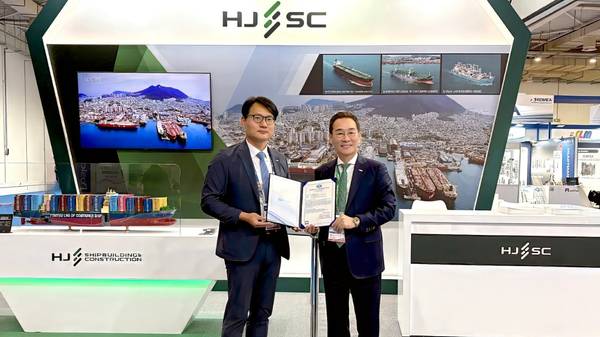
AiP award ceremony for a 10,000-teu biofuel-powered container ship. HJSC wins AiP for 10,000-teu biofuel-powered container ship design  

South Korean shipbuilder HJ Shipbuilding & Construction receives classification society approval for its biofuel vessel design at Posidonia.

Active vessel. Capital Clean Energy Carriers takes delivery of LNG carrier and dual-fuel gas carrier, secures five new charters  

Athens-based CCEC expands its fleet and pushes contracted revenue backlog to $3.1bn.

VPS logo. Fuel quality management for vessels in extended idle: Arabian Gulf, Gulf of Oman and adjacent anchorages | Rahul Choudhuri, VPS  

Managing fuel quality deterioration following the closure of the Strait of Hormuz.

Person signing a document. Agastya Green Fuels signs 250,000 t/yr e-methanol offtake deal with Sri Lanka’s SAR Group  

Indian producer and Sri Lankan maritime firm agree long-term green methanol supply partnership.


↑  Back to Top


 Recommended