This is a legacy page. Please click here to view the latest version.
Tue 8 Sep 2009, 13:58 GMT

Solar ship completes seven months of voyages


Two-year experiment into how solar power can be used to power a vessel continues.


The solar power-assisted vessel Auriga Leader (gross tonnage: 60,213 tons), which was jointly developed by NYK and Nippon Oil Corporation, has completed seven months of voyages in its scheduled two-year experiment into how solar power can be used to assist with powering a vessel.

The Auriga Leader set out on its maiden voyage on December 19, 2008, and completed its fourth voyage on July 13, 2009, a total of 207 days. By the end of the fourth voyage, the solar-panel system had been operated for a total of 2,600 hours and had generated 32,300 kilowatt-hours of electricity, equivalent to seven months of electricity use by 17 households in Japan.

The amount generated surprisingly turned out to be about 1.4 times more than that generated on land in Tokyo. Further research is needed to determine the exact reason, but the stronger sunlight caused by the high sun altitude and more daylight are thought to have played a part. Moreover, the wind the vessel encountered cooled the system, thus improving generating efficiency.

As initially anticipated, solar power was able to provide 0.05 percent of the ship’s propulsion power and 1 percent of the electricity used on the vessel, such as for pumps and lights. This change will reduce fuel per year by an estimated 13 tons (14 kiloliters) and the CO2 resultantly produced by approximately 40 tons.

Another purpose of the project is to verify the endurance of solar panels in the harsh conditions of actual navigation. Through the four voyages, the vessel encountered rough conditions—such as three straight hours of rain and lightning, 20 straight hours of strong wind (about 20 meters/second), and 48 straight hours of waves 3–4 meters high—but the system continued to operate well.

"NYK and Nippon Oil Corporation plan to continue this experiment so that the use of clean solar power can be practically applied to powering seagoing vessels and thus help to reduce the carbon footprint of this efficient form of transport," NYK said in a statement.

Japan 

World Fuel logo. World Fuel seeks marine lube operations and sales executive in Greece  

US firm is recruiting for a commercial role focused on marine lubricants, based out of its Glyfada office.

ECSA Parliamentary Breakfast event. European shipowners call for fuel supplier mandates and ETS revenue investment ahead of policy revision  

Industry body urges EU policymakers to redirect carbon revenues into clean marine fuel production.

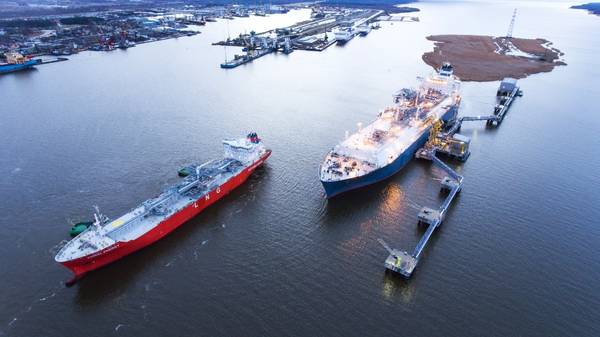
Coral Energy vessel at Klaipeda LNG terminal. Gasum secures LNG terminal capacity at Klaipėda through 2040  

Nordic energy company locks in long-term LNG supply access to serve northwestern European markets.

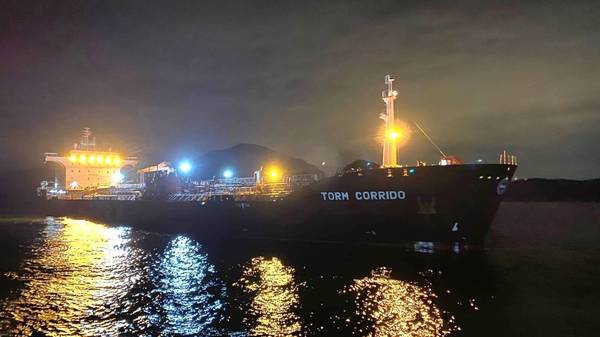
Torm Corrido vessel. Chimbusco Pan Nation extends B100 biodiesel bunkering to oil tankers as quarterly volumes triple  

Hong Kong bunker supplier CPN says Q2 B100 deliveries have exceeded Q1 totals by more than 300%.

TMD Energy Limited logo. TMD Energy extends bioenergy MOA with Double Corporate by two years  

Malaysian bunkering firm seeks to advance waste-to-energy marine fuel collaboration in EU and Asian markets.

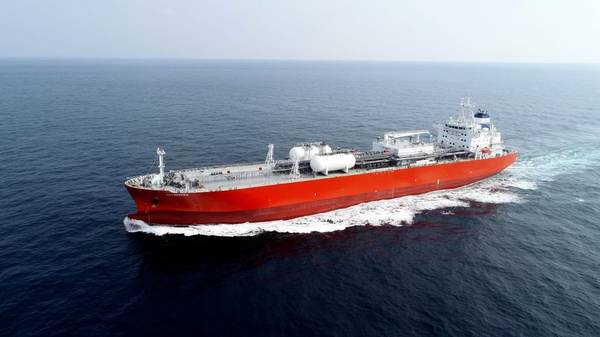
Antwerpen vessel. Exmar takes delivery of world’s first dual-fuel ammonia oceangoing vessel  

Belgian shipowner Exmar has taken delivery of what it says is the first oceangoing vessel powered by a dual-fuel ammonia engine.

Seaglider vessel render. MOL and JAL partner with Lloyd’s Register and REGENT to advance Seaglider certification in Japan  

Four organisations join forces to establish regulatory pathways for electric wing-in-ground craft ahead of a targeted 2030 commercial launch.

Geoff Wagner and Byung-Hun Kwon. ABS and HD Hyundai entities secure battery hybrid approval for 16,000-teu container vessel  

Approval in principle issued for electrical design of ultra-large container ship at Posidonia.

Steel cutting ceremony of vessel with builder's hull no. H1955A. Keel laid for world’s largest LNG carrier at China’s Hudong-Zhonghua shipyard  

Construction begins on a 271,000-cbm QC-Max vessel, the largest LNG carrier ever built.

Mercedes Pinto vessel truck-to-ship (TTS) bunkering. Port of Las Palmas completes first LNG bunkering operation  

Baleària Canarias’ new fast ferry receives LNG via tanker truck in milestone delivery.


↑  Back to Top