This is a legacy page. Please click here to view the latest version.
Wed 29 Jul 2009, 07:32 GMT

Shoreside power 'so successful' in Sweden


Sweden's shore-to-ship electrical connections save around 1,900 tonnes of fuel each year.


Sweden's ABB, a global leader in power and automation technologies, has announced that a pioneering solution that cuts greenhouse gas emissions and reduces ship fuel costs has helped the major North Sea port of Gothenburg win its second international award for cleaning up shipping and the seas.

The ABB solution was developed for a ro-ro (roll on-roll off) terminal at the Swedish port of Gothenburg in 2000 and was the first in the world to provide ships with high voltage electric power delivered by cable from onshore during their time in port.

The solution helped the Port of Gothenburg win two environmental awards, the 2008 Clean Seas Award given by Lloyd's List and the 2004 Clean Marine Award given by the European Union.

The process provides a ship at berth with shore-side electrical power when its main and auxiliary engines are turned off. In this way, its equipment, refrigeration, cooling, heating and lighting can receive continuous electrical power in loading and unloading.

Cold ironing

In total, Sweden's shore-to-ship electrical connections - at Gothenburg, Stockholm, Helsingborg and Pitea - save about 1,900 tonnes of fuel each year and reduce carbon dioxide emissions by 6,000 metric tons, according to the Swedish Environmental Research Institute (IVL).

Ships plug into an onshore grid, in contrast to the previous method in which ships used their auxiliary diesel engines to generate electricity in port, consuming large volumes of fuel and emitting high levels of greenhouse gases and noise.

"The Gothenburg installation has been so successful that an additional three terminals at the port have since been equipped with the ABB solution, helping the port authority to become the international benchmark for shore-to-ship power supply," ABB said. Providing shore-side electrical power is also known as "cold ironing," refering to a time when ships had coal-fired iron engines. Ships docked in port, turned off the engines and let them go cold, hence the term.

"Shore-side electricity has a large potential to reduce the impact from shipping on health and on the enviironment," IVL research Erik Fridell told a conference on shore connections at Northern Maritime University in May 2009. "The main advantage is the reduction in emissions of toxic gases in port cities."

Harbor facilities around the world have begun to take a closer look at shore-to-ship connections as a means to reduce emissions from ships in port and improve air quality in surrounding communities. Shore connections are now available at ports in the United States, including Los Angeles, Long Beach, San Francisco, San Diego, Seattle and Juneau, in Canada at Vancouver, and in Europe at ports in Germany, Sweden, Finland and Holland.

In the U.K. the port of Southhampton announced in July 2009 it will also consider implementing shore-to-ship electrical connections for cruise vessels in port.

Supported by EU

In May 2009, European Commissioner for Maritime Affairs and Fisheries Joe Borg told a conference of European cruise companies in Rome that shore connections is one of the policies being pushed by the EU as part of an Integrated Maritime Policy.

Compared to standard high-sulfur engine fuel, the ABB high voltage solution reduces carbon dioxide emissions by 50 percent and other greenhouse gases by up to 97 percent. The emission reduction is significant, even compared to the low-sulfur fuel that is set to become mandatory for ships visiting European ports in 2010.

If connected to a renewable energy source like wind, hydro or solar power – which the port of Gothenburg is considering - the solution has the potential to eliminate greenhouse gas emissions during ship stopovers.

Known as High Voltage Shore Connection (HVSC), the ABB solution is said to be a complete, compact, modular and highly flexible system. About a dozen cruise ships are currently outfitted with the technology.

Power from the grid, which is 50 Hz in most countries, is converted by an ABB frequency converter to the 60 Hz required by most vessels. The power is then transported by cable to a transformer where it is stepped down to 6.6 or 11 kV. A single cable delivers the power to the ship from a small power outlet at the berth.

Both the substation and transformer kiosk can be located at some distance from the berth where they do not interfere with terminal activities.

"The products used in the solution – substation, transformers and frequency converters (also known as AC drives) – are core ABB technologies in which ABB is the global market leader," ABB said in a statement.


TMS Tankers logo. Lloyd’s Register delivers fleet-wide energy transition roadmap for TMS Tankers  

LR Advisory maps vessel-level compliance risk and decarbonisation pathways across the Greek owner’s tanker fleet.

Dr Prapisala Thepsithar, GCMD. GCMD shares biofuel assurance and green finance insights at Hong Kong shipping decarbonisation forum  

The Global Centre for Maritime Decarbonisation presented pilot findings on biofuels and energy efficiency financing.

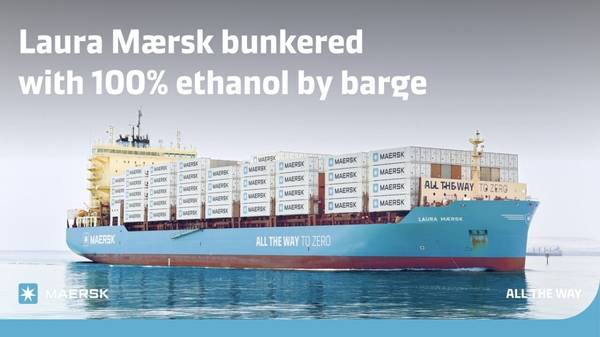
Laura Maersk ethanol bunkering graphic. Maersk conducts large-scale ethanol bunkering trial on Laura Maersk in Rotterdam  

A.P. Moller – Maersk has conducted a barge-delivered ethanol bunkering operation as part of ongoing fuel trials.

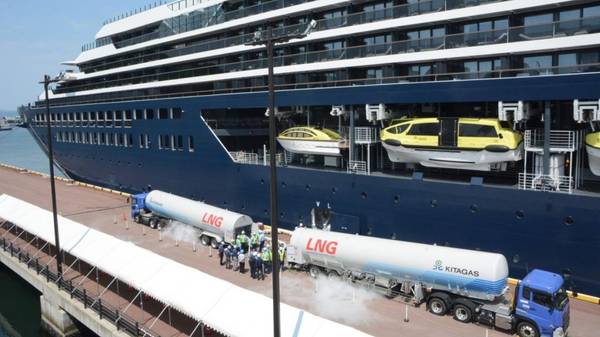
Luminara vessel truck-to-ship bunkering. MOL Techno-Trade completes first LNG bunkering for international cruise ship in Hokkaido  

Truck-to-ship LNG operation at Hakodate marks first such supply to an international cruise vessel in Hokkaido.

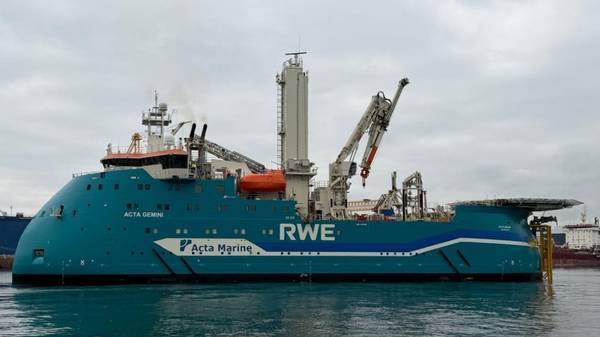
Acta Gemini vessel. Acta Marine takes delivery of methanol dual-fuel CSOV Acta Gemini for RWE wind farm charter  

The vessel will support operations at the Sofia Offshore Wind Farm at Dogger Bank.

Yeva Wood and Kirsten Møller Jørgensen. Malik Supply expands Danish team with bunker trader and finance hire  

Danish bunker supplier Malik Supply adds two new staff across its Fredericia and Aalborg offices.

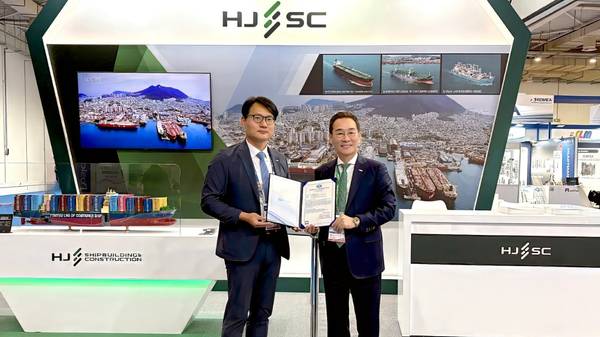
AiP award ceremony for a 10,000-teu biofuel-powered container ship. HJSC wins AiP for 10,000-teu biofuel-powered container ship design  

South Korean shipbuilder HJ Shipbuilding & Construction receives classification society approval for its biofuel vessel design at Posidonia.

Active vessel. Capital Clean Energy Carriers takes delivery of LNG carrier and dual-fuel gas carrier, secures five new charters  

Athens-based CCEC expands its fleet and pushes contracted revenue backlog to $3.1bn.

VPS logo. Fuel quality management for vessels in extended idle: Arabian Gulf, Gulf of Oman and adjacent anchorages | Rahul Choudhuri, VPS  

Managing fuel quality deterioration following the closure of the Strait of Hormuz.

Person signing a document. Agastya Green Fuels signs 250,000 t/yr e-methanol offtake deal with Sri Lanka’s SAR Group  

Indian producer and Sri Lankan maritime firm agree long-term green methanol supply partnership.


↑  Back to Top