This is a legacy page. Please click here to view the latest version.
Mon 27 Jul 2009, 09:47 GMT

Namibia launches fuel blending station


New onshore facility developed to help vessels reduce fuel costs and ship emissions.


A new onshore fuel blending station has been launched in Walvis Bay, Namibia, which will enable the country's fishing industry to use a mixture of distillate and heavy fuel products and to also reduce its impact on the environment.

Inaugurated by the Deputy Minister of Mines and Energy, Bernhard Esau, the N$35 million (US$4.6 million) Hangana Fuel Blending Station is the first of its kind in Namibia. It includes a controlling station, pump station, fuel tank farm, fuel supply pipelines and a blending station as well as an on-board fuel blending infrastructure.

The fuel blending station will enable Hangana Seafood's fleet of diesel powered fishing vessels to use a mixture of Automotive Diesel Oil (ADO) and Heavy Fuel Oil (HFO). The fuel blends will not only potentially reduce fuel costs but will also be more environmentally friendly than heavy fuel oil.

Hangana Seafood is a subsidiary of the Ohlthaver & List Group, said to be a leader in innovation and sustainability both in terms of natural resources and the natural environment. It therefore comes as no surprise to some that the company has taken on this groundbreaking marine fuels project in Namibia.

In addition, Hangana Seafood suffered from spiralling operational costs between 2004 and 2006 with fuel prices rising by over 60 percent in 2005 alone. Last year the company's bunker costs rose to unprecedented levels as the price of crude oil reached a peak of $147.27 per barrel in July.

With the slightest change in the price of oil amounting to millions more being spent on bunker fuel, the company launched its fuel project in 2006 in a bid to find a soluton that would enable it to cut costs and increase its competitiveness.

Whilst looking at alternatives, the company's idea of importing fuels with the right characteristics in terms of calorific energy value, viscosity, sulphur content and storability from South Africa proved to be unsuccessful with respect to import approvals, demand quantity and storage capacity.

Furthermore, the plan to bunker offshore was also found not to be feasible because of the time lost travelling to the offshore fuelling location, the limited tank capacity of Hangana Seafood’s vessels and perceived risk of inconsistent fuel over time.

The answer lay in in-line fuel blending and the project was set in motion for the design and commissioning of a plant at Hangana's factory premises. Here, diesesl and HFO were blended to form Intermediate Fuel Oil (IFO) with IFO being not only a cleaner, more environmentally-friendly fuel type than HFO, but tests revealed no difference in operational perimeters (ie consumption and power development).

Speaking at the inauguration, Deputy Minister Esau said the new fuel blending station will allow greater flexibility to optimise fuel consumption and will also save time and costs as no steaming is required, thus reducing the risk of offshore bunker spills.


TMS Tankers logo. Lloyd’s Register delivers fleet-wide energy transition roadmap for TMS Tankers  

LR Advisory maps vessel-level compliance risk and decarbonisation pathways across the Greek owner’s tanker fleet.

Dr Prapisala Thepsithar, GCMD. GCMD shares biofuel assurance and green finance insights at Hong Kong shipping decarbonisation forum  

The Global Centre for Maritime Decarbonisation presented pilot findings on biofuels and energy efficiency financing.

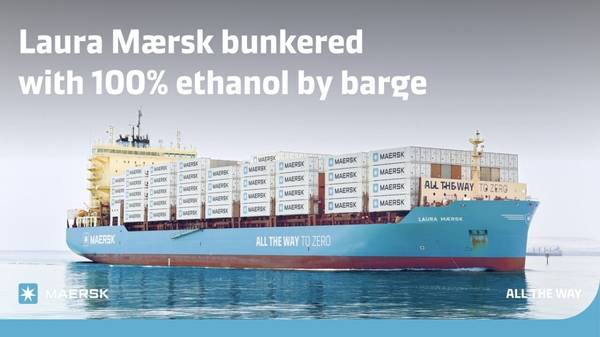
Laura Maersk ethanol bunkering graphic. Maersk conducts large-scale ethanol bunkering trial on Laura Maersk in Rotterdam  

A.P. Moller – Maersk has conducted a barge-delivered ethanol bunkering operation as part of ongoing fuel trials.

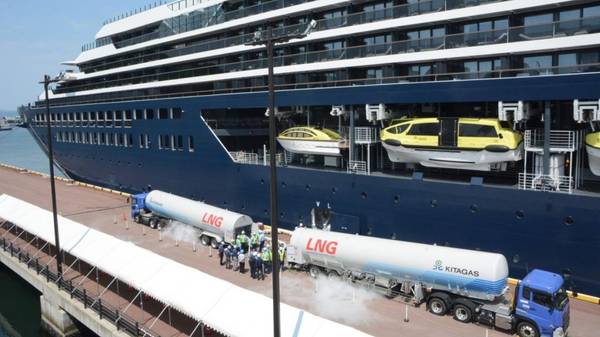
Luminara vessel truck-to-ship bunkering. MOL Techno-Trade completes first LNG bunkering for international cruise ship in Hokkaido  

Truck-to-ship LNG operation at Hakodate marks first such supply to an international cruise vessel in Hokkaido.

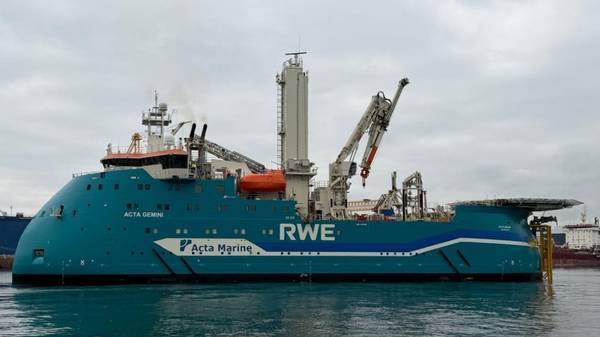
Acta Gemini vessel. Acta Marine takes delivery of methanol dual-fuel CSOV Acta Gemini for RWE wind farm charter  

The vessel will support operations at the Sofia Offshore Wind Farm at Dogger Bank.

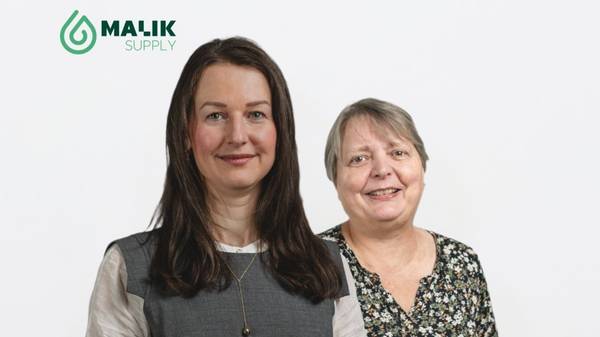
Yeva Wood and Kirsten Møller Jørgensen. Malik Supply expands Danish team with bunker trader and finance hire  

Danish bunker supplier Malik Supply adds two new staff across its Fredericia and Aalborg offices.

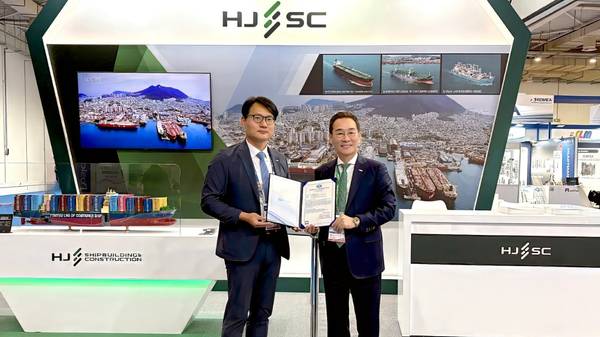
AiP award ceremony for a 10,000-teu biofuel-powered container ship. HJSC wins AiP for 10,000-teu biofuel-powered container ship design  

South Korean shipbuilder HJ Shipbuilding & Construction receives classification society approval for its biofuel vessel design at Posidonia.

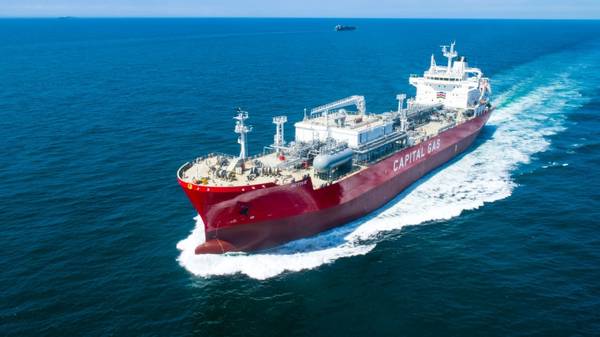
Active vessel. Capital Clean Energy Carriers takes delivery of LNG carrier and dual-fuel gas carrier, secures five new charters  

Athens-based CCEC expands its fleet and pushes contracted revenue backlog to $3.1bn.

VPS logo. Fuel quality management for vessels in extended idle: Arabian Gulf, Gulf of Oman and adjacent anchorages | Rahul Choudhuri, VPS  

Managing fuel quality deterioration following the closure of the Strait of Hormuz.

Person signing a document. Agastya Green Fuels signs 250,000 t/yr e-methanol offtake deal with Sri Lanka’s SAR Group  

Indian producer and Sri Lankan maritime firm agree long-term green methanol supply partnership.


↑  Back to Top