This is a legacy page. Please click here to view the latest version.
Thu 23 Jul 2009, 09:13 GMT

Antarctic fuel ban approved for adoption in 2010


Exceptions envisaged for vessels involved in search and rescue or safety operations.


The Marine Environment Protection Committee (MEPC) of the International Maritime Organization (IMO) has approved, with a view to adoption at its next session (MEPC 60 in March 2010), proposed draft amendments to MARPOL Annex I to prohibit carriage or use of heavy grade oil in the Antarctic area;

The proposed draft amendments would add a new chapter 9 with a new regulation 43, which would prohibit the carriage in bulk as cargo, or carriage and use as fuel, of:

* Crude oils having a density at 15°C higher than 900 kg/m3;

* Oils, other than crude oils, having a density at 15°C higher than 900 kg/m3 or a kinematic viscosity at 50°C higher than 180 mm2/s; or

* Bitumen, tar and their emulsions.

An exception is envisaged for vessels engaged in securing the safety of ships or in a search and rescue operation.

In the run up to last week's MEPC meeting cruise ship operators aready began preparing to drop the Antarctic from their schedules as a result of the expected fuel ban.

A number of cruise lines have already announced that they will no longer be operating in Atlantic waters. Voyages of Discovery and Saga have removed the area from their 2009/10 cruise programmes, whilst Swan Hellenic has said that it will be pulling out of the Antarctic in 2010.

Meanwhile, Norwegian firm Hurtigruten has announced that it has already cut back from two ships to one in the region.

The new rules mean that cruise ships sailing in the Antarctic would only be able to carry marine gas oil (MGO), which could cost operators several million dollars extra per season.

Currently, cruise vessels use MGO when sailing south of 60 degrees latitude and heavy fuels when north of this point. The new rules would require cruise ships to use MGO for the entire voyage.

The proposed amendments follow the sinking of the 2,400-ton Gap Adventures' MS Explorer off the Antarctic Peninsula in 2007. The incident served to highlight the need for stricter controls over cruise vessels sailing in the region.

Earlier this year, the Falkland Islands Tourist Board (FITB) expressed its concern over the impact of a fuel ban on the Falklands cruise industry.

The FITB's General Manager Jake Downing said "What is particularly disquieting about this development is that the intention of the ban seems only to be on tourist, fishing and cargo vessels. Military vessels, supply vessels, salvage vessels and SAR vessels will not be affected."

The new amendments were submitted to the Marine Environment Protection Committee by the Sub-Committee on Bulk Liquids and Gases (BLG), which was set up to consider matters related to the following subjects:

* prevention and control of marine pollution from ships and other related maritime operations involved in the transport and handling of oil and dangerous and noxious liquids substances in bulk;

* evaluation of hazards of dangerous and noxious liquid substances in bulk transported by ships;

* control and management of ships' ballast water and sediments;

* construction, equipment and operational requirements for ships carrying bulk liquids and gases;

* protection of personnel involved in the transport of bulk liquids and gases; and

* survey and certification of ships constructed to carry bulk liquids and gases.


Capital Clean Energy Carriers Corp. (CCEC) and CMA CGM logos. Capital Clean Energy Carriers and CMA CGM form joint venture to build $82.8m LNG bunkering vessel  

The 20,000-cbm dual-fuel vessel is due for delivery in the third quarter of 2028.

Hong Kong flag. Hong Kong launches port dues and vessel registration incentives to boost green fuel bunkering  

Two new schemes offer financial concessions to attract green fuel vessels and grow the Hong Kong fleet.

Mein Schiff Flow vessel. Fincantieri delivers LNG-ready cruise ship Mein Schiff Flow to TUI Cruises  

The 160,000 gross-tonne vessel is the second of two InTUItion-class dual-fuel ships.

Monjasa logo. Monjasa seeks trader for Fredericia-based Northwest Europe desk  

Bunker firm is recruiting a trader to join its Northwest Europe team.

Port of Barcelona and Port of Shanghai signing ceremony. Barcelona and Shanghai sign strategic port cooperation agreement targeting green fuels and digital corridors  

Ports formalise a 'sister ports' relationship covering green shipping, digitalisation and intermodality.

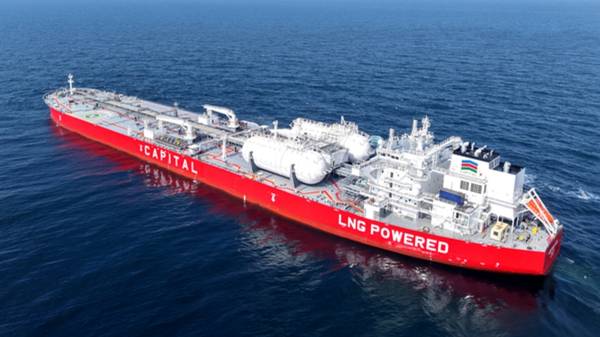
Capital's LNG-powered vessel. Chinese shipbuilder delivers 155,500-dwt LNG dual-fuel crude oil tanker  

Vessel handed over to Capital Ship Management Corp in China.

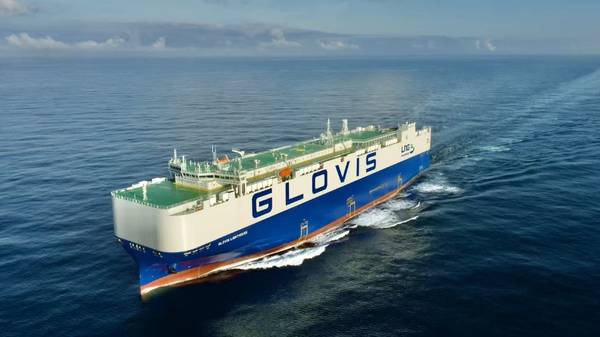
Glovis Lighthouse vessel. Seaspan takes delivery of first 10,800-ceu dual-fuel LNG car carrier  

Glovis Lighthouse enters service as one of a handful of vessels globally to exceed 10,000 CEU capacity.

Port of Rotterdam, Maersk, Core Power and Lloyd's Register logos. Rotterdam study maps pathway for nuclear-powered commercial ship port calls  

A joint study by Lloyd's Register, the Port of Rotterdam, Core Power and Maersk examines the feasibility of nuclear vessel port calls.

Hakata waterfront. Kinkai Yusen conducts first biofuel demonstration on domestic ro-ro vessel at Hakata Port  

Japanese shipping company to trial B24 biofuel blend aboard the vessel Nanotsu on 16 June.

Norwegian Energy Trading (NET) AS logo. Norwegian Energy Trading renews ISCC certification for biofuel trading  

Norwegian bunker trader says renewal reflects growing biofuel volumes and commitment to verifiable sustainability standards.


↑  Back to Top