This is a legacy page. Please click here to view the latest version.
Tue 21 Jul 2009, 15:42 GMT

EGCSA: MARPOL amendments 'central' to scrubber adoption


Association confident ECA implementation will act as a 'stepping-stone' for the development of scrubber technology.


The Exhaust Gas Cleaning Systems Association (EGCSA) has stated that the United States' Environmental Protection Agency’s (EPA) decision to begin consultation on the legislative implementation of amendments to MARPOL Annex VI is central to the widespread adoption of exhaust gas cleaning technologies by the shipping industry.

"EGCSA is very encouraged of this federal approach to facilitating consistent treatment of technology across all US ports, and in particular it will see California rescind its current rule which mandates prescribed fuel qualities to be used within 20 miles of the state’s coastline.

Commenting on the EPA announcement - supported by Environment Canada - for the implementation of Emission Control Areas (ECAs) along North American coastlines, Don Gregory, Director, EGCSA said: “For vessels that do not wish to ‘switch’ fuels when entering the US and Canadian ECA, scrubbing technology is the viable option for meeting the 0.1% sulphur regulation. I am also confident that once this ruling is passed, it will act as a stepping-stone enabling adoption of alternative solutions in Californian waters stimulating further development of these IMO-approved technologies.”

“There also has been a very welcome confirmation from the US EPA that it will support the equivalency option embodied in Regulation 4 of the Amended MARPOL Annex VI for vessels transiting into and visiting US ports and inland waterways.”

Gregory also believes that there needs to be far more transparency within the industry in understanding the full extent of the challenges for emissions reduction that lie ahead, as well as the viable options and solutions that are available.

“Industry leaders and legislators have not had access to sufficient information to enable optimal strategic planning to meet future emissions legislation,” said Gregory. “This is exemplified when we consider that some new-build vessels continue to be delivered which follow stock designs and machinery layouts and have not taken into account the changing demands of environmental legislation.”

Gregory continued: “We must also ensure throughout this period that there is equal transparency and independent verification of claims from technology manufacturers when communicating the benefits and performance of their innovations and new designs. These developments are essential to drive progression towards a more sustainable future. Exhaust gas cleaning systems are a good example of this.

"The reality is that the technology is clearly the obvious choice for ship operators as they look to meet requirements for sustainability, emissions compliance assurance, operational simplification and economic viability. However, we at the EGCSA realise that there is a need to assure prospective purchasers that these technologies are sufficiently mature, independently verified and includes a degree of operational experience. Open dialogue with the industry is key to driving this process forward.”

In line with this, and in addition to finalizing the Guidelines for Exhaust Gas Cleaning Systems at MEPC 59 in July, the EGCSA said it will shortly publish operational information from several new pilot sea-trial projects.


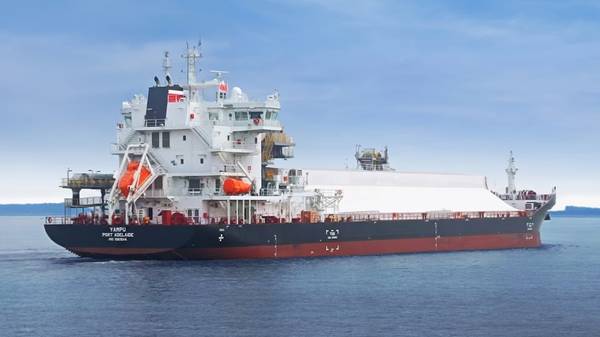
Yampu vessel. CSL delivers world’s first battery-powered self-unloading bulk carrier  

MV Yampu will transport limestone for Adbri in Australia, with full electric operation targeted by 2031.

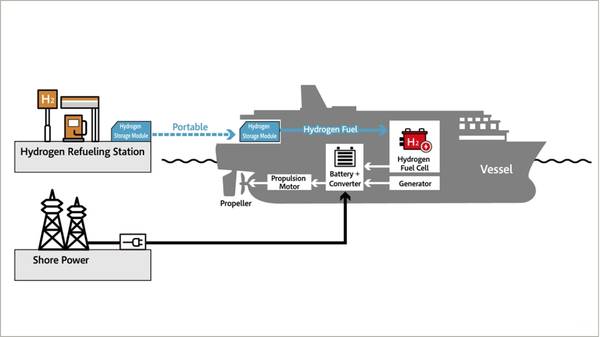
Illustration of hydrogen fuel cell system. NYK, Yanmar and Eneos to install hydrogen fuel cell system on new Tokyo dining cruise vessel  

Three Japanese companies are collaborating to bring hydrogen propulsion to a dining cruise ship due to enter service in 2027.

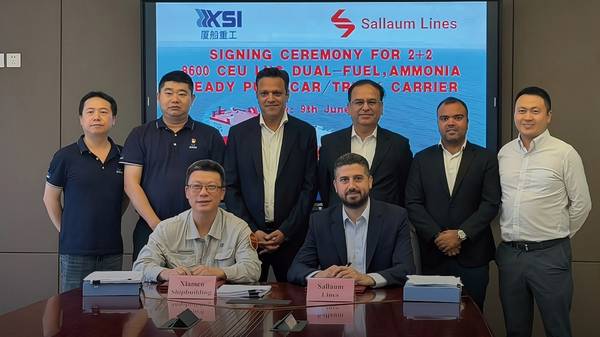
Signing ceremony for 8,600-ceu dual-fuel PCTCs. Sallaum Lines orders four 8,600-ceu dual-fuel PCTCs from Chinese yard — its largest vessels to date  

Ammonia-ready car carriers ordered from XSI mark the next phase of Sallaum Lines’ fleet renewal.

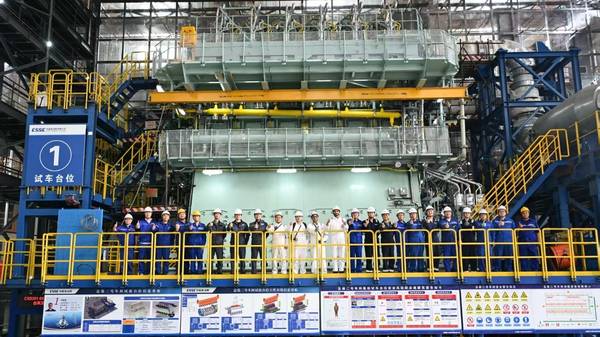
Factory acceptance test (FAT) for X72DF-A ammonia engine. WinGD completes factory acceptance test on X72DF-A ammonia engine destined for CMB.Tech bulker  

Swiss engine maker WinGD has completed factory acceptance testing of its ammonia-fuelled X72DF-A engine in China.

Everllence B&W S60ME-C10.5-GI-EcoEGR engine render. Everllence secures world’s first order for ME-GI Mk10.7 dual-fuel engine  

Norwegian car-carrier operator GCC selects next-generation methane engine for four newbuilds.

Capital Clean Energy Carriers Corp. (CCEC) and CMA CGM logos. Capital Clean Energy Carriers and CMA CGM form joint venture to build $82.8m LNG bunkering vessel  

The 20,000-cbm dual-fuel vessel is due for delivery in the third quarter of 2028.

Hong Kong flag. Hong Kong launches port dues and vessel registration incentives to boost green fuel bunkering  

Two new schemes offer financial concessions to attract green fuel vessels and grow the Hong Kong fleet.

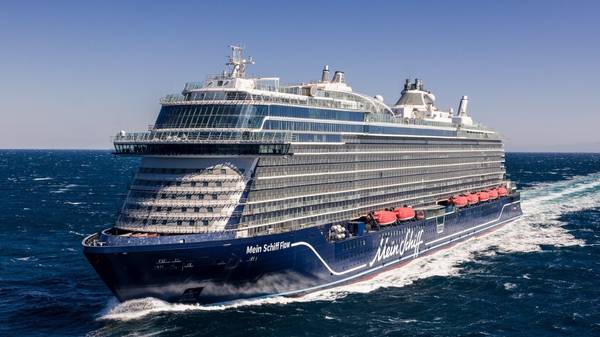
Mein Schiff Flow vessel. Fincantieri delivers LNG-ready cruise ship Mein Schiff Flow to TUI Cruises  

The 160,000 gross-tonne vessel is the second of two InTUItion-class dual-fuel ships.

Monjasa logo. Monjasa seeks trader for Fredericia-based Northwest Europe desk  

Bunker firm is recruiting a trader to join its Northwest Europe team.

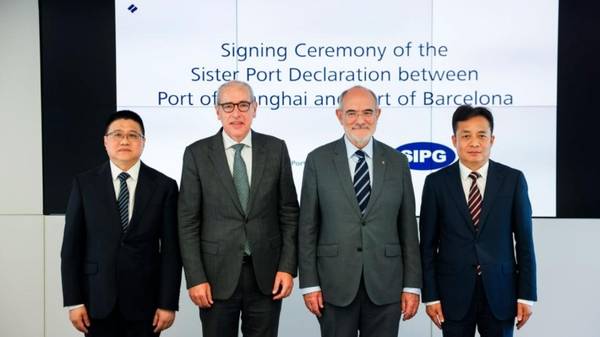
Port of Barcelona and Port of Shanghai signing ceremony. Barcelona and Shanghai sign strategic port cooperation agreement targeting green fuels and digital corridors  

Ports formalise a 'sister ports' relationship covering green shipping, digitalisation and intermodality.


↑  Back to Top