This is a legacy page. Please click here to view the latest version.
Mon 20 Jul 2009, 07:27 GMT

MEPC to issue interim GHG measures


IMO Committee to circulate a package of technical and operational measures to reduce GHGs.


Source: International Maritime Organization (IMO)

Marine Environment Protection Committee (MEPC) - 59th session: 13 - 17 July, 2009

The Marine Environment Protection Committee (MEPC) of the International Maritime Organization (IMO) agreed to circulate, via MEPC circulars, a package of interim and voluntary technical and operational measures to reduce greenhouse gases (GHGs) from international shipping and a work plan for its further consideration of market-based instruments to provide incentives for the shipping industry, when it met for its 59th session from 13 to 17 July 2009, at the IMO Headquarters in London.

These measures are intended to be used for trial purposes until the Committee's sixtieth session (MEPC 60) in March 2010, when they will be refined, as necessary, with a view to facilitating decisions on their scope of application and enactment. The measures include:

* interim guidelines on the method of calculation, and voluntary verification, of the Energy Efficiency Design Index for new ships, which is intended to stimulate innovation and technical development of all the elements influencing the energy efficiency of a ship from its design phase; and

* guidance on the development of a Ship Energy Efficiency Management Plan, for new and existing ships, which incorporates best practices for the fuel efficient operation of ships; as well as guidelines for voluntary use of the Ship Energy Efficiency Operational Indicator for new and existing ships, which enables operators to measure the fuel efficiency of a ship.

Market-based instruments

The Committee held an in-depth discussion on market-based instruments and agreed a work plan for its further consideration of the topic, as of its next session (MEPC 60, March 2010), to build on discussions and submissions to date, taking into account also relevant outcomes of the climate change conference (COP 15) that the United Nations will convene in Copenhagen in December 2009.

Such instruments would have two main purposes: to offset growing emissions in other sectors; and to serve as an incentive for the industry to invest in more fuel-efficient technologies.

Report to COP 15

The outcome of the MEPC on GHG emissions from ships will be reported to COP 15, which will consider a successor instrument to the Kyoto Protocol to the UNFCCC.

Greenhouse gas study 2009

The MEPC was assisted in its deliberations by the outcome of the Second IMO GHG Study on greenhouse gas emissions from ships, 2009, which is the most comprehensive and authoritative assessment of greenhouse gas emissions from ships engaged in international trade.

The study estimated that ships engaged in international trade in 2007 contributed about 2.7 per cent of the world's anthropogenic CO2 emissions and also states that emission reductions are feasible through technical and operational measures as well as through the introduction of market-based reduction mechanisms.

In the absence of global policies to control greenhouse gas emissions from international shipping, the emissions may increase by between 150 and 250 percent by the year 2050 due to the expected continued growth in international seaborne trade.


TMS Tankers logo. Lloyd’s Register delivers fleet-wide energy transition roadmap for TMS Tankers  

LR Advisory maps vessel-level compliance risk and decarbonisation pathways across the Greek owner’s tanker fleet.

Dr Prapisala Thepsithar, GCMD. GCMD shares biofuel assurance and green finance insights at Hong Kong shipping decarbonisation forum  

The Global Centre for Maritime Decarbonisation presented pilot findings on biofuels and energy efficiency financing.

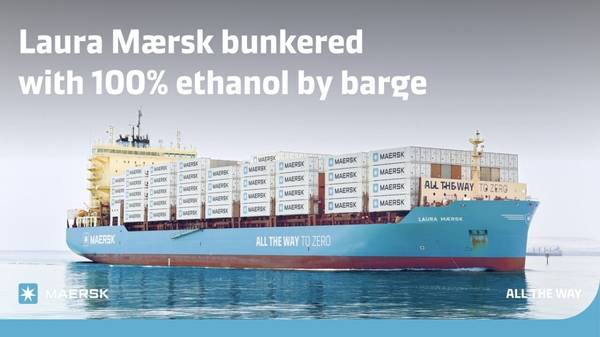
Laura Maersk ethanol bunkering graphic. Maersk conducts large-scale ethanol bunkering trial on Laura Maersk in Rotterdam  

A.P. Moller – Maersk has conducted a barge-delivered ethanol bunkering operation as part of ongoing fuel trials.

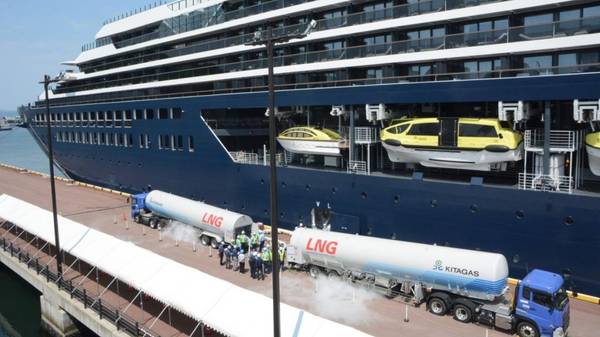
Luminara vessel truck-to-ship bunkering. MOL Techno-Trade completes first LNG bunkering for international cruise ship in Hokkaido  

Truck-to-ship LNG operation at Hakodate marks first such supply to an international cruise vessel in Hokkaido.

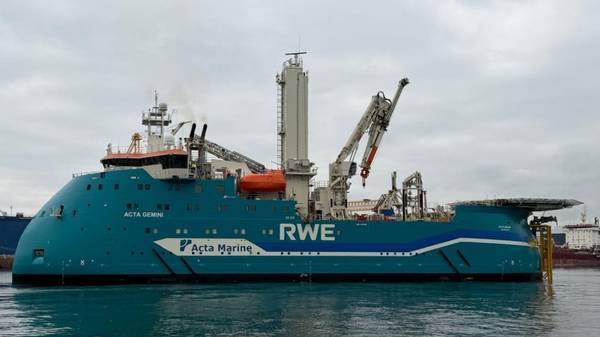
Acta Gemini vessel. Acta Marine takes delivery of methanol dual-fuel CSOV Acta Gemini for RWE wind farm charter  

The vessel will support operations at the Sofia Offshore Wind Farm at Dogger Bank.

Yeva Wood and Kirsten Møller Jørgensen. Malik Supply expands Danish team with bunker trader and finance hire  

Danish bunker supplier Malik Supply adds two new staff across its Fredericia and Aalborg offices.

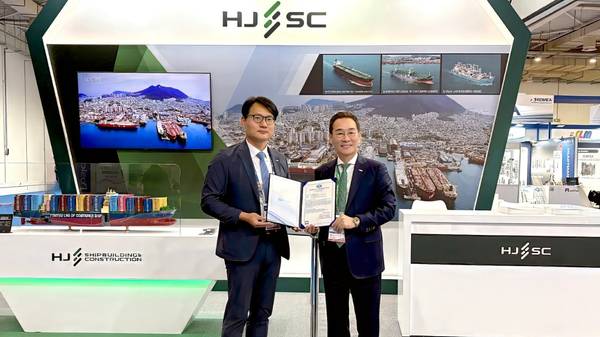
AiP award ceremony for a 10,000-teu biofuel-powered container ship. HJSC wins AiP for 10,000-teu biofuel-powered container ship design  

South Korean shipbuilder HJ Shipbuilding & Construction receives classification society approval for its biofuel vessel design at Posidonia.

Active vessel. Capital Clean Energy Carriers takes delivery of LNG carrier and dual-fuel gas carrier, secures five new charters  

Athens-based CCEC expands its fleet and pushes contracted revenue backlog to $3.1bn.

VPS logo. Fuel quality management for vessels in extended idle: Arabian Gulf, Gulf of Oman and adjacent anchorages | Rahul Choudhuri, VPS  

Managing fuel quality deterioration following the closure of the Strait of Hormuz.

Person signing a document. Agastya Green Fuels signs 250,000 t/yr e-methanol offtake deal with Sri Lanka’s SAR Group  

Indian producer and Sri Lankan maritime firm agree long-term green methanol supply partnership.


↑  Back to Top